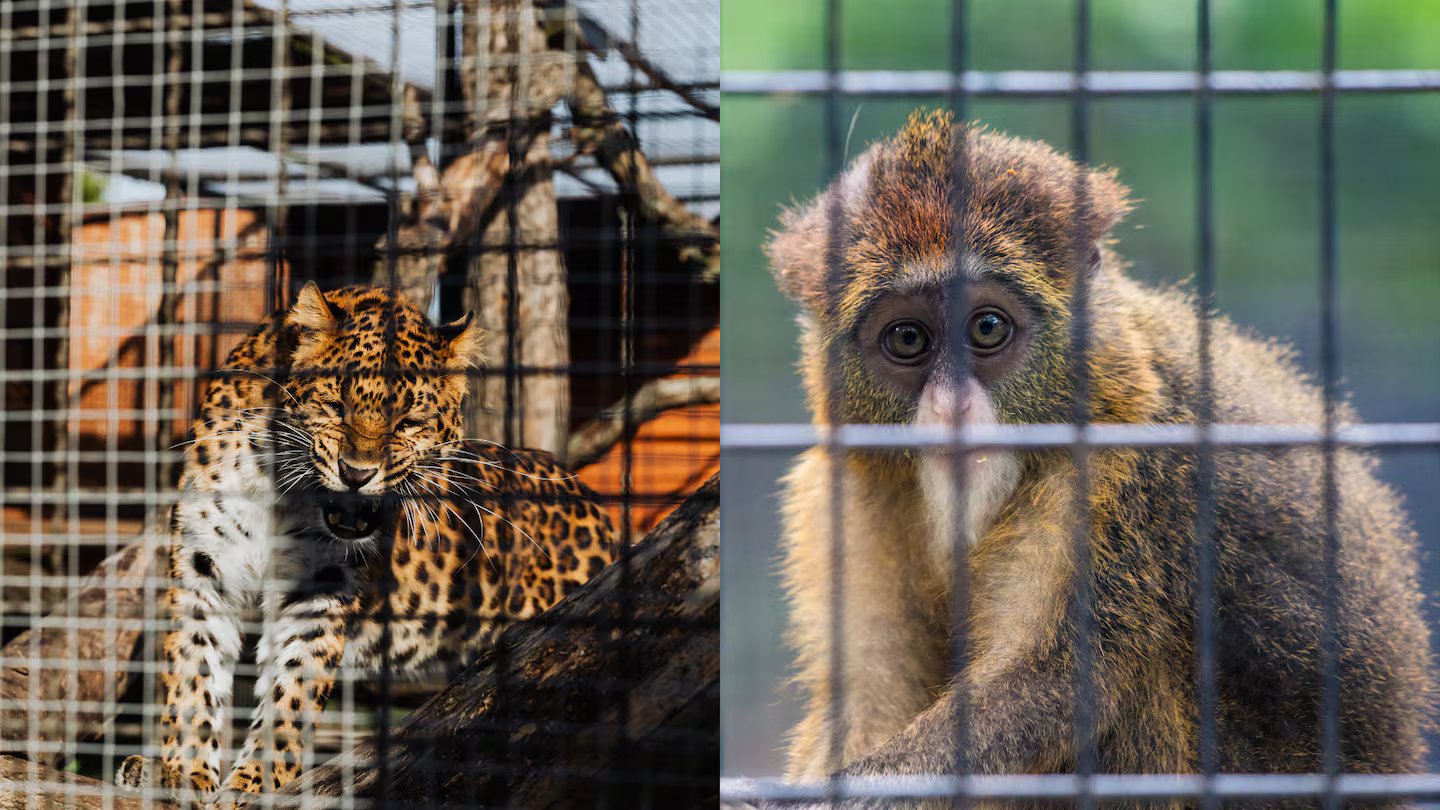
The global exchange of wildlife, especially in live and illegal animal markets, enhances the spread of diseases. A joint study by the University of Freiburg in Germany and the University of Lausanne in Switzerland reveals that the trade of wild species creates pathways for pathogens to jump to people.
The researchers published the findings in the journal Science. The accumulation of pathogens shared with humans increases the longer the species remains within the commercial chain.
Historically, the wildlife trade has been linked to outbreaks ranging from HIV and Ebola to Covid-19 and chickenpox. The process encompasses hunting, breeding, transportation, retail sales and pet ownership. The research allows us to understand the dynamics of this spread that was not clearly understood before.
The experts analyzed 40 years of information from the Convention on International Trade in Endangered Species of Wild Fauna and Flora (CITES). They also reviewed data from the Law Enforcement Management Information System (LEMIS) and the Seized Wildlife Data Set (DSW).
The analysis linked these sources to the CLOVER database, which records more than 190,000 associations between mammals and pathogens. Of the 2,079 species of mammals on the global market, 41% share at least one pathogen with humans. In contrast, only 6.4% of non-marketed animals have this characteristic.
Scientists determined that mammals in trade are 1.5 times more likely to harbor transmissible pathogens. Transmission between species appears as an inherent characteristic of this business. Animals in live markets hold more pathogens compared to those that are marketed exclusively as products or legally.
The time factor also influences the health danger. According to the authors, each decade that a species remains on the market corresponds with an additional pathogen shared with humans.