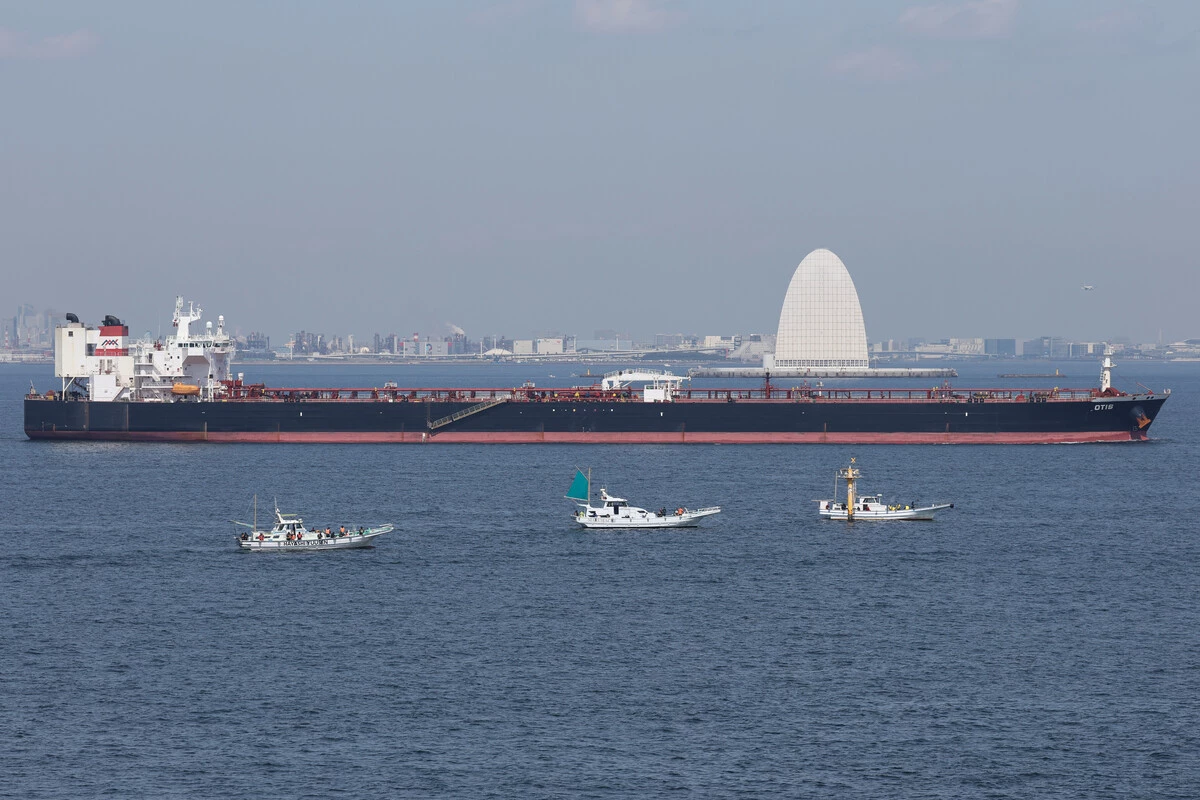
The other 10 tankers are expected to sail via the Cape of Good Hope. The first is likely to arrive in early May, while some are projected to reach Japan in June.
“The route is decided based on the needs of the shipper–whether they choose volume over speed, and whether they are willing to pay tolls for speedy delivery,” a shipping industry source said.
Nishi said the US-origin crude was likely arranged through spot contracts rather than long-term deals.
“The crude oil tankers from the United States are believed to be carrying (oil) procured with spot contracts rather than long-term contracts,” Nishi said. “It’s questionable whether Japan can maintain continuous procurement next month and beyond, as it may have to compete for US oil with other Asian countries.”
Separately, four tankers that departed from the Middle East without passing through the Strait of Hormuz, along with four more carrying oil transshipped in Malaysia, were also confirmed to be bound for Japan. Excluding those ships and the 13 tankers from the United States, Nishi found no other crude oil tankers supplying Japan with alternative oil sources.

[Copyright The Jiji Press, Ltd.]