
– Advertisement –
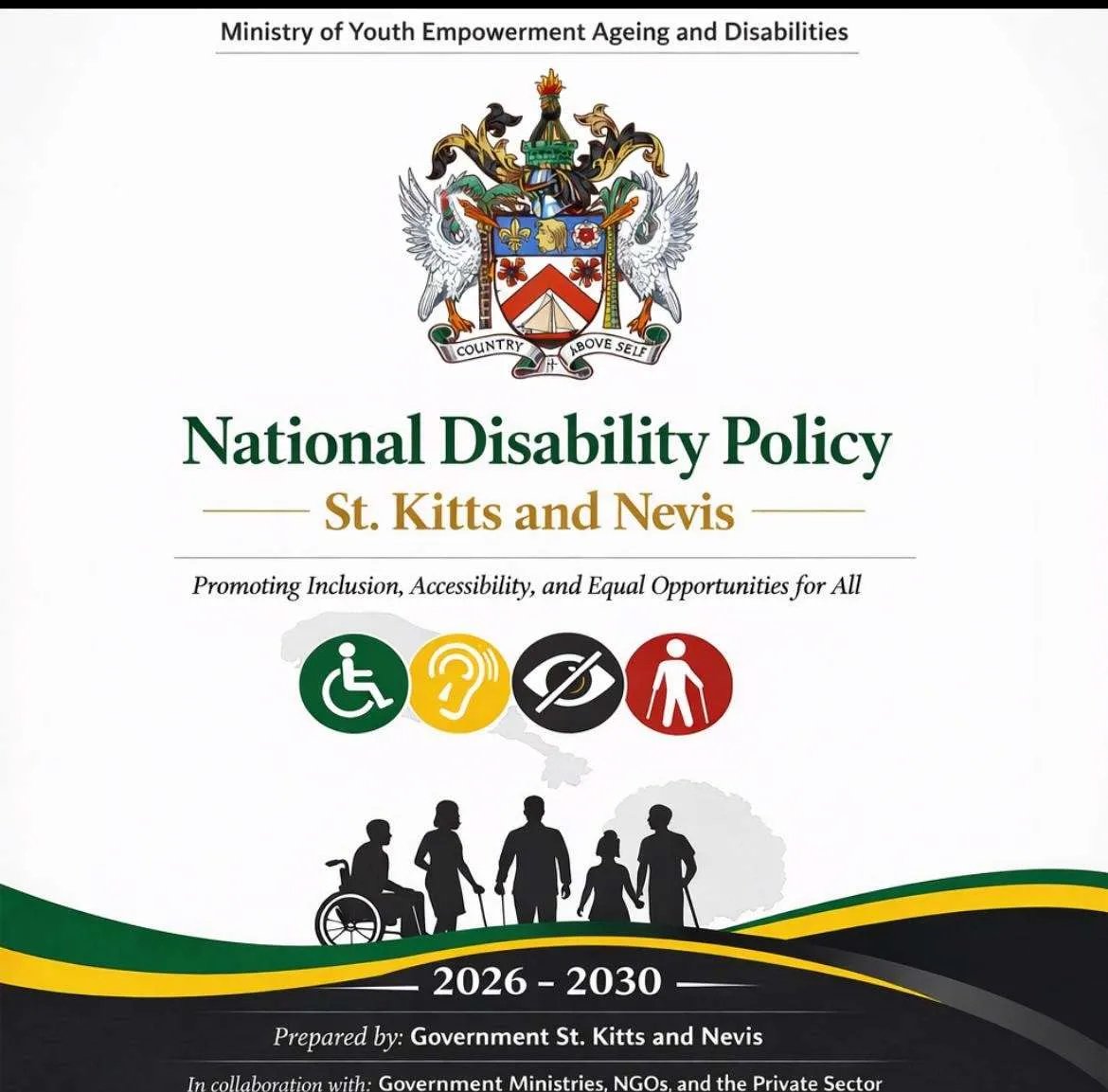
Basseterre, St. Kitts, May 1, 2026 — The Government of St. Kitts and Nevis has taken a significant step toward strengthening inclusion and equal opportunity for persons living with disabilities through the introduction of the Federation’s first National Disability Policy.
The policy, which covers the period 2026 to 2030, was formally laid in the Federal Parliament on Thursday, April 30, by Minister of State with responsibility for Ageing and Disabilities, Senator the Honourable Isalean Phillip.
Designed as a national framework for action, the policy outlines guiding principles and implementation measures aimed at promoting the full participation of persons with disabilities in all areas of society. It also aligns with the National Development Planning Framework, a key pillar of the Sustainable Island State Agenda.
Ten policy priorities have been identified to guide continued progress in improving the quality of life and living standards of persons with disabilities across the Federation.
1. Removal of Environmental Barriers – equal access to public spaces, transportation, information and assistive devices.
2. Education, Training and Lifelong Learning – students and adults with disabilities have equal opportunities to attain educational certifications.
3. Economic Inclusion and Financial Security – a right to work, earn, and build a future.
4. Public Awareness and the Attitudinal Barrier – disability rights embedded in the national curriculum in schools, and a national public awareness campaign launch.
5. Health and Wellness – a disability inclusive sector with equitable access to quality healthcare and mental health services.
6. Inclusive Housing and Liveable Communities – a quota for public housing options as well as a grant programme to retrofit homes. Ensuring spaces such as emergency shelters, sporting facilities, community centres, etc. are accessible.
7. Social, Cultural and Public Participation – a right to participate in cultural life, play sports, vote, etc. and to have a say in decisions affecting their community and family.
8. Legal Capacity, Protection and Access to Justice – review of legislation and procedures that, by omission or design, discriminate against persons with disabilities. Establish a Disability Commission to receive and investigate complaints and violations of the rights of persons with disabilities.
9. Disability Data and Research for Planning – structured disability disaggregated data collection and analysis, allowing for continuous monitoring and evaluation of policy goals.
10. Accountability Implementation and Governance –establish a National Disability Council with a functioning Secretariat to coordinate policy implementation and foster accountability.
Senator Phillip said the introduction of the National Disability Policy reflects the government’s commitment to building a fully inclusive society that values every citizen and resident, regardless of ability.
Source: SKNIS
– Advertisement –