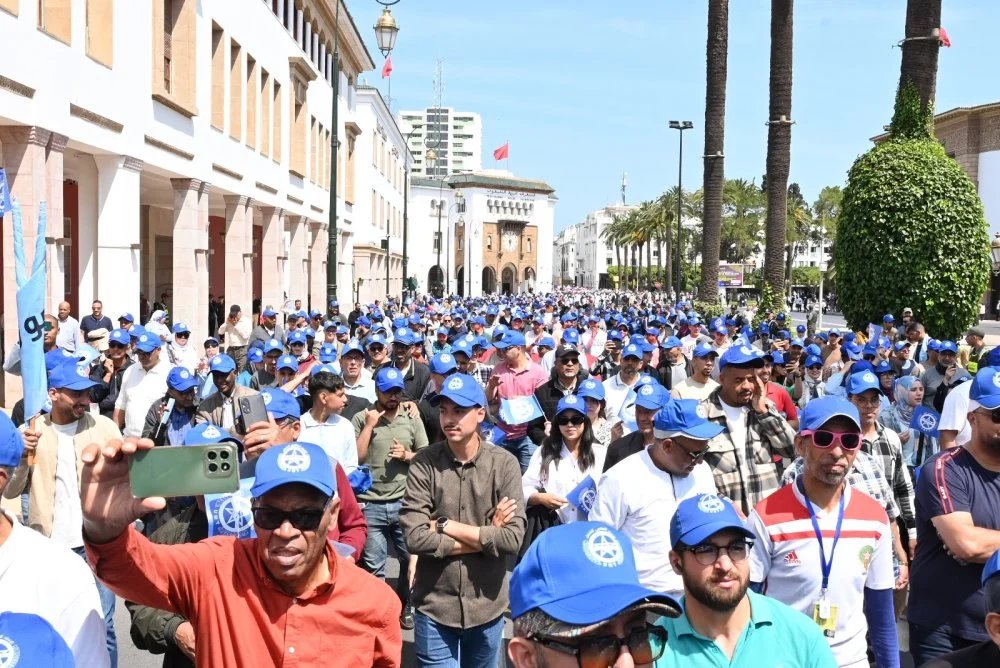
International Workers’ Day gave rise, Friday May 1, 2026, to a series of marches, rallies and meetings organized in several cities in the Kingdom. HAS Casablanca, Rabat, Tangier, Fez, Meknes, Agadir and even Dakhlathe main trade union centers have used this annual meeting to put the concerns of the working class at the center of the social debate, in a context marked by the high cost of living, the effects of inflation and persistent tensions on purchasing power.
In Casablanca, the processions crisscrossed the main arteries of the economic capital. The demands focused first on the increase in salaries in the public and private sectors, but also on the revaluation of retirement pensions and their indexation to changes in the cost of living. For the unions, this measure is necessary to guarantee retirees effective social and health protection, as well as a decent life.
The Moroccan Labor Union, the Democratic Confederation of LaborL’General Union of Moroccan WorkersL’National Labor Union in Morocco and the Democratic Federation of Labor also insisted on the need to preserve trade union freedoms, to enforce the Labor Code and to consolidate democratic and social achievements.
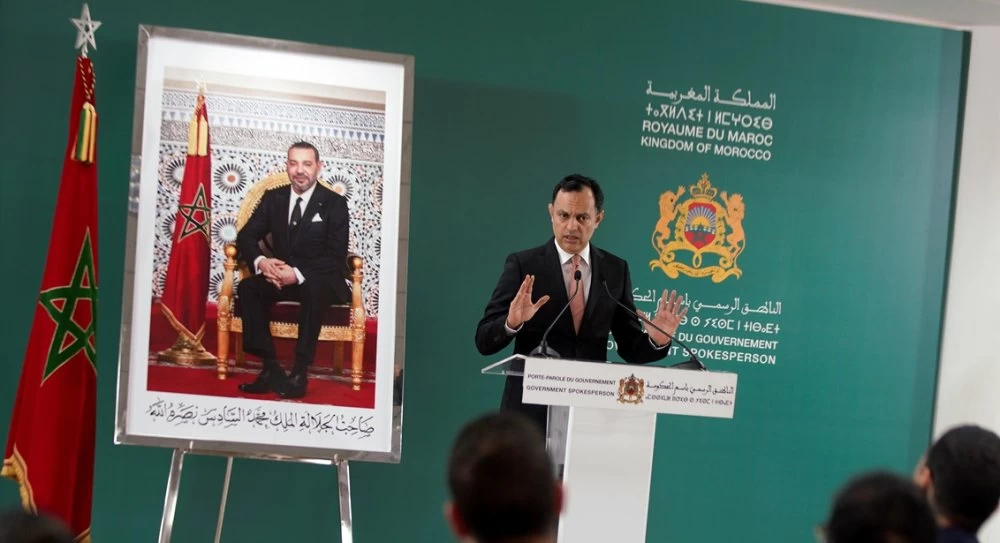
The CDT, meeting in Casablanca, called for a general increase in salaries, allowances and pensions, as well as the continuation of sectoral dialogues. Its secretary general, Khalid Alami Houir, estimated that the current situation requires collective mobilization to preserve achievements and respond to social demands, recalling the progress obtained in 2023 and 2024, particularly in terms of salaries, revision of income tax and reduction in the working hours of private security agents from 12 to 8 hours.
The UGTM, for its part, reaffirmed its attachment to social dialogue while calling on the government to honor the commitments resulting from the social agreements of 2022 and 2024. Its secretary general, Youssef Allakouch, pleaded for the preservation of purchasing power in the face of rising prices, speculative practices and market imbalances. Present at this meeting, Nizar Baraka highlighted the increase in the minimum wage, the exemption from income tax for salaries not exceeding 6,000 dirhams, as well as efforts intended to support the middle class.
The UMT has also made the defense of purchasing power its main slogan. Its secretary general, Miloudi Moukharik, called for a general increase in salaries, family allowances and retirement pensions. He also called for the continued reduction of income tax, the increase in family allowances, as well as the partial or total reduction of VAT and the domestic consumption tax, in order to ease the pressure on households.
In Rabat, the trade union centers called for improving incomes, the fight against unemployment, effective social protection and a review of public policy priorities. The UMT defended the idea of a fair salary, quality public services and tax justice. The CDT called for a “new social pact” placing the citizen at the heart of public policies, while the ODT pleaded for the institutionalization of social dialogue through the creation of a Higher Council for Social Dialogue and Employment. The UGTM, for its part, insisted on strengthening labor inspection, particularly in the private sector, in terms of health and safety at work.
In Tangier, where the FDT chose to hold its central stage, the demands took on a strong regional dimension. In a region considered the second industrial hub of the Kingdom, unions called for the creation of decent jobs, reform of the health system, more attention to the education sector and the effective implementation of advanced regionalization. Particular attention was paid to workers called upon to integrate regional multi-service companies, with a clear request: to preserve their achievements.
In the Fez-Meknes region, marches and rallies organized in Fez, Meknes and other localities focused on the increase in wages, the improvement of purchasing power, the strengthening of social rights and the promotion of more effective social dialogue. Unions also insisted on social justice, equity and improved working conditions.
In Agadir, the parades focused on the social sectors considered priorities, notably health, employment and education. Participants called for protecting achievements, improving the quality of public services, strengthening social protection and continuing reforms intended to preserve purchasing power in the face of the high cost of living.
In Dakhla-Oued Eddahab, the demands were linked to the dynamics of regional development. Unions have called for better integration of the local workforce and the creation of stable jobs in fishing, agriculture, tourism and services. They also called for improving working conditions, strengthening social protection and a more equitable distribution of wealth produced in the region.
The situation of working women was also highlighted, particularly in Dakhla, where union leaders called for fighting discrimination, promoting equal opportunities and improving women’s working conditions, considering their rights as an essential component of the demands of the working class.
Beyond social demands, the trade union centers reaffirmed their attachment to national constants, in particular the territorial integrity of the Kingdom and the defense of the Moroccan Sahara. They also expressed their solidarity with the Palestinian people and their right to establish an independent state with Al Quds as its capital.
This May 1, 2026 will thus have confirmed the convergence of union demands around a few priorities: income, pensions, purchasing power, union freedoms, social dialogue, quality of public services and social justice.