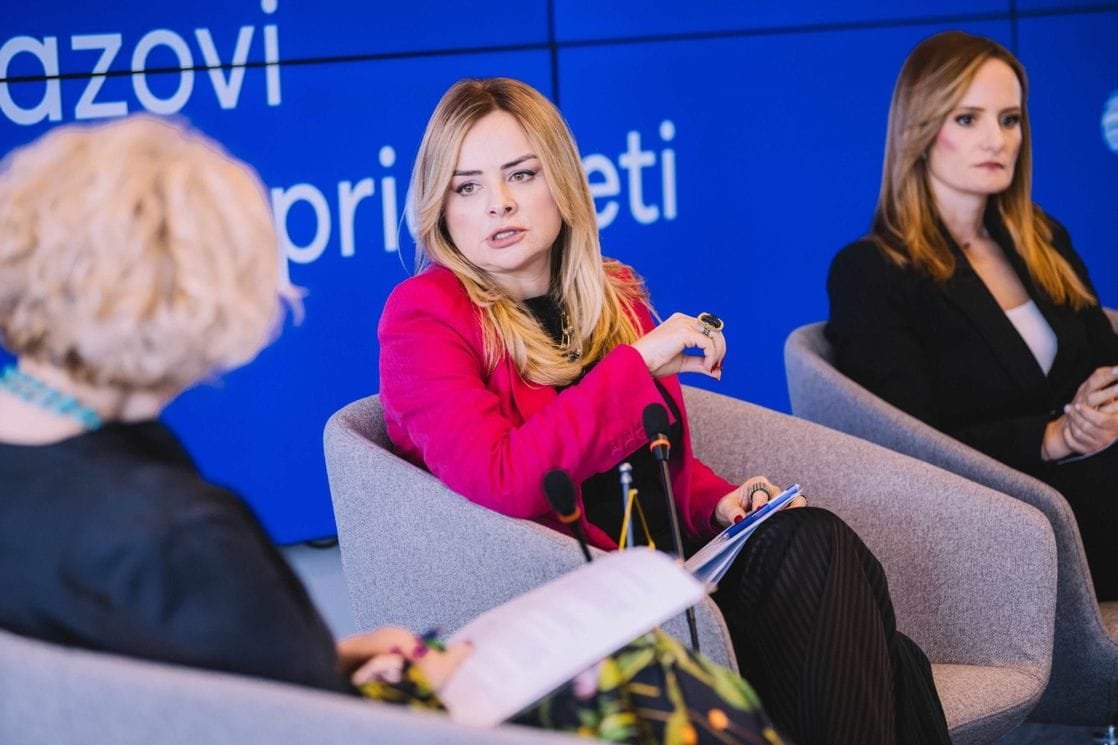
“There were periods of acceleration, but they were almost as a rule short and superficial, while the phases of stagnation and regression lasted longer and had deeper consequences. There was no lack of knowledge or support, but there was a sincere and consistent political will. So far, no government has treated reforms as a need for society, but primarily as an obligation to Brussels,” she pointed out on the panel at the conference “Montenegro 2006–2026: lessons, challenges and democratic priorities for the next period”, organized by Atlantic Alliance of Montenegro and YATA Montenegro.
Hence, as she added, today we have a paradox.
“We have formal European progress, because we have moved the farthest in the process of integration in the region, and essential democratic regression, because we have no measurable progress in key areas – the rule of law, the functionality of institutions and the understanding and application of European values,” she believes.
On the threshold of EU membership, we are dealing with issues that belong to the basic civilizational minimum, she says.
“It is absurd that today we have to conduct campaigns to erect monuments to anti-fascist heroes, while at the same time trying to rehabilitate war criminals. This clearly speaks of the value compass of society and the fact that Montenegro has not completed the processes that Europe completed more than half a century ago,” said Uljarević.
She also warned about weak political capacities.
“The most dangerous for the public interest are formally educated people who do not have a valid value orientation,” she concluded.