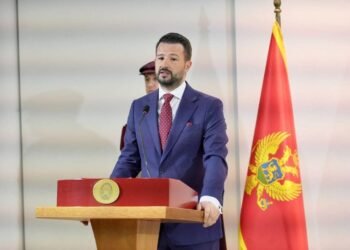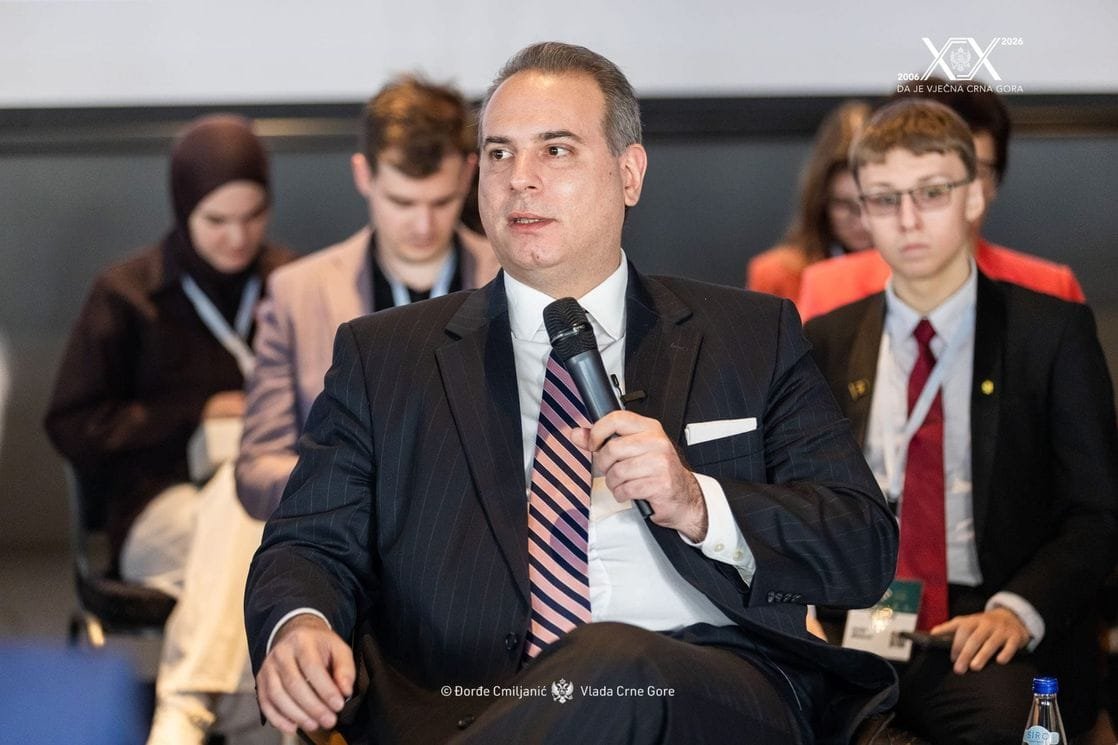
Montenegro’s entry into the European Union (EU) has become an irreversible process, assessed the Deputy Prime Minister for Foreign and European Affairs Filip Ivanovic, stating that they expect three intergovernmental conferences to be held by August.
In an interview with the MINA agency, Ivanovic said that they expect intergovernmental conferences between Montenegro and the EU in May and June, but he could not specify how many chapters should be closed.
“It is difficult to assess because we can say that we have a certain number of chapters ready, but that maybe the European Commission (EC) will not be able to verify all of these chapters, and this is not known until practically the last moment,” said Ivanovic.
He said that an intergovernmental conference can be expected in July as well.
“There are certain assumptions and plans to hold another intergovernmental conference in July, with the beginning of the Irish presidency. Of course, I could not bid on the number of chapters, it will certainly be more than two or three,” Ivanovic said.
Commenting on the dynamics of closing chapters, Ivanovic said that this year is a little different compared to the previous one.
“Because last year we had fewer intergovernmental conferences, and we closed more chapters. Now we have more intergovernmental conferences, so at each of those intergovernmental conferences we close one, two, three chapters. We’ll see how it will be in May and June,” Ivanović added.
He said that three intergovernmental conferences will most likely be held before the vacation in August.
Ivanovic said that it is important that Montenegro does everything in its power and then, in agreement with the EC, put the chapters that are ready on the agenda.
He said that the formation of the working group for the drafting of the contract on the admission of Montenegro is an even bigger event than the positive Report on the fulfillment of temporary standards.
“So, when everything is put together, that moment of the beginning of the drafting of the accession agreement is the greatest progress and the most significant moment in the overall negotiations between Montenegro and the EU, not because it is an administrative step, but because it shows, I could freely interpret it that way, that the entry of Montenegro into the EU has become an irreversible process”, assessed Ivanović.
He said that the criticism of a part of the public about the fact that some legal solutions are quickly adopted in the Parliament is perhaps justified, but “the situation is as it is”.
Ivanovic stated that everything that needs to be done on the way to the EU, the adoption of laws, numerous appointments, amendments to the Constitution, requires certain solutions to be adopted without excessive discussion.
“That is to say that it goes as quickly as possible, in order to enable the EC and its experts to check and verify everything and that it could be on the agenda at the intergovernmental conference”, Ivanović added.
He said that similar things happened in other states that are now members, and when they were candidates.
“So nothing is unknown, nothing is new and nothing is specific to Montenegro,” Ivanovic added.
He believes that the opposition left the parliamentary bodies because they saw that Montenegro was making great strides towards membership.
“They saw that the goals set by the Government and the parliamentary majority are being met. And we have reached a situation, about a year before the regular parliamentary elections, where certain political subjects want to position themselves on the political scene in the best possible way,” said Ivanovic.
Answering the question whether it is acceptable for Montenegro to join the EU under certain conditions, Ivanovic said that this story has been going on for years.
“This refers to the way decisions are made, that is, whether to keep the unanimous system as it is now or to introduce the system of the so-called qualified majority. That debate is ongoing and it is divided between large and small EU states,” Ivanović said.
He added that the smaller EU states are committed to preserving the unanimity system, because it is something that gives them equal status within the EU and decision-making, regardless of their geographic or economic power.
“How this debate will be resolved and whether it will be resolved before the entry of Montenegro or some other potential new member states, that is a question for the EU and we cannot give any answers in that regard,” Ivanović said.
He stated that, bearing in mind the current state of affairs, specifically Montenegro, it is impossible to accept a new member state at this moment and deny it the right to vote or deprive it of the right of veto, because the legal structure and documents that regulate the functioning of the Union do not know that.
“What is being talked about and what we will see in the coming months as this working group for drafting the accession agreement progresses with its work, are certain protective mechanisms and transitional periods that will be incorporated into the accession agreement,” Ivanović added.
Asked about the negotiations between Montenegro and Croatia regarding the open issues of the two countries, Ivanovic said that the agreement was that the talks would be held continuously and that the public would be informed about the outcome, not the progress.
“Accordingly, the talks, as I said, are going well, they are being held, they are going on in good faith. As I have mentioned several times, we are very close to a solution to certain issues that Croatia has applied for, and which, again, I must always emphasize, are not from yesterday and not five or six years ago, but from 30 or 35 years ago,” Ivanović said.
He said that “someone else opened those questions, and it is up to us to close them, and I am sure that we will succeed in that”.
According to Ivanović, there is goodwill on the part of Montenegro.
“There is, I would say, good will on the part of Croatia as well. And maybe that should also be mentioned – that is, chapter 31 was not closed because Croatia did not give the green light, however, this is not about any kind of blockage or slowing down of the entire process of European integration, because, as you can see, Croatia gives the green light for all other chapters that we are continuously closing from that December 2024,” Ivanović said.
He stated that he will inform the public about the outcome when certain matters are agreed upon and resolved.
When asked what January 1, 2027 will look like if all chapters are not closed, Ivanovic said that it will be a day like any other.
“I cannot tell you from the point of view of the executive power, as I could, for example, if I were an analyst or a media person or, God forbid, part of the opposition, what will happen if this does not happen, because what would happen, if it did happen, and what would happen if something does not happen, is not the way a responsible government and government should function,” Ivanovic said.
Ivanovic said that, as far as Montenegro is concerned, everything will be ready for the closing of all chapters by the end of the year.
Asked if he expects sabotage of Montenegro at the end of the negotiations, Ivanovic said that not everyone will like it.
“Sabotage may be a bit of a difficult word, but I expect that not everyone will like it. Just like not everyone likes it now, either in the country or outside the country,” Ivanovic said.
He said that the Government is closely monitoring the situation.
“And not only the Government, the media also needs to play an important role here, but citizens must also be aware that not all narratives, the so-called narratives that are placed in the public or through social networks or through certain announcements, are not all accurate,” Ivanović added.
He said that an example of this is the information about the dismissal of 25 percent of people from the state administration, stating that it was denied by both the EU Delegation and the Government.
Asked if he thinks that the state apparatus is too bulky, Ivanovic said that he thinks it should be more efficient.
Ivanovic, answering a question about the performance of the Europe Now Movement in next year’s parliamentary elections, said that it is too early to talk about it, but that their idea is to go independently.
a”There is still more than a year until the election, of course we will think about it and the modalities of the performance, so in the end we will talk among ourselves and with others and see what can be the optimal model to achieve the greatest possible success and that no one can complain that we have reduced our strength and importance”, said Ivanovic.