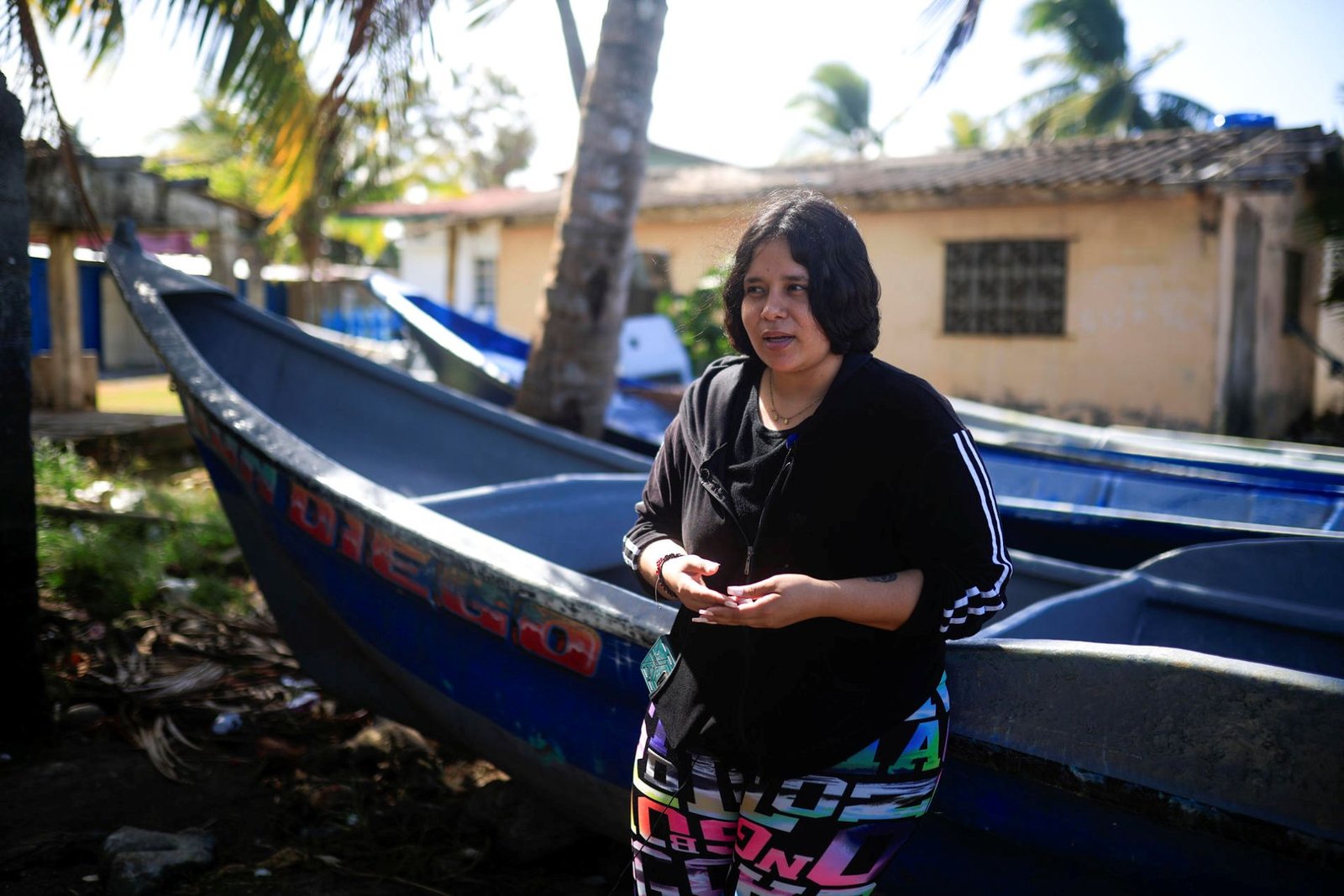
Alejandra Ramírez “never” would have made that decision if it had not been for social networks. If he had known, he would never, he insists, have set out to travel nearly 8,000 kilometers on foot in search of a better life in the United States. What he saw on TikTok about that path had nothing to do with reality, a reality that hit him head-on at every step.
This Venezuelan’s journey began two years ago (2024) and is not over yet. He had started his law career, but his father died and he had to leave his studies. The situation in the country, “where the salary was not enough, never in my life,” and with a now six-year-old son that she had to feed, pushed her to take the step with a group of compatriots. “Who wouldn’t want to give a better life to their family? Yes, you understand me? To your mother, to your son,” he asks.
But now, at 25 years old, he is in Miramar, in Panama, a coastal point of reference in the Caribbean for “reverse flow” immigrants, those who return from their attempt to reach US territory.
Historically impenetrable, The Darien Gap transformed into a human corridor that broke records: from the 133,000 migrants who crossed it in 2021 to an overwhelming number of 520,000 in 2023. For years, the jungle was the critical funnel of a mostly Venezuelan flow that sought the dream of the north.
However, the situation changed dramatically in 2025. With the return of Trump and the tightening of deportations, the path forked: the flow to the US plummeted to give way to the “reverse flow”. Now, thousands of faces like Alejandra’s retrace their path, marking a forced return to the south that in 2025 will exceed 22,000 people.
After two years of a fruitless path, Alejandra recognizes that the guide, the coyote—as the facilitators, often illegal, of migrants crossing borders are popularly known—were the TikTok videos full of promises. “That was, I think, the mistake we made.”
The lies of migration on TikTok
What Alejandra saw in those videos was far from what she would later find. In the networks – he says – other alleged migrants They described the trip almost as a game, as an excursion “camp”, minimizing its risks.
“Guys, if you are going to come through the jungle, bring canned goods and a flashlight.” And then one became confident: “’Ah, no, if that’s fast, that’s brief’… brief?!”, he laments. Those videos claimed that they would cross the jungle in one day, but it took five days and four nights. And what they suffered there, what they had to live, was “a very traumatic experience.”
According to what he says, on the third day they ran out of food. “There were about three cans of tuna and cookies left,” and they left it for the children in the group. Then, the rivers – “as many as there were in the jungle” – crossed them making “chains”, hooking each other by the arms to provide strength and prevent the current from dragging them.
There were a lot of people, he says, dozens of people who joined together to cross, with the strongest men in front putting pressure with their arms and legs to support the rest. Sometimes the chain broke at the weakest part and the children, often on their parents’ shoulders or holding hands while screaming and crying, fighting against the current, were the first victims.
“The river took two children, not those who were with us… a lot of people came. And we continued and the families were left there crying, other families went crazy when they saw that their children were dying,” explains Alejandra, while narrating her experience in the jungle almost in one breath, as if wanting to leave it behind as soon as possible: one of those crossings almost cost her her life.
According to a report from the UN Refugee Agency (UNHCR) in 2023, at least 38% of the people who arrived in Darién then received information through Facebook and almost 10% through TikTok, so the organization launched the “Trust El Tucán” campaign to combat misinformation and warn about the risks of the journey, including violence and human trafficking. The campaign was not successful with Alejandra.
Migrants arrive in Mexico
On the way northAfter the jungle experience, the journey through Costa Rica, Nicaragua, Honduras and Guatemala was relatively easy, until everything became complicated again in Mexico.
The cartels dictated the rules of the road under threat, something that no one warned about in their idyllic tiktoks. Alejandra and her group crossed a country that turned its back on them for fear of the consequences at the hands of drug traffickers, so much so that one of her companions ended up kidnapped and her family, from Venezuela, had to pay the ransom.
For Alejandra, the fear of heights she suffers dissolved into the urgency of surviving the train that migrants call “The Beast.” Five minutes were enough to climb to a roof where the sun was blazing and from which “people fell” into the void. Between the roar of metal and the constant fear, his fall with a girl in his arms when changing trains was a reminder of the brutal inertia of the road, “no one waits for anyone.”
But he was still guided by TikTok. Sometimes he got it right, like when they had to cross some “little stairs” in Costa Rica. Other “many things (…) were lies.”
On September 22, 2024, already in Mexico City, Alejandra made her appointment in the CBP-One application, enabled by the Joe Biden Government to request regular entry into the United States. But that appointment “never came.”
Another option was to cross the border as an undocumented person, but she was afraid of being shot or kidnapped. Meanwhile, there was no shortage of options on social media, including places to hire coyotes as guides, but how could one trust them? His cousin, he remembers, was scammed and robbed of $3,000.
So with the closure of CBP-One After Donald Trump came to power, and after “months of thinking about it and thinking about it,” they decided to return to South America.
A trip back home
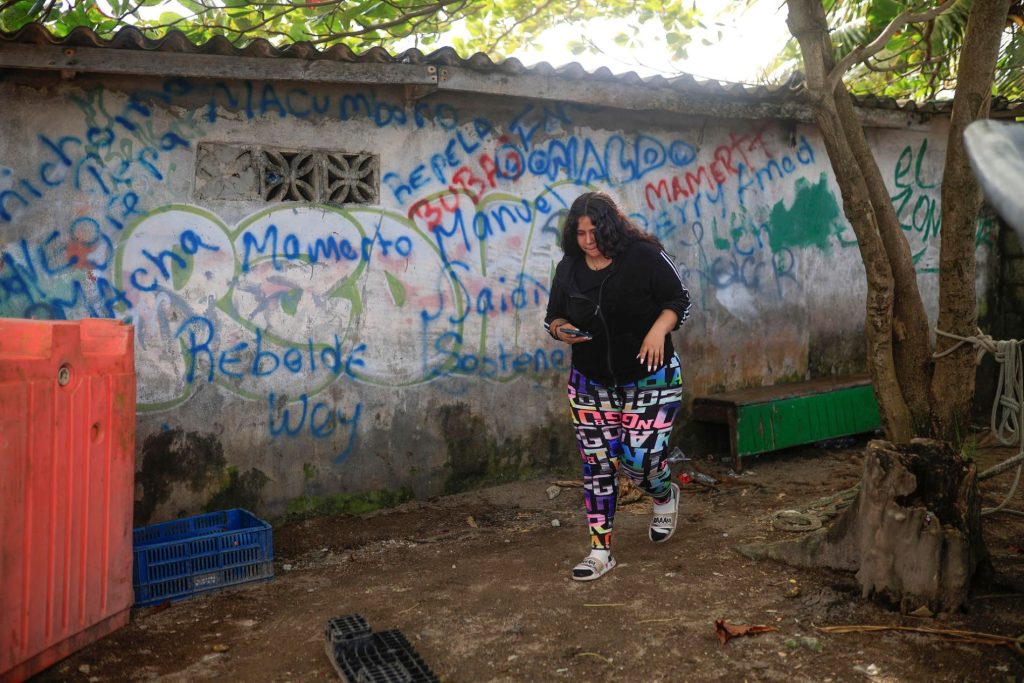
On the return trip, the hostility of the borders was mitigated; However, relief was a mirage that ended up running aground in the Panamanian port of Miramar. There, where they are now, Alejandra and hundreds of migrants crowd in front of the Caribbean, looking for a way out that will not force them to face again the thickness of the jungle that they do not want to remember and through which the Panamanian authorities have also prohibited passage.
The strategy now is to circumvent the danger by sea, tracing a route from Miramar to Puerto Obaldía to finally reach Necoclí, in Colombia. However, progress is suspended due to a lack of resources: private boats are an unattainable luxury and they are waiting for a “humanitarian ship” to help them return.
“In the end you hit a wall, it’s not what you were looking for,” says Alejandra, remembering the trip. He drank from polluted rivers, he saw dead people in the jungle, people who couldn’t get out. He remembers one of the bodies they found in a tent: “You could only see his little white head and he was an older man.” And he wonders about his family, who will never know about him.
On social networks they said: “The American dream, let’s go, that the Darién, that crossing the jungle is a piece of cake, that it is fast, that you passed the jungle and in three days you are already in the United States… that was a total deception,” he laments.
“If I had known that (it was like that), it would never have happened to me in my life, ever.”