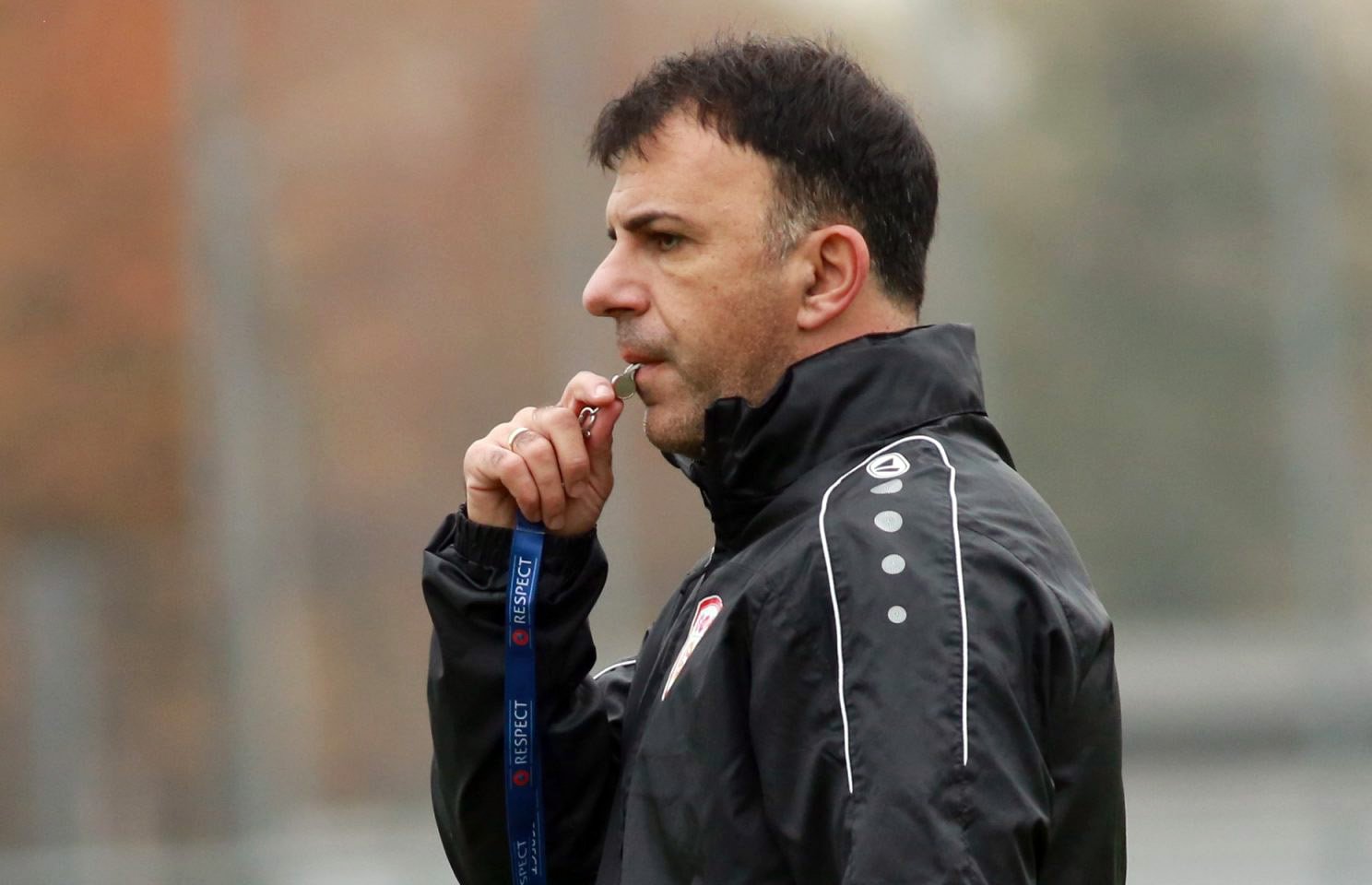
This is no longer just a coach “for a task”, as it was before, but a specialist with experience in leading the national team to a major tournament. And this immediately sets a new level of expectations.
Igor Angelovski was born on June 2, 1976 in Skopje (North Macedonia). He is a classic representative of the Balkan football school: first he went through the path of a player, then became a coach, gradually rising to the level of the national team.
As a footballer, Angelovski played as a midfielder. His career passed without high-profile European clubs, but was stable and eventful: Macedonia Gjorce Petrov, Pelister, Slovenian Publikum Celje, Cementarnica, Pobeda. He played more than 60 matches at the professional level and retired in 2008.
This is an important point: Angelovski is not a world football star, but a coach who made himself through work.
Start of a coaching career: rapid growth
He started coaching relatively late, but very quickly made his mark. His first serious project was the Macedonian club “Rabotnicki” (2013-2015). And already here he showed the main quality – the ability to get the most out of a team without top resources.
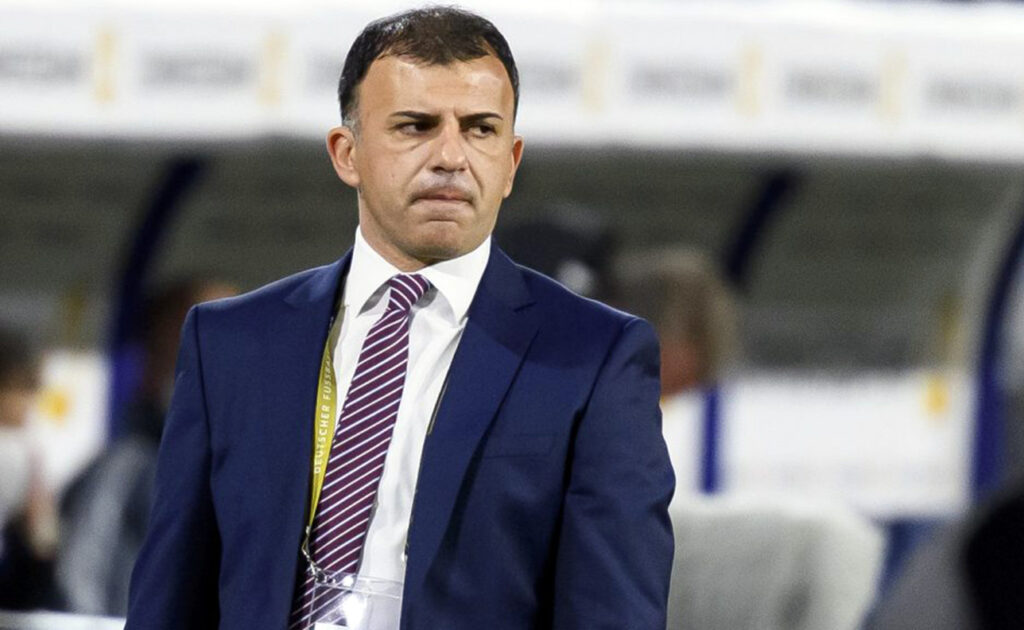
But the real breakthrough came in 2015. Angelovski led the North Macedonian national team – and the main page in the history of this team is connected with him.
Under his leadership, the national team reached a major tournament for the first time in history – Euro 2020, won its group in the Nations League, and also formed a new generation of players.
This is a key fact: he didn’t just work for the national team – he made a historic result. And he did this not with the top squad, but with a team that no one perceived as a favorite.
After the national team: finding yourself in club football
After leaving the Macedonian national team (2021), Angelovski’s career followed the club line: Gorica (Croatia), Kaspii (Kazakhstan), Ethnikos Akhna (Cyprus).
The results were different, but another thing is important: he continued to work in different football environments – the Balkans, Eastern Europe, Asia. It is this international experience that is now especially valuable for the Tajikistan national team.
Angelovski is not a romantic coach. His style is pragmatic and disciplined. He often uses formations like 3-5-2, adapting to the opponent rather than imposing one pattern. His teams don’t depend on one star – balance and structure are important.
The main weapon of his Macedonian team is not technique, but discipline and fight. He also practices his ability to play number two. This is especially important for Tajikistan at the Asian Cup.
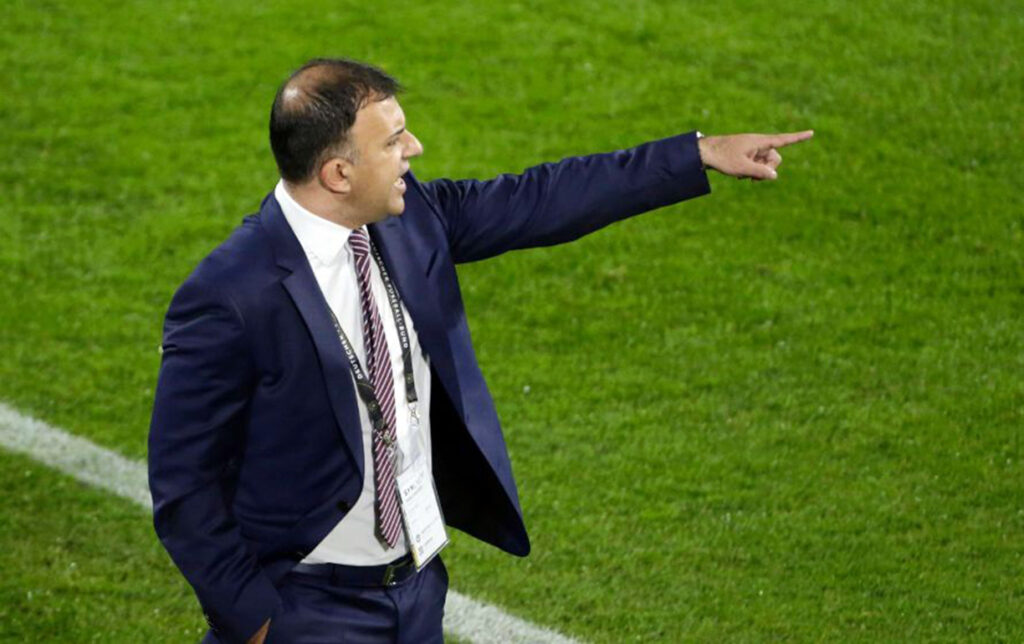
Why him?
Angelovski’s appointment is a signal: the Tajikistan national team wants not just to participate in the Asian Cup, but to fight. There are several reasons why the choice fell on him: experience of working with the national team and tournaments, the ability to achieve results with limited resources, knowledge of “non-top football”, where the structure is important, not names, experience of bringing the team to a historical level.
In fact, his profile is very similar to what has already worked for Tajikistan under Petr Segrt.
Now the Tajikistan national team has access to the Asian Cup, the roster has been formed, the potential is obvious, now the next step is needed – the quality of the game and the result at the tournament. It seems that Angelovsky comes specifically for this task.
With a high probability, under the new coach, the team will become more disciplined in defense, will play from the opponent more often, rely on quick transitions and get a clearer structure of the game. The main question is whether Angelovski can quickly adapt to Asian football.