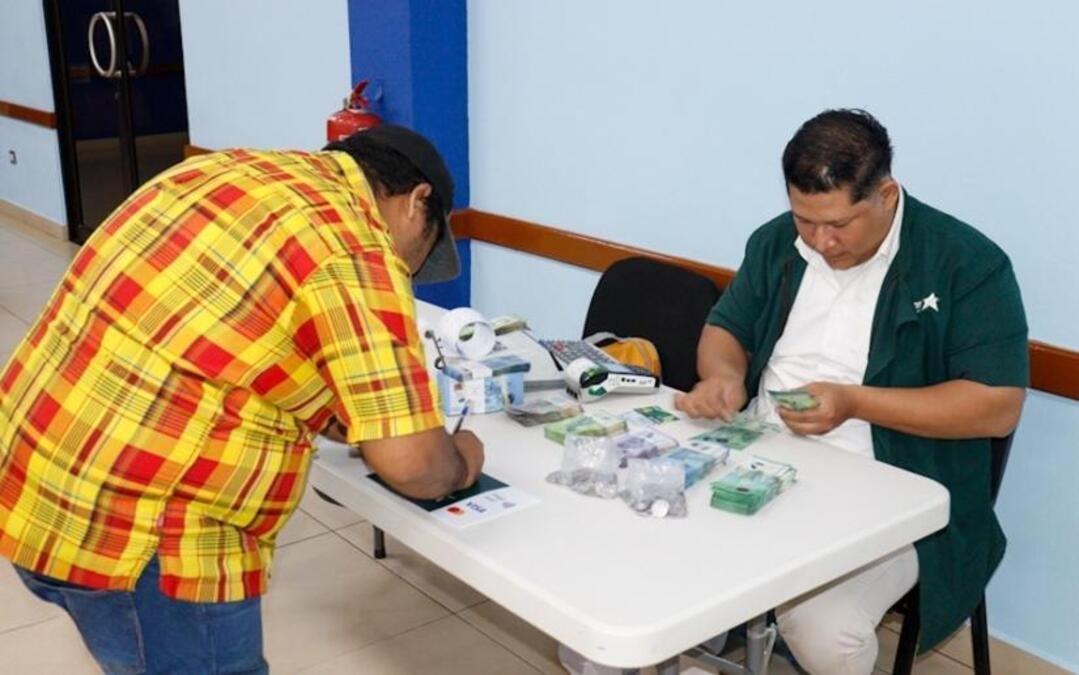
Nicaragua’s public employees have little to celebrate on May 1, 2026, International Workers’ Day. The regime of Daniel Ortega and Rosario Murillo took between 2 and 10% of their monthly salary as a “contribution” to the ruling Sandinista National Liberation Front (FSLN).
Jessicaa high school teacher in the West, sent CONFIDENTIAL your payment receipt from May 2026 to demonstrate the “illegal deduction.” He explained that they took 206.24 córdobas from him, which represents 2% of his gross salary of 11,227 córdobas and is added to the deductions from the Income Tax (IR) and the contribution to the Nicaraguan Social Security Institute (INSS). Rates that reduce your net salary to 9919.48 córdobas.
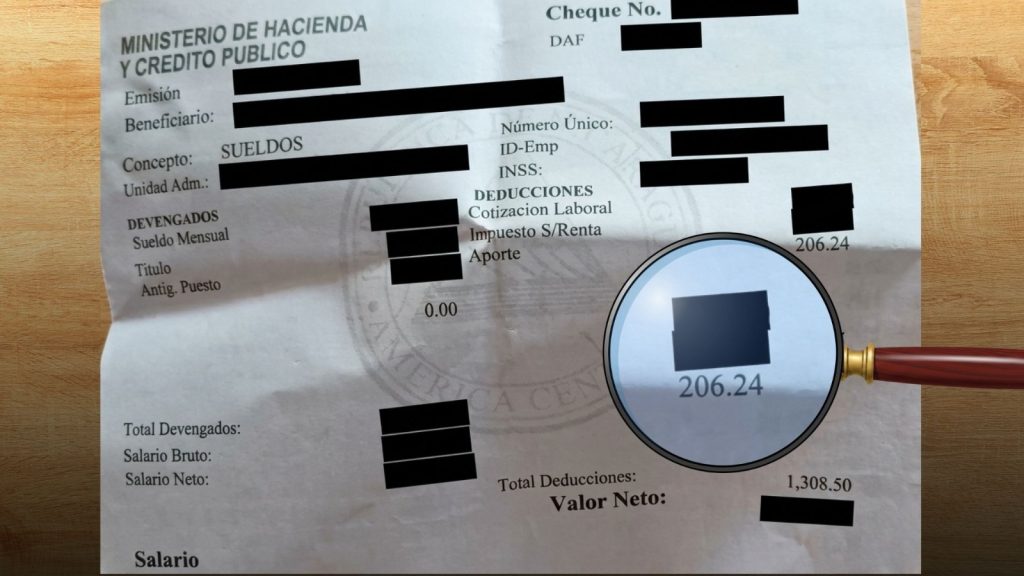
The deduction of the so-called “contribution” fell like “an avalanche” within the Ministry of Education (Mined), one of the institutions that pays its workers the worst. “All the teachers were complaining because, instead of raising our salaries, they are taking more away from us,” he lamented. Jessica.
“They didn’t tell us anything about the teachers,” said the teacher. But most of us “heard the rumor” during the Interlearning Pedagogical Meeting (EPI), which is the training carried out by the Mined on the last Friday of each month. The last meeting was held on Friday, April 24, 2026, the same day that Murillo announced the advance payment of the May salary.
In Nicaragua there are 47,595 active teachers, according to statistics from the Central Bank of Nicaragua.
Health sector employees
Marka health worker, learned that the party “contribution” would be deducted from the workers’ salaries due to rumors that circulated in the halls of the Ministry of Health (Minsa), during the penultimate week of April 2026. At that time, he downplayed the issue because, supposedly, the contribution “was made voluntarily.”
The surprise for Mark He arrived when he received his advance salary for May and found that the Ministry of Finance deducted 1,000 córdobas. A figure higher than the 200 córdobas that he “voluntarily” contributed to the party.
Franciscaanother worker in the Health sector, confirmed to CONFIDENTIAL that the party “contribution” was applied to all employees of the hospital where he works. They took 475.39 córdobas from her, which added to the deductions from the Health Workers’ Center (Fetsalud), the Commissariat, the IR and INSS, she was left with a salary of 8837.61 córdobas.
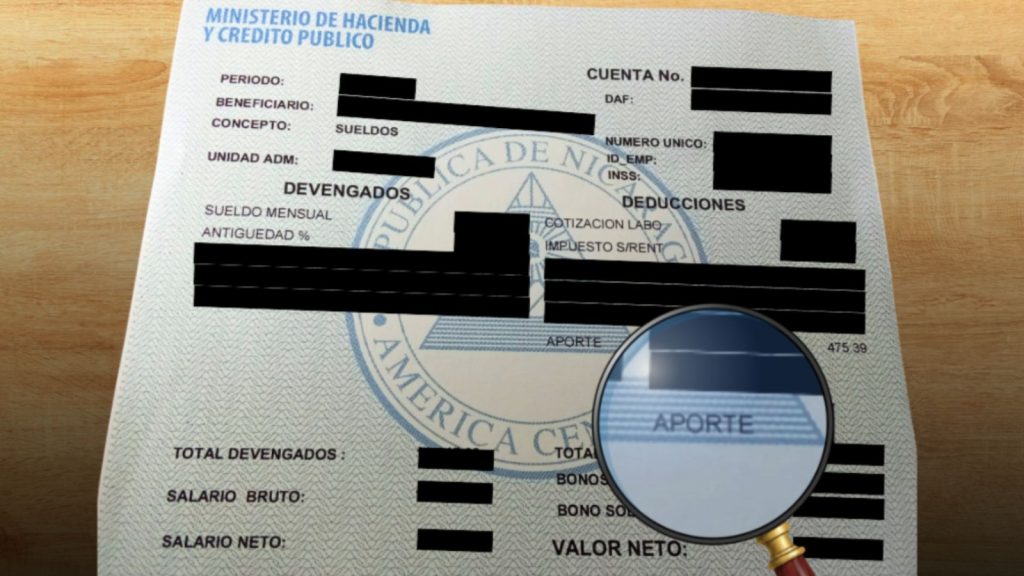
“They took 2,000 córdobas from a doctor” and “they took up to 2,600 córdobas from the specialist doctors,” he commented. Francisca.
The “party contribution” has also been deducted from workers at the Ministry of the Interior (MINT) and other State institutions.
Reports from 100% Noticias and the newspaper La Prensa indicate that the percentage deducted from public workers, as party contributions, ranges from 2 to 10% of the gross salary of each worker.
Another abuse against public employees
The so-called “partisan contribution” adds to a long list of abuses by the dictatorship against public employees, who have been forced to carry out an asset declarationas well as filling out a “militant form,” which—according to opponents—are tools of “espionage” and “repression” of the regime.
From the end of 2023, the dictatorship forced all state workers and its militants to fill out a “single registration form,” in which they asked for personal and contact information, as well as information on deceased relatives.
State employees also had to detail your social media accounts —Facebook, Twitter (now X), Instagram and TikTok—as well as employment information for the last five jobs and academic and training data.
In all state institutions—according to public employees—there are “political managers,” whose sole purpose is keep workers under surveillance. “We have our work managers, but there is also a whole surveillance structure to know what we say, if we complain, even down to our social networks,” lamented an official.
Many public employees have had their passports taken away and are not allowed to leave the country. A CONFIDENCIAL report published in 2023 revealed that the permits to go abroad were “selective”, while the majority were prohibited.