He Panama Canal once again becomes a thermometer of world trade. This time, the trigger is not a drought or the pandemic, but the geopolitical impact of the closure of the Strait of Hormuz, which has redirected maritime flows and triggered demand for transit through the interoceanic waterway.
The recent episode of the ship that paid nearly $4 million to advance its transit through the Panama Canal, through an auction, is the most visible manifestation of the global pressures facing maritime trade.
Ships that previously used routes through the Middle East, which mainly carry Liquefied Natural Gas (LNG) and Liquefied Petroleum Gas (LPG), are now opting for the Panama Canal, increasing traffic to nearly 40 vessels per day in recent days.
It is those same ships—pressured to comply with itineraries and contracts—that are willing to pay high amounts to advance their transit.
For shipping companies, the auction is a marginal cost compared to what is at stake: ensuring arrival at the destination without delays and keeping the logistics chain running.
Behind the noise generated by the payment of the $4 million there are three key ideas, at least for the Panama Canal Authority (ACP): Tolls have not been raised, there are no queue-jumping boats, and there is no out-of-control congestion.
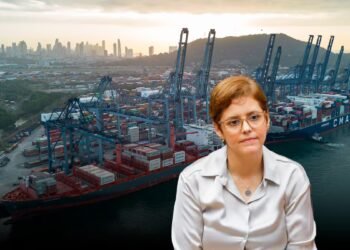
The administrator of the Panama Canal, Ricaurte Vasquezwas on the afternoon of Tuesday, April 28, at the Ascanio Arosemena Center of the ACP with the aim of dismantling versions that have surrounded the payment of the $4 million. He didn’t admit it this way, but his intention was very obvious.
At some point he said: “The Canal is not transactional and does not speculate on market conditions”.
At his side were the vice president of Finance, Victor Vialand Boris MorenoVice President of Operations, among other executives. One was in charge of precisely explaining the costs and budget structure, while the other detailed what type of ships are currently concentrating the greatest demand for transit through the Canal.
At the center of both, Vásquez acted as a connection point. With an almost classroom tone, he was weaving concepts such as auctions, reservations and allocation of quotas, mechanisms that for canaleros are part of everyday language, but that for the general public can feel like an alien world.
How Reserves and Auctions Work
The Canal’s current system is based on advance reservations, which allows ships to secure their transit date weeks or months in advance.
From this scheme, dynamics are generated that explain both the increase in traffic and the availability of auction slots.
Suppose that up to 36 daily slots are scheduled through reservation, but if there is operational capacity (water, resources, safety conditions), some vessels with reservation can advance their transit.
By doing so, they release the quota they were assigned at a future date.
Then, that freed space is the one that can be offered again to the market or allocated through auction.
The authorities emphasized that with this mechanism no ship with a reserve is moved.
In auctions, the Canal establishes a minimum price to participate, which varies depending on the type of vessel. Can go from the $55,000.
The average cost between March and this April is at $385,000, up from between $135,000 and $140,000 before the conflict in the Middle East.
From that floor onwards, the offers increase depending on the interest of the participants, who usually have predefined limits depending on the value of their cargo or their logistical commitments.
Under normal conditions, prices remain close to the minimum. However, situations such as the closure of strategic routes, such as the Strait of Hormuz, have increased competition for quotas, raising the amounts significantly.
The liquefied petroleum gas (LPG) vessel Virgo Gasunder the Singapore flag and operated by the Chinese company Wanhua Chemical, was the one that paid $4 million to advance its transit through the Panama Canal on April 15.

Two Aframax-type tankers paid around $3 million each after winning spaces in auctions.
Increased traffic in key segments
The Canal is currently experiencing an increase in traffic levels, with daily averages that reached 34 vessels in January, rose to 37 in March, and with peaks that exceeded 40 transits on some days in April.
This increase in demand to cross the Channel is reflected in several segments of maritime traffic. In the case of tankers, transit went from around 7 to about 12 vessels per day, while bulk carriers increased from 10 to 15 transits per day.
A large part of these flows respond to routes between the United States Gulf and Asia, in the midst of logistical adjustments derived from geopolitical tensions.
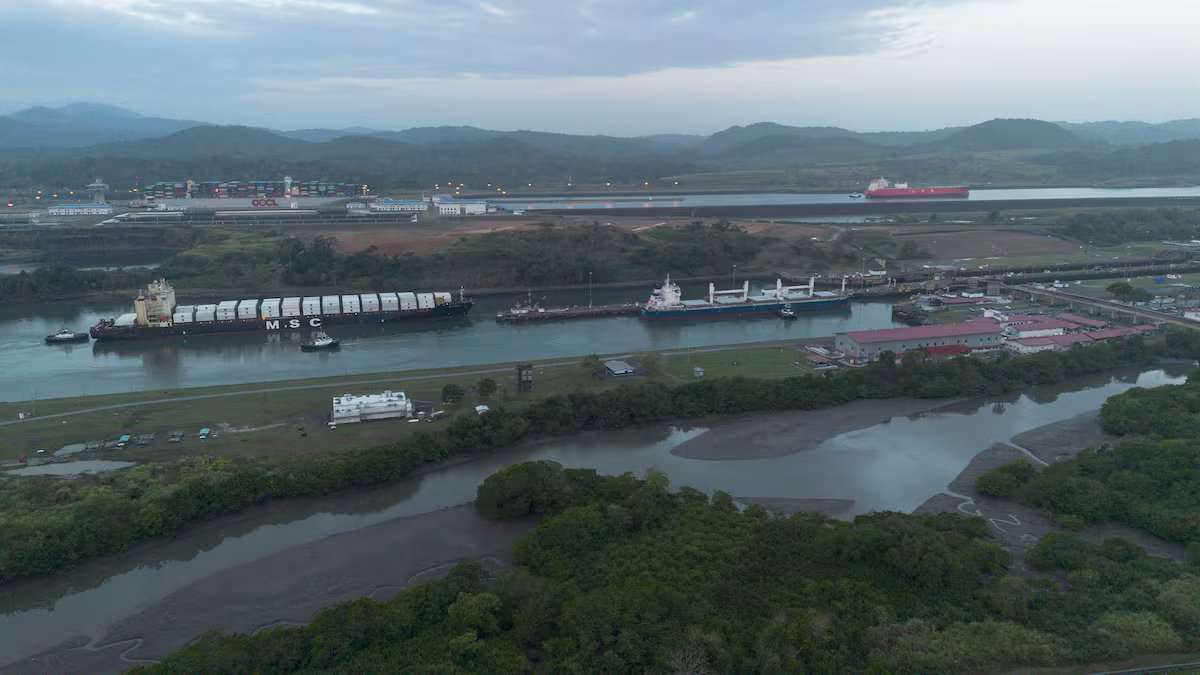
The lines of ships to cross the Canal are always a thermometer that tells the country how things are going. They are usually seen from the Cinta Costera, in the city center, or on the Calzada de Amador.

In 2023, a queue of 130 vessels waiting was reported, as a result of restrictions due to the drought. At that time only 32 ships were allowed to pass because water was scarce.
Now the scenario is different. Up to 41 boats pass by. But yesterday, Tuesday, there were 118 ships in line, due to high demand for the route. Of all the ships, only 22 were without space or in the expectation that a space will open up in the system.
The Canal has insisted that this difference is key to understanding current operation: not all “waiting” vessels are competing for immediate space. The majority already have their transit assured, while a smaller group operates in a more flexible scenario, depending on the availability of the day or market dynamics.
“There cannot be congestion because most of the ships that are here are waiting because they have a reserved space.”Vasquez said.
What are they doing in line, then?
Apparently, the ships are taking advantage of their presence in Panama to receive complementary services, such as crew change, fuel supply, provisioning or technical adjustments; It is the pulse of the auxiliary maritime industry in action. The country functions as a hub maritime, so this “waiting” time is not unproductive, but part of the operational cycle of the trip.
Added to this is a strategic component. Some vessels without reservations—and with interest in bringing forward their dates—remain attentive to the release of quotas or the possibility of participating in auctions.
In these cases, waiting also responds to a market decision: remaining in the Canal zone may be convenient if the opportunity arises to obtain earlier transit at a cost that, in certain scenarios, is competitive with losses due to delay. The difference between reaching the destination in less than 15 days through the Canal or taking more than 30 days through the longest route is strategic for a business that today is full of uncertainty and geopolitical pressure.