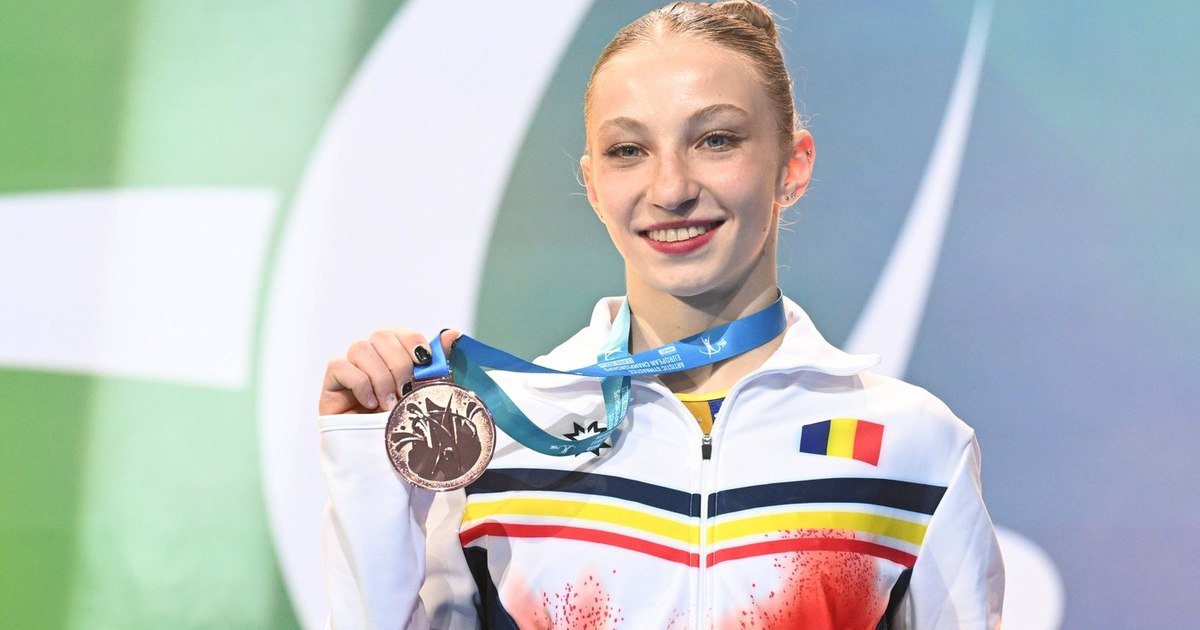
Gymnast Ana Bărbosu, in the middle of a scandal of proportions at the Olympic Games, came into the spotlight again, after missing three anti-doping controls. The athlete received a two-year suspension from the activity, as a result of the fact that she declared “not present” at a control in Romania and at two in the United States. The decision is not final, and the Romanian Gymnastics Federation is already preparing an appeal, although it does not really know how to act in such situations.

Ana Bărbosu was suspended for two years. Profimedia photo
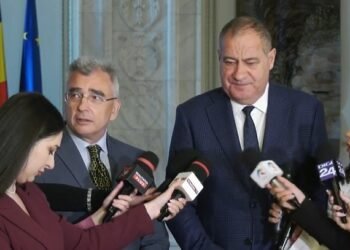
“Now we received an address from ITA informing us of the sanctioning of Ana Bărbosu for three ‘missed tests’. That is, she has not been found three times (within 12 months) by anti-doping agents at the location she announced on the app that every performance athlete has. In principle, things regarding the period will go to two years, but I cannot give official information because it is an internal matter“, said Ioan Suciu, the president of the Romanian Gymnastics Federation, quoted by Agerpres.
Suciu explained that he is going to get in touch with Ana Bărbosu, a sportswoman who has been brewing for some time in the United States of Americawhere she is a student at Stanford University. “At the moment we will analyze the situation in the Executive Committee and we will talk with Ana. I cannot say more, because the information is fresh and it is a matter that concerns her directly”he said.
FRG is considering an appeal
Asked if the Romanian Gymnastics Federation will appeal the ITA sanction or if the gymnast’s lawyer will take care of the procedure, Ioan Suciu answered: “I don’t know. I don’t want to speak on assumptions, I want to talk to her first. We need to see exactly her position. She has a lawyer in her turn. And then the lawyer of the Federation will connect with her lawyer and we’ll see what the steps are.”
Under anti-doping regulations, performance athletes are required to announce their home or whereabouts on an app for 60 minutes each day so agents can conduct surprise tests. If an athlete is not found at the announced location within 60 minutes, this constitutes an anti-doping rule violation. Three such violations during a calendar year result in the athlete being sanctioned, even if he has no positive test. To defend it, Stanford University hired the best lawyers. According to information from across the Ocean, the institution paid $300,000 Romanian lawyers.
ANAD claims that Ana Bărbosu was not suspended
Immediately after the information appeared in the public space according to which the gymnast would have received a suspension for a period of two years, the National Anti-Doping Agency came out with a statement denying this fact. ANAD claims that Ana Bărbosu is under the attention of the ITA, but the athlete has not received a suspension until now.
“ANAD was informed by the International Testing Agency (ITA), on behalf of World Gymnastics, about the accusation brought against the athlete Ana-Maria Bărbosu, for violating the provisions of Article 2.4 of the World Anti-Doping Code (Whereabouts Failures). We specify that this violation concerns the failure to fulfill the obligations regarding the provision of location information and the availability for controls, it is not a case of detection of a prohibited substance, as suggested in some materials appearing in the public space.
We also emphasize that this case is handled at the international level by ITA, on behalf of the international gymnastics federation, and the related actions do not involve doping control officers of ANAD, but personnel assigned within the international programs. ANAD is informed at each stage of the procedure, but the information is confidential until the completion of the case and the official communication from the ITA.
Ana has the right to formulate the defense
So far, the athlete has not been suspended. It has the right to formulate its defense with respect to each of the three retained situations, which, cumulatively, may constitute a Whereabouts Failure. According to the World Anti-Doping Code, for such a violation, the standard sanction is 2 years of suspension, with the possibility of reduction depending on the degree of guilt and the specific circumstances of the case.
In the following period, the athlete can accept the proposed consequences or opt for the case to be resolved by the competent court, according to international procedures. ANAD is monitoring the evolution of the situation and will continue institutional cooperation with the competent bodies, within the limits of legal powers”those from ANAD communicated, but what the agency claims goes head-to-head with the statements of the president of the federation. Contacted to confirm the information, Ioan Suciu stated: “Yes, it’s the official information”.
Ana Bărbosu still has a case at TAS
Ana Bărbosu is also involved in another case, which reached the Court of Arbitration for Sport in Lausanne, for the bronze medal from the 2024 Olympics.
The Swiss Federal Supreme Court (SFT) made the decision, at the beginning of February, to send the dispute related to the bronze medal in the floor final, in the women’s gymnastics competition at the 2024 Paris Olympic Games, for re-examination to the Court of Arbitration for Sport (TAS), which had awarded the medal to the Romanian Ana Bărbosu.
Barbosu initially placed third in the floor final, but dropped to fourth after the United States delegation appealed following the performance of its representative, Jordan Chiles. The American’s score was increased and she rose from fifth place to third. Romania appealed to TAS, which decided that the initial mark of the American Chiles should be kept because the call of the US delegation was made after the one-minute deadline and therefore should not have been valid.
The case from the 2024 Olympics, sent back to trial
USA Gymnastics said it provided new video evidence that the first protest was communicated 47 seconds after the note was published, and a second protest eight seconds later. However, according to the American federation, the new evidence was not admitted by CAS.
Ana Bărbosu, zero degree meeting with Jordan Chiles, after the Olympic medal scandal
The Swiss Federal Supreme Court announced in February that it was remanding the case to TAS, “based on the audio-video recording discovered after the decision taken by TAS” in favor of Ana Bărbosu.
The Federal Court stated that it was likely that the audio-video recording would lead to a change in the decision of the TAS in favor of the applicants (Chiles and USA Gymnastics), given that the TAS could consider, in light of this recording, that the verbal request made to Jordan Chiles was made before the expiration of the regulatory time limit of one minute.
TAS gave him the medal of birthz, in the first instance
On August 5, 2024, in the floor final, Ana Bărbosu was awarded the bronze medal for a few tens of seconds, but the American Jordan Chiles filed an appeal and her mark was increased, from 13.666 to 13.766, so she finished in third position. Sabrina Maneca-Voinea also appealed for the grade she received (13.700), but it was rejected. Later, the Court of Arbitration for Sport (TAS) decided that the bronze medal should go to gymnast Ana Maria Bărbosu, who was followed in 4th place by Sabrina Maneca-Voinea and 5th by the American Jordan Chiles.
Later, both the US gymnastics federation and the Romanian gymnast Sabrina Maneca-Voinea appealed to the Swiss Federal Court. Romania had not won an Olympic medal in artistic gymnastics since 2012 (London), when Sandra Izbașa won gold on vault, Cătălina Ponor won silver on floor, and Romania’s women’s team took bronze.