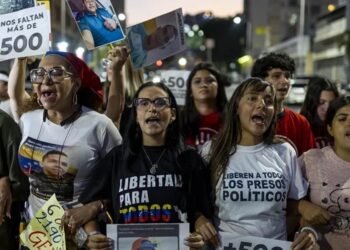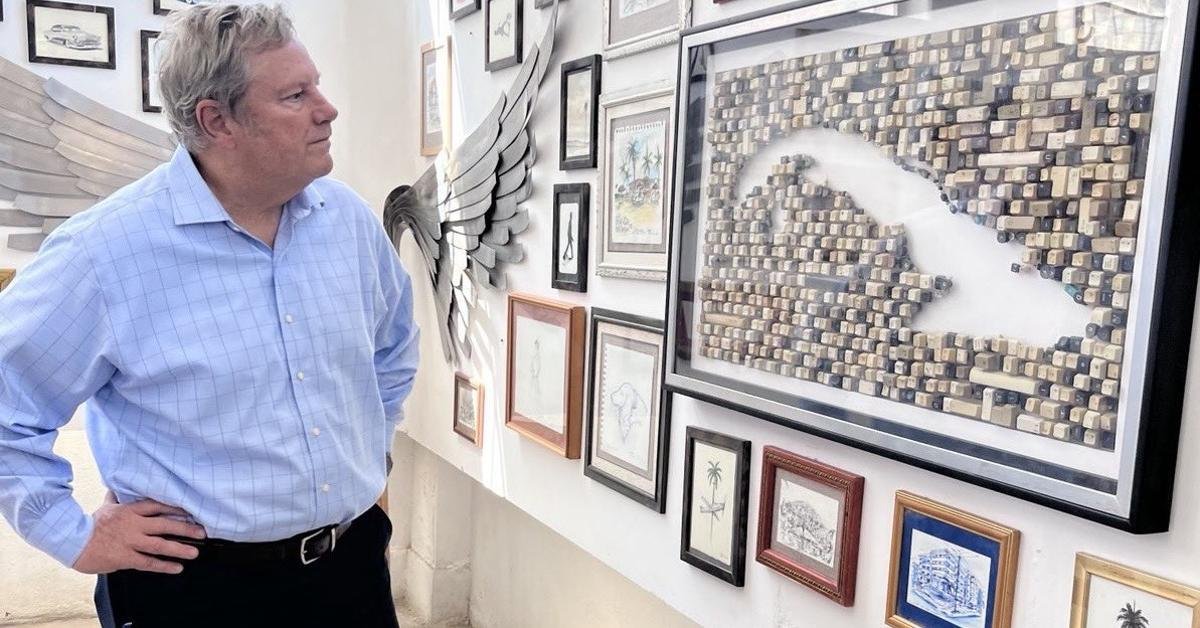
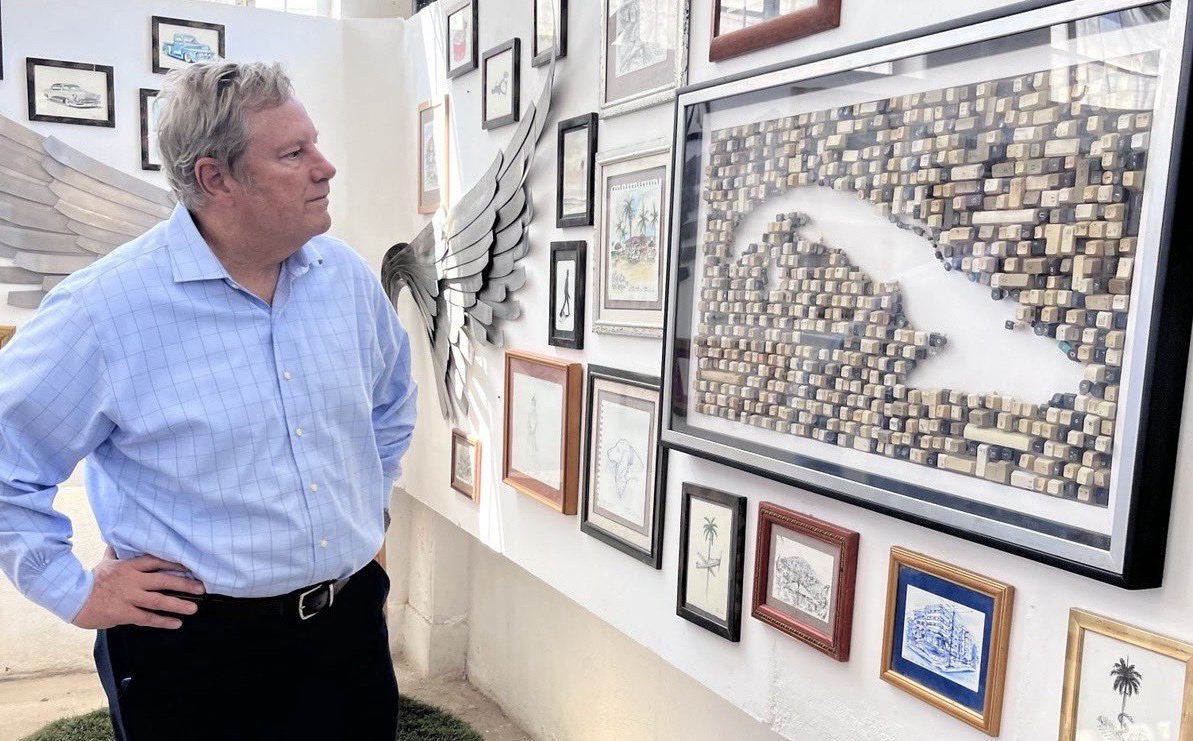
Havana/Mike Hammer, head of the US diplomatic mission in Havana, expressed concern about the detentionlast February, by Ernesto Medina, known as Ticoand Kamil Zayas, members of the El4tico project, for publishing critical content against the Government. In a video on the account of the US embassy in Havana this Wednesday, the diplomat is shown in a video call with Doris Santiesteban, Medina’s wife, to whom he points out that the activists and their families have the “support of Washington.”
During the conversation, Santiesteban points out that all the legal procedures presented on behalf of the detainees have failed. “The things that have been applied, they have all been negative. The change of precautionary measure, a complaint, they have denied everything,” he indicates to Hammer’s express question.
Regarding the physical condition of her husband and Zayas, the woman responded: “Well, they are thin, they are skinny.”
Then, the head of mission, who since he was appointed has not stopped traveling throughout the Island and visiting activists, journalists independent and ordinary Cubans in their own homes, points out that “on the part of the United States embassy, in Washington, we are very concerned about them. We are going to continue insisting that they should be released, like all political prisoners. They have done nothing.”
“We are going to continue insisting that they should be released, like all political prisoners. They have done nothing”
Before ending the conversation, Hammer wishes him “strength, encouragement,” and adds that at the diplomatic headquarters “we are always thinking about Tico and Kamil.”
“I also thank you and the United States embassy for the support and solidarity,” Santiesteban later points out.
The diplomatic headquarters accompanies the 53-second video with the message: “We will continue to insist that freedom of expression and thought be respected and that all those who are unjustly detained be released.”
Ernesto Medina and Kamil Zayas were arrested on February 6 in an operation in Holguín, which seemed typical of a raid against armed and dangerous criminals, which included the search of their home and the confiscation of work equipment, such as cell phone, laptop, camera, tripod, router and other devices. The harassment of the repressive forces against them was recorded and disseminated by the communicators themselves in their digital stories.
Almost a week later, the Holguín Provincial Prosecutor’s Office justified its decision to open criminal proceedings against the creators of the platform. He accused them of “propaganda against the constitutional order” and “instigation to commit a crime,” through publications that incited the population and members of the Armed Forces and the Ministry of the Interior to change the constitutional order and “defamed State institutions.”
He accused them of “propaganda against the constitutional order” and “instigation to commit a crime” through publications.
The call between Hammer and Santiesteban takes place two days after the artist and political prisoner Luis Manuel Otero Alcántara ended a hunger strike eight days in the Guanajay prison, Artemisa, as confirmed by his Facebook page.
The strike was a direct response to the death threats he received from agents of Department 21 of State Security during a prison inspection on March 28, and to the regime’s refusal to release him early despite legal efforts by the Cubalex advisory center.
Days before carrying it out, he had begun a 12-hour daily fast, which he planned to end on March 31. However, when the date came up, he escalated his bet.
The Cuban artist Anamely Ramos, who announced the new hunger strike at the time, pointed out that Otero Alcántara’s decision was based, in addition to the recent death threat, “because he already suspects that they will want to extend his sentence beyond five years, which ends entirely in July.”
“He already suspects that they will want to extend his sentence beyond five years, which ends entirely in July”
This Wednesday, the international organization Human Rights Watch (HRW) condemned that the release announced by the Cuban Government of 2,010 people excludes political prisoners. In a statement, the NGO said that, “although the announcement raised hopes among many families of political prisoners, neither Human Rights Watch nor other civil society groups, including Prisoners Defenders and Justice 11J, have identified political prisoners among those released.”
He stressed that Havana would exclude, among others, people convicted of “crimes against authority,” which may include “contempt,” “propaganda,” and “attack,” “which the Government has used for decades to arbitrarily persecute and prosecute opponents.”
In this regard, HRW indicated that more than 700 political prisoners remain behind bars in Cuba, “and hundreds more suffer house arrest and other restrictions.”