The lack of a specialized unit to care for adult patients with burns in Santiago is once again evident, while Health authorities continue to transfer critical cases to Santo Domingo, in a scenario that calls into question the response capacity of the health system in the Northern region.
The most recent case is that of Ángela Yaniris Marcelino, 52, who was seriously burned after the explosion of a gas cylinder in an apartment in San José de las Matas, an incident in which her minor daughter was also affected.
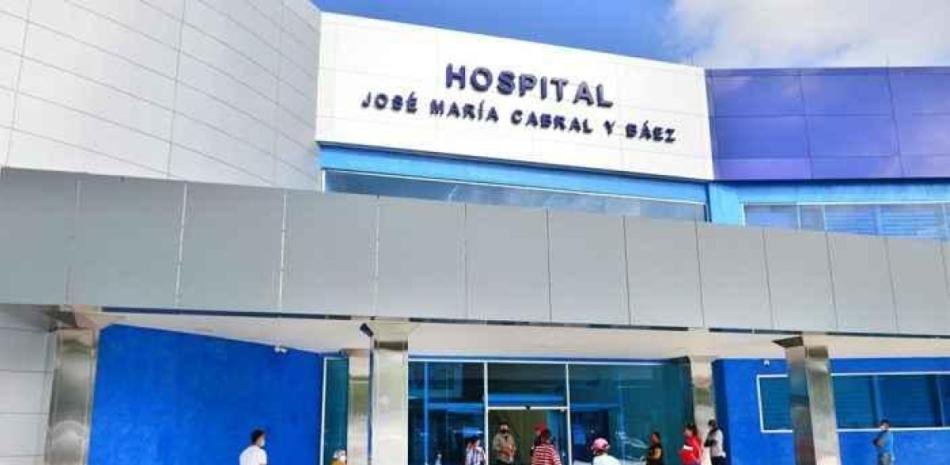
The woman was initially taken to the José María Cabral y Báez Regional University Hospital, one of the main health centers in Cibao, but due to the lack of a burn unit for adults, she had to be referred to Santo Domingo to receive specialized care. Meanwhile, the minor remains admitted to the burn unit of the Children’s Hospital of Santiago.
According to preliminary information, the explosion occurred when a light bulb was turned on in the apartment, where there was allegedly a gas leak, which caused the detonation. The family was in the country on vacation at the time of the incident.
The director of the Cabral y Báez hospital, José Luis Bautista Sosa, reported that the patient has second and third degree burns on a large part of her body, and that, although she remains stable within her condition, her condition remains delicate.
Beyond the specific case, the specialist reiterated a problem that is constantly repeated: the absence of adequate infrastructure for the management of patients with burns in Santiago.
“We have trained medical personnel, such as surgeons and anesthesiologists, but we do not have the isolation unit or the specialized operating rooms that are required for these cases,” he explained.
This limitation requires that, after receiving the first care, the most serious patients be transferred to the capital, which implies not only a logistical challenge, but also an additional risk in situations where time is decisive for survival.
According to data provided by the hospital itself, each month they receive between two and three patients with large burns, in addition to other less serious cases, which shows that these are not isolated situations, but rather a recurring need.
The persistence of these transfers exposes a structural gap in the health system, especially in one of the most populated regions of the country.
Although Santiago has one of the most important public hospitals, the lack of a burn unit for adults continues to be an outstanding debt.