The blue dollar handrail left profits of 100% during the stock market. Only in 2025, the Central Bank began to close its first summaries. These investigations reveal a circuit that moved at least US$900 million. Financiers and exchange houses were the first to be identified. The matter escalated and legal cases began to be activated all together. On December 30, an unprecedented event occurred: three judges ordered simultaneous raids. The most sensitive file points to the alleged collusion between public officials and money changers who obtained the greenback when everything was restricted and poured it into the parallel market. At least five officials and 34 companies are in the crosshairs of federal prosecutor Franco Picardi, according to documentation to which he had access THE NATION. That court case The summary has been secret for almost two months and its development intrigues both the city and politics.
It is a file that works like a two-lane highway. Both share a core: investigate who and how they accessed hundreds of thousands or millions of dollars during the time of the stocks. What differentiates them is that one of them pursues the blue dollar route and the other, as published THE NATIONto import permits known as SIRAs.
On March 20, when the case was already under secrecy, a second round of raids was carried out by the Federal Operations Division of the Federal Police. The orders called for kidnapping electronic devices, money, and documentation linked to a series of people and a total of 34 companies.
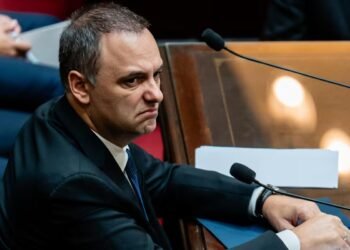
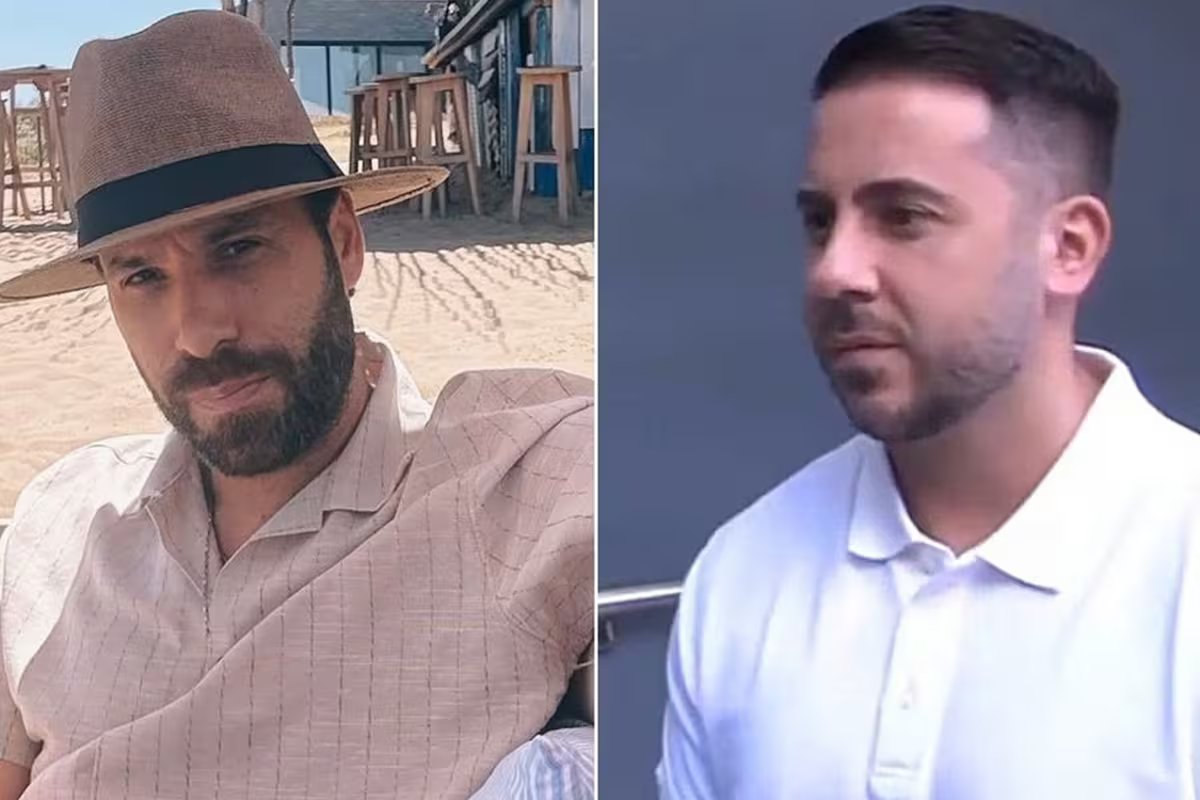
Among the people, Elías Piccirillo (detained at his home), his former partner Martín Migueles, Francisco Hauque, Matías Bocca, and five officials from the Supervision of Non-Financial Entities area of the BCRAin charge of controlling the exchange houses.
Researchers are also looking at Valeria Fabiana Fernandezan external auditor of the Central that would have signed the financial statements of several key exchange houses such as Mega Latina and Stema Cambios.
In the list of companies, there are 27 change agenciesthree companies that, according to their purpose, are dedicated to foreign trade, two banks, a credit card issuer and another that provided digital financial solutions. Some surnames are repeated among its managers: Piccirillo, Migueles, and Ariel Vallejo (the owner of Sur Finanzas).
“N y M Cambio SA” appears on the payroll of the exchange houses.acquired in January 2021 by Eduardo and Mauro Piccirillo, father and brother of the financierand Centenera, created by an air conditioning installer who lives in a humble neighborhood on the outskirts of Santa Fe and was nicknamed “the changarín del rulo.” That agency recorded foreign currency sales of $9.2 billion in the first half of 2023 alone, as revealed THE NATION.
Part of the judicial investigation follows the route of the dollars to try to identify the final beneficiaries of the circuit. On the other hand, the file also investigates who should control these operations from the public service. There are chats, videos and documents that show fluid dealings with financiers.
The Central Bank also investigated the blue operation. “The legality of these operations was suspected, following multiple and coincident indications that questioned their genuineness and warned about the implementation of a seemingly regular mechanism, but which evidently had the purpose of acquiring foreign currency at official values to later be used to supply the parallel market”says one of the summaries of the entity chaired by Santiago Bausili.
The greater the gap between the official and the blue, the greater the business was going to be. So, in that scheme there were three key elements: 1) physical dollars that came out of banks, 2) exchange houses or agencies to acquire the currency and market it, and 3) buyers or people who demanded the currencies.. The loss of traceability, for the BCRA, is one of the critical indicators of the drainage of banknotes to the parallel market. How do they detect it? When an exchange house received transfers in pesos from third parties, but did not record sales operations.
After the first raids ordered in the court case, a former BCRA official defended the management of Miguel Angel Pesce. He said that he had strengthened controls and revoked permits from 40 exchange houses and agencies, and suspended another 55. That same source, consulted in the last two weeks, remained silent.
(e)MARTIN ZABALA – XinHua
According to a survey of THE NATIONthe exchange houses investigated in the case carried out by prosecutor Picardi record sales of foreign currency equivalent to $660,127 million between 2022 and the first half of 2024according to the semiannual reports of the Central Bank. The period is not arbitrary: 91.5% of those transactions occurred in 2023. And most of the agencies then went dark.
One of those cases is that of Arg Exchangeby Elías Piccirillo. In the second half of 2023, it recorded sales of $60,804 million. That number fell to zero in the first half of 2024. “Until there is official information about the files, I have nothing to contribute about it,” Piccirillo said through one of his lawyers at the end of January. Now everyone is silent until they know what is in the file. “Let’s wait,” was the unanimous response of the defenders contacted by THE NATION.
Another of the agencies mentioned in the case is Fenus, which in the second half of 2023 was under the orbit of Vallejo’s mother. In that period it had sales of $2,858 million.
One of the emblematic cases is that of Mega Latina. That exchange house sold foreign currency for a total of $59 billion in the second half of 2023. After that peak, it had practically no movement. In one of the Central Bank’s summaries, its representatives maintained that they did not commit any illegal act.
Precisely, the largest financial summary that the BCRA resolved is about Gallo Cambios and the sale of US$474 million between May 2022 and October 2023. “It was observed that 92.71% were delivered in banknotes by Gallo Cambios to the purchasing operators, causing the banking traceability of said foreign currency to be lost,” reads the document signed by the Superintendent of Financial and Exchange Entities, Juan Curutchet.
Those responsible for Gallo Cambios pointed out in their defense that the BCRA regulations are “cradle of deficiency” and alleged that the accusation against them is ambiguous. Therefore, they stated that it was null.
The other operators referred to in the Central Bank summary and who received dollars from Gallo Cambios are exchange houses. The documentation lists 14, of which 8 are part of the list that appears in the Picardi case. “They received transfers in pesos in their bank accounts from a multiplicity of legal and/or human entities without having registered exchange operations in their name,” describes the official text. Among them are Fenus and Centenera.
The case carried out by Picardi and Judge Ariel Lijo began with some audios provided by Carlos “The Wolf” Smitha former police officer who worked for Piccirillo. The recordings were saved on a pen drive. When he declared his remorse, Smith, who in addition to security excelled at writing reports and reading cases, revealed that this device had been left in the glove compartment of his BMW X6 truck. The judge ordered the vehicle to be searched and found the famous pen drive.
In one of the conversations awarded to Romina García, a Central Bank official, you hear: “There were people upstairs who were dressed up”. Did you mean your bosses? In another audio, Hauque and Piccirillo talk about former Minister of Economy Sergio Massa. “Do you think Massa is going to help them? He washes his hands,” says the first.
Several of the defendants have already questioned the authenticity of these explosive recordings before the Federal Court. But the cause continued to advance. In addition to the audios, on the pen drive There was a 70-page document full of names. Then the telephone numbers and evidence of the raids were added. Politics is in suspense.