Matanzas/It all starts with a phone call. On the other end of the line, a formal and neutral voice, with the tone usually used by members of the Ministry of the Interior in the exercise of their duties, is identified with a common first and last name, in addition to the rank of lieutenant. He then reports that an imprisoned relative or friend has been involved in an altercation with another inmate and that, during the incident, he broke the prison television. To avoid being prosecuted for what happened, he explains, they must pay the sum of 24,000 pesos, which would be divided between the two inmates involved.
They add an element of pressure to the alleged infraction: they assure that the prisoner is in a punishment cell as a result of the incident and that, in addition, he is not eating. It might seem like the script of an American prison series, but it is the beginning of a scam that, according to the testimonies collected, is affecting families of people sanctioned or awaiting trial in different prisons in Cuba.
Inés was contacted in this way. The call left her very nervous, although something didn’t fit into the story they were telling her. She knows almost all the officers of the Southern Combine and that supposed lieutenant was not familiar to her.
Upon consulting with her son’s father, a former police officer, he made some contacts and managed to confirm that the call had been made from Camagüey. He also provided the Ministry of the Interior with the bank card to which the alleged officials intended the money to be deposited.
“Several days can go by without contacting the family. That gives the scammers time to act.”
Two days after the first communication, he received another call from the same number. This time the tone was much more urgent. They told him that this was the last opportunity and that, after some efforts, they had managed to reduce the payment to 8,000 pesos for each inmate involved. However, the money had to be delivered that same day or else both would be prosecuted.
“There I realized that they were trying to rob me, even if it was less money,” says Inés. “I decided to hang up on them and, luckily, my son called me that afternoon and denied everything. He told me that several relatives of his colleagues had also been contacted in the same way.”
For her, it is especially outrageous to see how some people take advantage of the misfortunes of others and the uncertainty in which the relatives of prisoners in Cuba live to obtain money. Asked if she considers that this situation could be avoided, she explains that the very conditions of communication between inmates and their families can facilitate this type of deception.

/ Martí News/Roxana García Pedraza
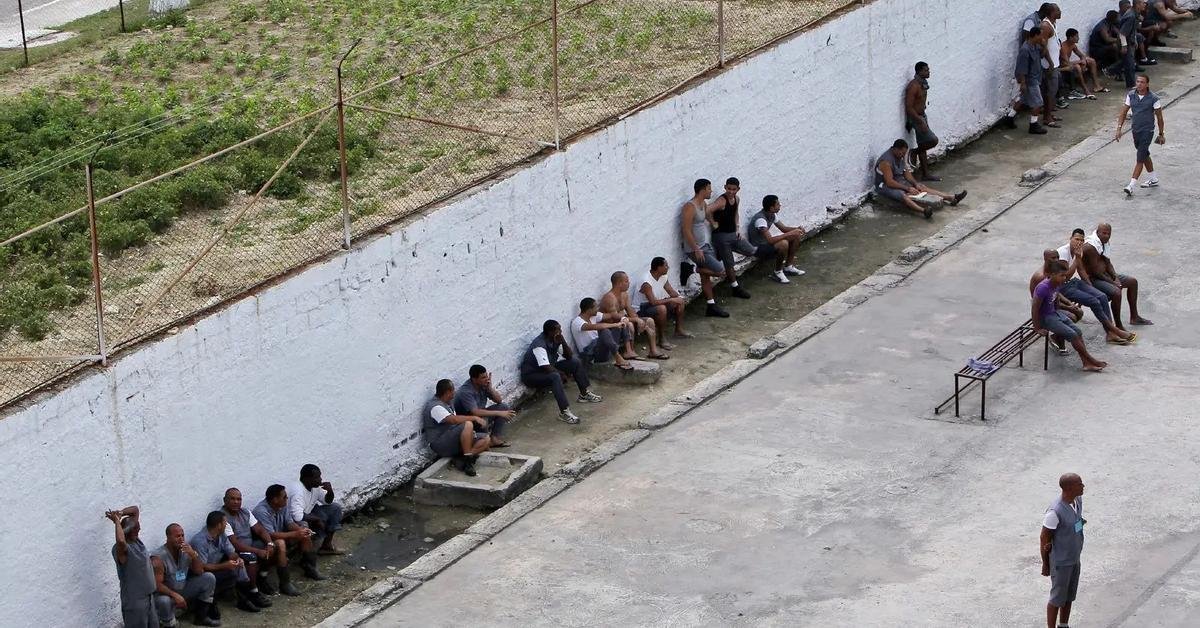
“In the Combinado del Sur, in Matanzas, unlike the Combinado del Este, in Havana, there is no public telephone,” says Inés, and explains that the prisoners must wait until the afternoon to call from their detachment’s telephone, for five minutes. “There are times when they can only do it once a week, maybe twice. And if a line is broken, they can go several days without contacting the family. That gives the scammers time to act.”
Like Inés, María was contacted by people who used the same procedure. In Violeta’s case, however, the story had a different outcome: she did deposit the money into the scammers’ account.
“I didn’t think twice,” says Violeta, whose nephew is serving a sentence for murder. “Having a sanctionable problem could result in being transferred to a prison further away from the city of Matanzas, possibly to Agüica, which is the prison with the harshest prison regime in all of Cuba. Nobody wants to have a family member there.” She understood later that she had been scammed, but there was nothing she could do now. “I just had to inform the police,” he says.
Some relatives believe that someone related to the Ministry of the Interior along with prisoners from the same penal centers are involved.
Days later, his nephew managed to communicate and told him that it was not an isolated case. As he explained, the same situation was occurring in several prisons, as other inmates from the La Cerámica prison, in Camagüey, and the Combinado del Este prison claimed that their relatives had also received similar calls.
Given the repetition of these events, family members themselves have begun to alert each other to prevent other people from falling into the trap. Some of them also believe that someone related to the Ministry of the Interior along with prisoners from the same penal centers are involved.
This type of scam highlights the vulnerability of those who have imprisoned family members. Criminals not only seem to know the communication conditions in penitentiary centers, but also use information about inmates, their possible conflicts, and the consequences that a disciplinary sanction could have to construct credible stories.
The fear of being transferred, of additional punishment, or of a family member not receiving food turns each call into a distressing situation. In this state of desperation, and with the uncertainty of what could happen to their loved ones deprived of liberty, many end up paying without verifying the veracity of what they are being told.