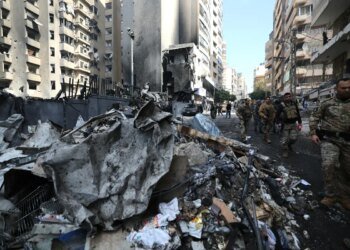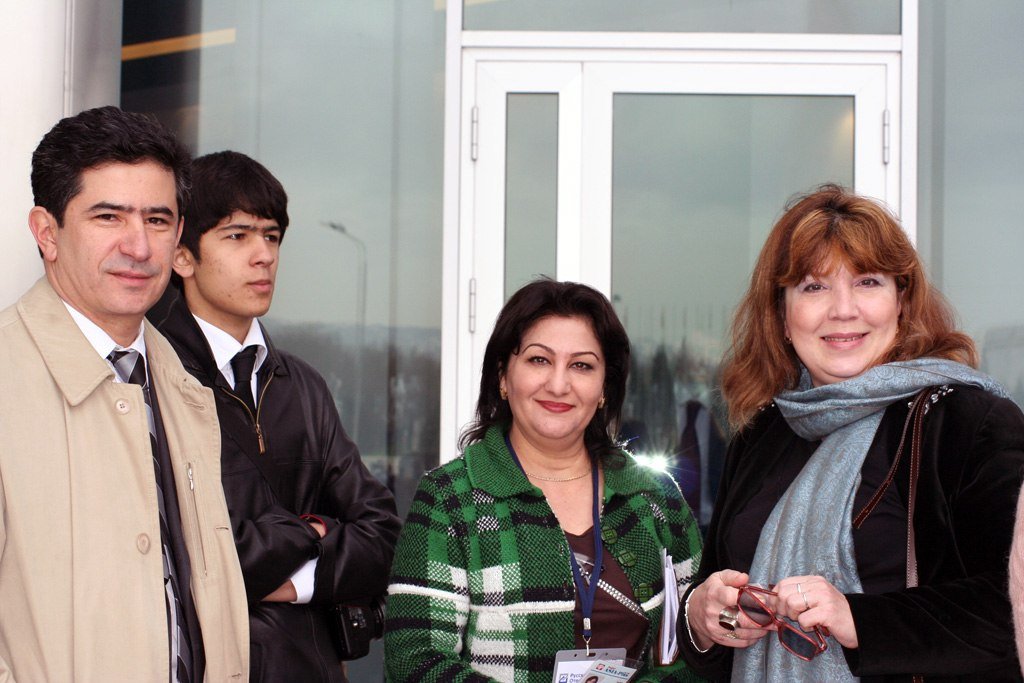
Lidia Isamova remembers the most difficult times of tireless work, when we did not yet have first-class equipment, the number of people in our team could be counted on one hand, and militants periodically visited the office. Memoirs of the ex-editor and head of the Asia-Plus information service.
By profession, Lidiya Isamova is a Russian philologist. She received her education at the Tajik State University, then completed her postgraduate studies at the Faculty of Philology. However, it turned out that she connected her life with journalism.
Today Lidia Isamova is a correspondent for RIA Novosti in Tajikistan, and before that, in addition to working at Asia-Plus, during the years of the Union she worked at a film studio, in the capital’s House of Cinema, the Central Committee of the Communist Party, and the hukumat of Dushanbe.
After leaving Asia Plus, Lydia was IWPR’s first country director in Tajikistan (2002-2005) and Associated Press correspondent in Tajikistan (2002-2004). In addition, she is a certified trainer and, as part of her job, has visited various countries around the world.
And yet Lidia Isamova still remembers the old team of “Asians” with love and great respect.
“Sometimes militants visited us”
Lydia joined Asia-Plus at the end of 1996. At that time, she had already heard about this media, and when the team needed replenishment, journalist Natalya Brooker advised the founder of Asia-Plus, Umed Babakhanov, to invite Lydia to work.
“I already had experience: in Soviet times I wrote for “Komsomolets Tajikistan”, “Evening Dushanbe”, “Communist of Tajikistan”. These were mainly film and theater reviews; in general, I worked as an art critic. But the news was new to me. I’m used to writing lengthy articles. It was hard at first, but soon I got into the rhythm,” says Lidiya Isamova.
The conditions, as she recalls, were very difficult at that time: cold offices, old computers running on the first generation of Pentium processors, and in general the times were unsafe. So, the oldest among her colleagues, Lydia, who was 39 years old at that time, was very worried about her young colleagues. After all, the majority of the employees were 20-25 years old at that time.
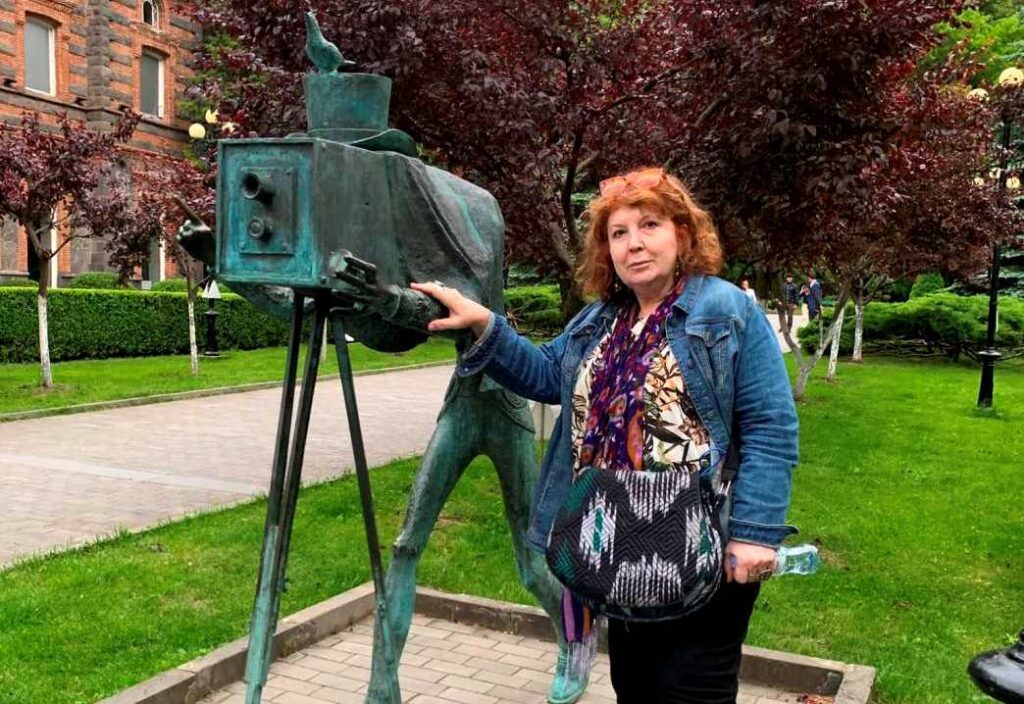
“The times were so… difficult… Sometimes militants came to us when they didn’t like something. They will come irritated, angry, clanging with machine guns. Our guys, especially the girls, came out and tried to calm them down and calm the conflicts. I have always been afraid for my girls. I was the oldest among them. These are dangerous times, at 16-17:00 all the streets were already empty, and tinted cars were driving around the city in search of adventure…” recalls Lydia Isamova.
Not all of her colleagues then lived near the office, some even lived on the other side of the city, so Lydia sent the “Asian women” home earlier and always asked to inform them as soon as they were home.
Working moments back then were also much more difficult than they are today. “Blitz” was initially released twice a week, but a little later it was decided to switch to a daily format. Even Umed Babakhanov was scared to do this, but the team was no stranger to difficulties even then. And so a new format of work was born.
Lydia herself initially edited the economic review of Tajikistan, and gradually what the editors printed formed the basis of the newspaper. Then in 2000, she became the head of the information service, while not forgetting about the newspaper. And the woman’s boss, as she herself admitted, was very demanding and tough.
“I left my bad mood and family problems in the elevator. “Come in here and work,” Lydia often told her subordinates then.
Friendly team
At the same time, despite their young age, the “Asians” of that time were just learning to use computers, and they were taught everything by Bakhodur Babakhanov, whom Lydia calls a computer genius and an excellent teacher.
She speaks with the same warmth about almost every employee: Ilkhom Nazriev, Hiromon Bakozoda, Tohir Safarov, Khurshed Niyazov, Marianna Aripova and, of course, Rosa Shaposhnik, who today is our production editor. She especially noted the translator Abdurakhim Mukhidov, who was not only a friend and adviser, but the author of many ideas used in the agency and newspaper.
Many of the former Asians, as Lydia notes, achieved great heights by going through the “Asia-Plus school.” Muborak Abduvokhidova, for example, opened a kindergarten and a private school. And Diana Bagdasarova, who worked as an advertising agent, soon became a radio presenter thanks to her beautiful voice.
“We worked very friendly and united. Although, sometimes there was not enough money for either coffee or food. But we celebrated holidays, especially birthdays, perfectly. The table was not rich, but it was always set with soul,” shares Lidiya Isamova.
Bullets over your head
Isamova worked at Asia-Plus until the fall of 2001, and during this time there were many bright and even funny events. But one of the most memorable is associated with the honored aviator of Tajikistan and ex-CEO of Somon Air Mirzo Mastongulov.
“It was 1998, I went to him for an interview, he showed me his office. And there are the remaining traces of shots. It turns out that militants came to him and shot over his head, literally half a meter away, demanding that he vacate his seat and resign from his position as director of the airline. But he managed to answer them: “Take all the planes, organize your pilots and fly, please!”
I was simply shocked by it all: this man’s masculinity, perseverance, knowledge and masculine charisma. Apparently, his inner strength also affected the militants and they left. And he told me that after this incident he didn’t even turn gray,” recalls Lydia.

They maintained friendly relations with Mirzo Mastongulov, often called each other on the phone and congratulated each other on holidays.
It is equally important to have reliable, verified sources of information, which, as Lidia Isamova notes, should be treasured. One of her sources was the Secretary of the Security Council of Tajikistan Amirkul Azimov. It was he who provided exclusive information about conflicts on the border, negotiations with the opposition and operations. It is noteworthy that Azimov had not previously shared information with other media.
“This incident taught me that it is important to protect your sources of information. I also forced my fellow journalists to double-check each information and send it to the person who provided it for verification. This is especially true for security, politics and defense topics. You can’t make a mistake here, because otherwise the reputation of the entire news agency, and not just the journalist himself, will be hit,” Isamova emphasizes.
Being “Asian”
As Lydia admitted, the “Asia-Plus” school gave her a lot that she took with her further. These are not only professional skills and the ability to manage a team, but also warm memories. And Lidia Isamova maintains friendly relations with someone to this day.
“The time was quite difficult, scary, but fun. At least we had enthusiasm, a sense of responsibility, discipline, love for the profession and mutual assistance. This is the most important thing. There is also a kind of shoulder feeling left. I still communicate with Rosa, for example, and no longer within the framework of a teacher-student relationship, but as an equal. Over the years, the age difference has disappeared,” admits Lydia.
With no less respect, she remembers her ex-boss, Umed Babakhanov, about the very school she went through. Thanks to the tasks that he set for his subordinates, which literally acted as “shock therapy,” those same feelings of duty and responsibility were born. Lidia Isamova herself already used the same method when she worked at IWPR.
“I would like to wish you to hold the banner high and with dignity. To be the first, no matter what, despite the competition, despite the fact that there are so many temptations around now: informational, media. And of course, to raise a new generation of journalists,” concluded Lidia Isamova.