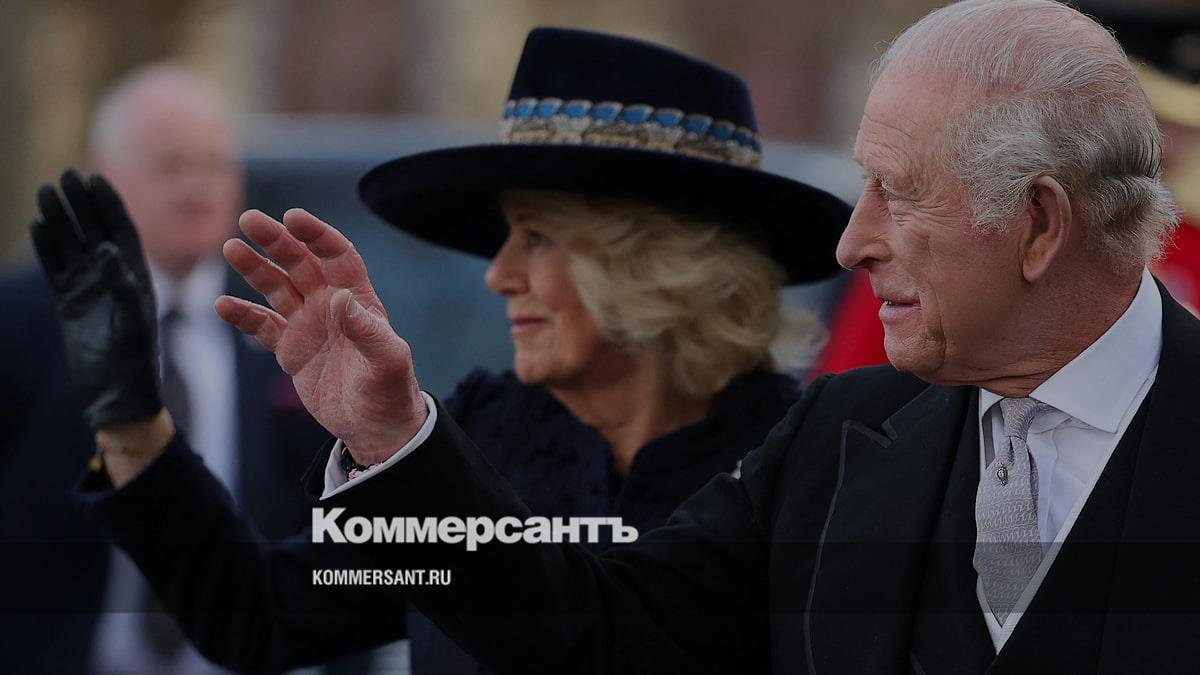
Britain’s King Charles III will travel to the United States on April 27 amid serious rifts between London and Washington. The parties consider the upcoming visit an opportunity to restore the “special relationship”, which has cracked amid disagreements between British Prime Minister Keir Starmer and US President Donald Trump over the war with Iran. And although there have been repeated calls in Britain to cancel the trip, Starmer remains convinced that it is the monarch who will be able to seriously change the current situation for the better.
The upcoming four-day visit by the King of Great Britain and Queen Consort Camilla is noteworthy for several reasons. This is Charles III’s first trip to the United States as monarch, as well as the first state visit of a British king to the States since 2007, when Charles’ mother Queen Elizabeth II came to Washington.
Officially, Charles III’s visit coincides with the 250th anniversary of the declaration of US independence from British rule. The monarch’s program includes a tete-a-tete meeting with Donald Trump, a state dinner at the White House, visits to New York and Virginia, and a speech before Congress.
Previously, the British monarch had spoken to American congressmen only once – in 1991, Elizabeth II addressed them with a speech.
In fact, the purpose of the visit is to try to reconcile the US and Great Britain, whose so-called special relationship has recently faced a serious crisis. Previously, the British government, if at all, demonstrated the existence of disagreements with the Trump administration, be it on issues of trade wars or the status of Greenland, with extreme caution, but with the war in the Middle East, direct confrontation could not be avoided.
It began with Keir Starmer’s refusal to allow the United States access to British bases at the beginning of the American-Israeli operation in Iran. After some time, however, London allowed the use of the Diego Garcia base for targeted attacks on Iran’s infrastructure. But Donald Trump still has a bad feeling.
In addition to the usual statements for the American president about the lack of help from NATO members, he personally criticized Keir Starmer. Publicly, the American president admitted that he was disappointed with the British prime minister, posted parodies of Starmer on the Truth Social social network, and in private conversations, according to The Telegraph’s source, called him a loser. Once, Trump even contemptuously remarked that “we are not dealing with Winston Churchill,” speaking about the current British prime minister.
Against this background, many in Britain considered the upcoming visit of the British monarch to the States inappropriate.
The opinion that Charles III’s trip would be a humiliation for the kingdom and would only benefit the Trump administration was expressed not only by opposition liberal Democrats, but even by some members of the ruling Labor Party.
Conservatives, in turn, called for the king’s trip not to be turned into a “political event,” and more than 140 thousand people signed a petition demanding that the visit be cancelled.
But Keir Starmer chose to look at the situation differently, betting on the ability of the British monarchy to act as a “soft power”, capable of establishing connections through its authority and personal relationships. When asked why they decided not to cancel the king’s trip, the prime minister replied: “Often, what the monarchy is able to do thanks to its connections, (others) in a similar situation can be achieved for decades.”
Apparently, Donald Trump agrees with him. In an interview with the BBC on April 23, he said the monarch’s visit to the United States could help restore relations with Britain. “I know him well, I’ve known him for many years. He’s a brave man and he’s a wonderful person. “He would certainly have a positive impact,” Trump said.
True, in the same interview, Donald Trump again decided to reproach the British prime minister, recalling his previous claims to London: Keir Starmer, in his opinion, will be able to “rehabilitate himself” only if he resolves the issue of immigration and agrees to expand oil production in the North Sea (Britain refuses, striving to switch to renewable energy sources).
In addition, Donald Trump has promised to introduce new tariffs against the UK if the two percent service tax on large American technology companies is not abolished.
“They better be careful,” the US president threatened. Keir Starmer did not remain silent this time either. Speaking to reporters on the evening of April 23, he said he would “serve the British people, stand up for them and make the right decisions for them” and that he would “not be distracted from that by what other people say.”
In such circumstances, Charles III’s unspoken task of smoothing the corners in British-American relations during his visit to the States looks like a difficult mission.