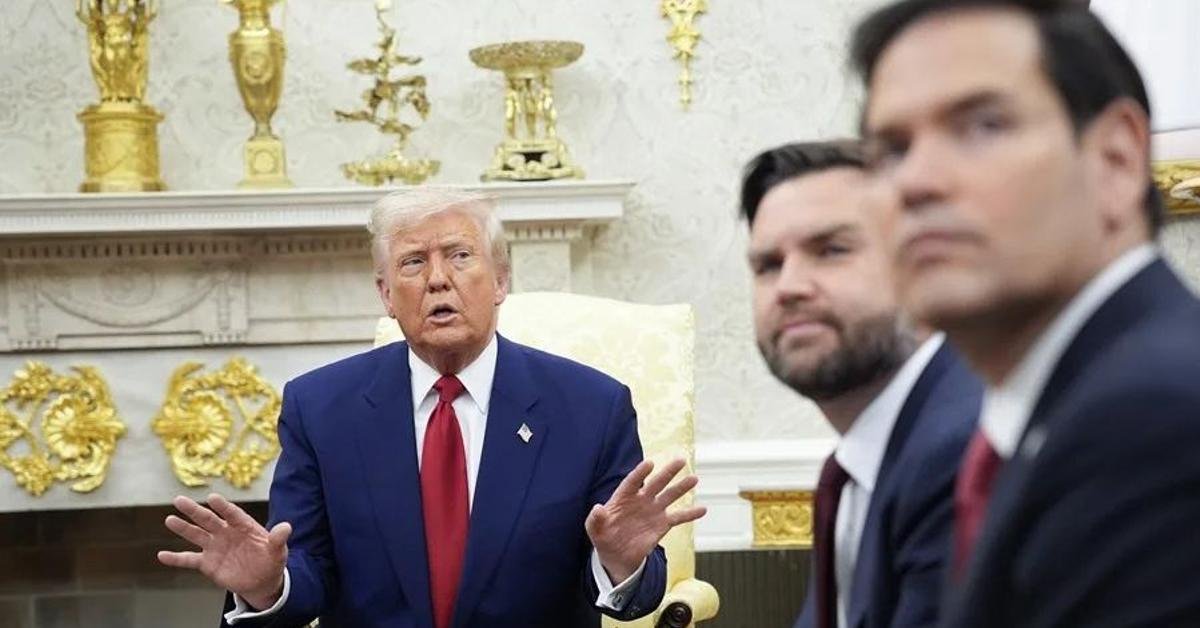
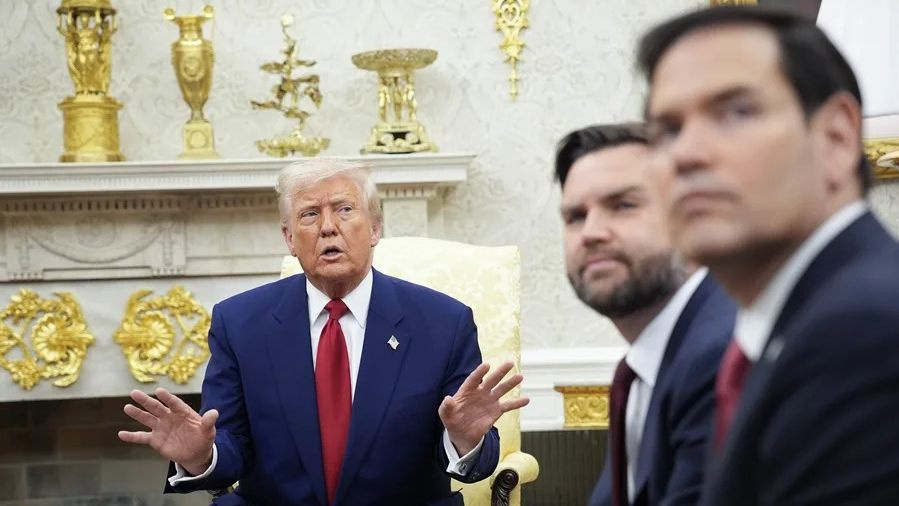
Madrid/The US Secretary of State, Marco Rubio, is thinking about resigning from his position in Donald Trump’s Government, in the face of a possible candidacy for the 2028 presidential elections. as published this Thursday the british newspaper The Independent. The information, based on Republican sources in Washington and senior British Government officials, comes just two days after the Democrats took over the Republicans control of both cameras congressional.
Rubio, who in addition to directing US diplomacy serves as National Security Advisor, would be considering leaving the Administration to compete for the Republican nomination against Vice President JD Vance. According to the newspaper, up to five members of the Cabinet could leave their positions after the electoral defeat, given the prospect that the new Congress, with a Democratic majority, will promote investigations against the Executive.
A source close to Rubio believes that the Cuban-born politician needs to distance himself from the war against Iran and attribute responsibility for a military intervention that has had a high electoral cost to Trump. However, the White House and the State Department have categorically rejected the information. The latter’s spokesperson, Dylan Johnson, called it fake news based on fabricated sources.
“We’ll see what happens. We don’t know who will show up. There are a lot of people”
Tuesday’s defeat has reopened the debate over the succession of Trump, who will not be able to run for a third term. The president himself fueled the unknowns this Wednesday, when reporters asked him if he had spoken to Vance about the 2028 elections. “We’ll see what happens. We don’t know who will run. There are a lot of people. Maybe no one will. Maybe he won’t run, I don’t know,” he responded.
The words contrast with the expectations of the vice president, who had expressed his confidence in receiving Trump’s support if he decided to compete. Although the president has repeatedly praised Vance, he has so far not publicly named a successor.
The discussion has intensified after Vance directly attributed the Republican defeat to the situation with Iran. “The reason we lost is the war,” wrote on Wednesday in X, where he questioned whether the price of losing the Senate for the next six years had been worth paying.
The vice president listed four reasons for discontent among former Republican voters: the prolongation of the conflict, the increase in the cost of life, the lack of attention to the priorities of America First and US relations with Israel. His diagnosis received public support from Donald Trump Jr., the president’s eldest son, who shared Vance’s message on X with the comment: “Every word of this is 100%.”
“I did the right thing. I would do it again”
The president, for his part, acknowledged that the war had influenced the electoral results, but defended his decision to intervene militarily. “I did the right thing. I would do it again,” he told The Wall Street Journal. Although he claimed to understand Vance’s criticism, he made clear his refusal to reconsider the intervention.
The differences over Iran also reach Rubio. According to information published by Axios November 2while Vance and special envoy Steve Witkoff defend a negotiated solution to the conflict, the Secretary of State – along with Treasury Secretary Scott Bessent and CIA Director John Ratcliffe – is in favor of maintaining economic pressure on Tehran without resuming military attacks or reaching an immediate agreement. However, his status as head of US foreign policy would complicate any attempt to completely disassociate himself from Trump’s decisions.
In September, Rubio had assured that he had no plans to run for president and that he was focused on his government responsibilities. He had also implied that he would not compete if Vance decided to run. The sources now cited by The Independent They maintain that the political scenario has changed.
Rubio’s eventual resignation would not only be a political decision, but a legal requirement to compete for the Republican candidacy.
American history offers precedents of high officials who left their positions and later reached the White House. William Howard Taft left the Secretary of War in 1908 and won the presidential election that year, with the backing of Theodore Roosevelt. Herbert Hoover, secretary of commerce during the administrations of Warren Harding and Calvin Coolidge, also left the government in 1928 and was elected president.
More recently, Hillary Clinton left Barack Obama’s Secretary of State in 2013 and won the Democratic nomination in 2016, although she ended up losing the election to Trump himself. Previous cases show that leaving a high position can facilitate access to the candidacy, but it does not guarantee success.
In any case, Rubio’s eventual resignation would not only be a political decision, but a legal requirement to compete for the Republican candidacy. The Hatch Act prohibits federal Executive officials from running for partisan elections, a restriction that affects the Secretary of State, but not the vice president, who is expressly excluded from that regulation. Vance could, therefore, begin his presidential campaign without leaving office, while Rubio would have to resign before formally launching his.
For Cuba, an eventual departure of Rubio would have special relevance. A veteran Florida political operative declared to The Independent that the secretary could delay his resignation if he considered it possible to participate from the US Government in an eventual fall of the communist regime in Havana.
Rubio has also not given any public signs that he will resign. A source from the Administration itself consulted by the British newspaper assures that it has not observed preparations for departure, while another considers that it could remain in office to project stability after the Republican defeat.