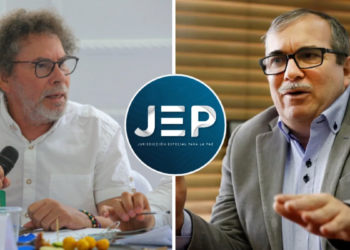
“Operation Mariscal is everything that represents violations of international humanitarian law in terms of the conduct of hostilities”says Judge Gustavo Salazar, of the JEP. Since 5:15 am, injured civilians, including minors, were already arriving at the San Javier Intermediate Unit, where the Police and Prosecutor’s Office were present. Even so, the magistrate points out, no measures were adopted to prevent further damage to civilians caught in the crossfire.
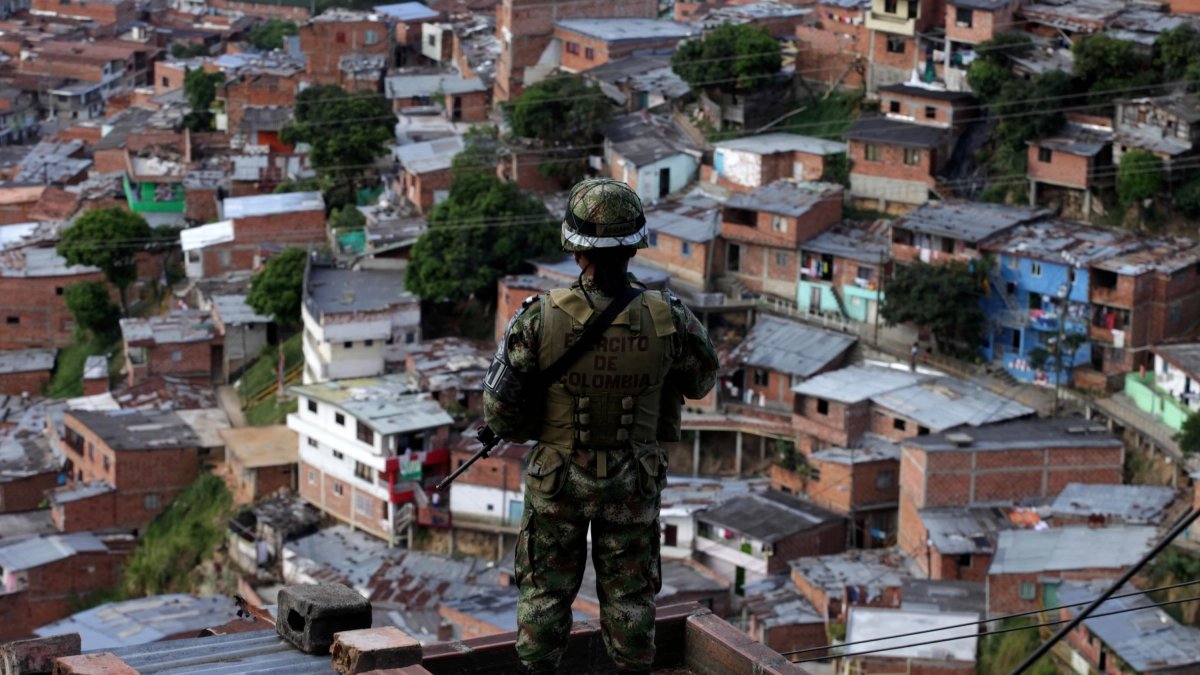
Operation Mariscal was a violent military and police raid carried out on May 21, 2002 in Commune 13 of Medellín with the objective of combating the guerrilla militias.. The operation, according to the JEP, had questionable coordination with paramilitary groups, plunging the neighborhoods into an intense crossfire that left at least 9 civilians dead, dozens injured and multiple arbitrary arrests. Given the severity of the attacks, the inhabitants staged a historic act of civil resistance by taking to the streets with sheets and white flags to demand an end to the fighting, a tragic precedent for what months later would be Operation Orion.
Operation Orion was the largest urban military incursion carried out in Medellín. Photo:PHOTO: Jaiver Nieto
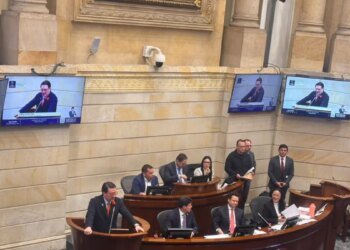
These events are part of the accusation made by the Special Jurisdiction for Peace for war crimes and crimes against humanity against the retired generals Mario Montoya and Leonardo Gallego, and six other former members of the Army and four of the Police for events that occurred in Comuna 13 and surrounding areas between 2001 and 2004.
“Operation Mariscal is everything that represents violations of international humanitarian law in terms of the conduct of hostilities, and operation Orión, which in addition to violations of international humanitarian law, is like the compendium of alliances with the paramilitaries,” Salazar said in dialogue with EL TIEMPO.
The Chamber established that the homicides, disappearances, displacements, torture, sexual violence and persecution against civilians were part of a macrocriminal pattern. Members of the Public Force and paramilitary structures participated in it, mainly the Cacique Nutibara Block (BCN). The accusations are developed in the Antioquia Subcase of Case 08.
Salazar described Operation Mariscal, carried out on May 21, as a case of “absolute non-observance” of the principles of precaution, distinction and proportionality of international humanitarian law. According to the Chamber, nine civilians were killed and 37 people were injured. Among the dead are two girls, one 5 years old and the other 11. In addition, according to Salazar, two other minors and a 58-year-old man with a disability died.
The magistrate said that the reports of spent ammunition “are enormous” and that thousands of projectiles were fired, especially by the Police and the platoon that led the main effort. Furthermore, he added that, according to the testimonies of about eleven injured people who had never testified in ordinary justice, the shots basically came from the Police.
“We have mentions of how General Gallego used in some of his instructions the expressions that everyone had to be arrested. Everything that moves there has to be intervened and that the injured had to be intercepted,” said the magistrate.
Commemoration of the years of Operation Orion Photo:Javier Nieto
Magistrate Salazar pointed out that the operation began at 3 in the morning. The first wounded civilians arrived at the San Javier Intermediate Unit around 5:10 or 5:15 and continued arriving until noon, for about seven hours. The Chamber asked Montoya, Gallego and the then mayor Luis Pérez Gutiérrez why the operation was not restricted.
“They cannot say that they did not know, because they were entering the San Javier intermediate unit, the wounded and the dead were entering,” said the magistrate.
Salazar assured that the 34 arrest warrants planned for the operation did not correspond to leaders or members of militias. According to him, some were related to domestic violence and food, and were not effective. He said that prosecutor Lilian Andrea Soto, who coordinated some of the prosecutors in the operation, recognized that it was poorly planned.
“The 34 arrest warrants that were available for Operation Mariscal, basically, did not correspond to militia leaders or members of militias. There were operations related to domestic violence, with food, they had nothing to do with the development of public order and those arrest warrants were not effective. That was a disaster,” said the magistrate.
Those appearing, according to the magistrate, insisted that Mariscal had been a “fiasco.” “It was such a fiasco that the generals did not even claim this as a success, but instead began to point out that the militias had murdered the nine people,” he explained.
Gustavo Salazar, judge of the JEP Photo:J.E.P.
Operation Orion
Operation Orion was a massive military and police incursion carried out between October 16 and 19, 2002 in Commune 13 of Medellín to expel the guerrilla militias. The operation took control of the area by deploying helicopters and more than 1,500 troops in what, according to the JEP, was a criminal alliance with the paramilitary group Cacique Nutibara Block. The intervention plunged the neighborhoods into an intense crossfire that left dozens of civilians dead, hundreds injured and a serious toll of forced disappearances, whose bodies were presumed clandestinely buried in the La Escombrera sector.
In Orión, Judge Salazar said, the Chamber documented interceptions and references from ordinary justice files on hooded guides who were paramilitaries. In these records, the term “cousins” is used to denote members of paramilitary groups and is also used by paramilitaries to refer to police and military personnel.
For his part, Judge Óscar Parra Vera cited instructions from General Gallego in which he would have used expressions such as arresting “everyone.” The Chamber charged the crime of serious deprivation of liberty due to massive, arbitrary and disproportionate arrests. According to the magistrates, the injured were prevented or limited from passing through the checkpoints.
“We have mentions of how General Gallego used in some of his instructions the expressions that everyone had to be arrested. Everything that moves there has to be intervened and that the wounded had to be intercepted, that is, some type of blockade of care for the wounded,” said Judge Vera.
Judge Óscar Parra. Photo:JEP.
Salazar stated that during Orion it was said that there were no missing persons. “Yes, there were missing people, we have names, we have complete data,” he responded. According to the Court, there were eleven: two in the initial phase, six during the operation and three afterwards. Two bodies appeared. The findings of bodies in La Escombrera, Cerro 12 Apóstoles, La Palomera, Naranjal and El Cebollal total 38 exhumations, of which 36 correspond to the period of the decision.
In addition to Montoya, the decision covers retired general José Leonardo Gallego Castrillón, then commander of the Metropolitan Police of the Aburrá Valley, who was also attributed responsibility for omission.
Magistrate Óscar Parra explained that General Montoya’s responsibility was due to improper omission: the complaints about alliances between the military and paramilitaries, his command position and the presence of up to 18 military and police facilities in less than five kilometers were some of the elements exposed to support that he could not ignore what was happening in the area.
“There was a position of guarantor derived from his institutional competence, the command role he exercised and the constitutional and conventional duties that imposed on him the obligation to protect the civilian population. In addition, he had the material capacity, not merely formal, to adopt measures, prevent the commission of certain crimes, correct irregular operational practices and sanction some of the conduct, particularly when the complaints that came to his knowledge arose,” he said.
And he added: “These are elements of responsibility for omission. We also highlight that, despite the information it had received, it failed to pursue the paramilitary groups, exercise effective control based on humanitarian law and adopt operational and disciplinary measures against some of the complaints.”
Mario Montoya was the commander of the Army’s Fourth Brigade, based in Medellín. Photo:Private file
Under the same modality, retired colonel Bernardo Gutiérrez Camelo, who directed the intelligence section of the IV Brigade, was identified; retired Colonel Jairo Bocanegra de la Torre, commander of the Pedro Nel Ospina Engineer Battalion, and retired Colonel Álvaro Botero Mejía, operational deputy commander of the Metropolitan Police.
The Chamber also accused retired colonels Juan Armando René Cadena Montenegro, Julián Ernesto Cadena Castillo and Darío Enrique Cortés Castillo as co-authors; retired captain Carlos Mauricio Rojas Martínez; to retired major Sergio Enrique Pérez García, and to sergeant Dagoberto de Jesús Bermúdez Villa. According to the investigation, they made essential contributions to the planning, execution or cover-up of the criminal plan.
For his part, retired major Jhon Jairo López Valencia was identified as co-author of the homicides committed during Operation Contrafuego and as responsible for improper omission of homicides, injuries, deprivations of liberty and forced disappearances related to operations Mariscal and Orión.
The decision came after an investigation that included 150 judicial proceedings, including 79 voluntary versions from former members of the Public Force and 71 testimonies. The Chamber also inspected 200 files related to homicides and forced disappearances, in addition to military documents, intelligence records and files from different state entities.
Justice Editorial