47% of Peruvians consider that the president Keiko Fujimori has carried out a regular management in its first 100 days of government, while 38% rate it as bad and 10% as good, according to the latest national survey of International Datum for América Multimedia, broadcast this Sunday by “Cuarto Poder”.
In the north of the country, 51% rate Fujimori’s management as fair, 36% as bad and 9% as good. In Lima and Callao, the regular evaluation reaches 50%, while 32% consider that the management is bad and 15% that it is good.
In the center, 51% rate the management as bad, compared to 37% who consider it average and 6% who evaluate it as good. In the east, 49% of those surveyed consider the government to be regular, 35% rate it as bad and 8% as good.
Finally, in the south, 45% evaluate the president’s management in her first 100 days negatively, 42% consider it average and 8% rate it as good.
Fujimori, leader of Fuerza Popular, assumed the Presidency of the Republic last July, after defeating the candidate of Together for Peru, the leftist Roberto Sánchez, in the second round of elections.
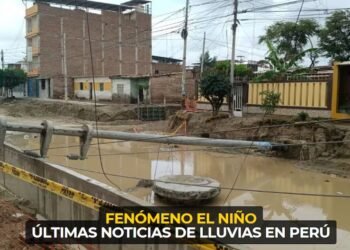
During her first 100 days in office, the president has had to face an agenda marked, among other issues, by the effects of the El Niño phenomenon and citizen insecurity.

International Datum Survey for America
Among Peruvians between 25 and 34 years old, 50% consider that Fujimori has carried out a fair management, 37% bad and 8% good.
In the 45 to 54 year old group, 44% rated it as fair, 41% as bad, and 8% as good. Among young people between 18 and 24 years old, 48% evaluate it as fair, 39% as good and 9% as bad.
51% of Peruvians consider that the president is not demonstrating capacity. 44% say yes and 5% do not know.
41% estimate that the Fujimori government will improve in the coming months. 27% estimate that it will get worse and 25% that it will remain the same.
31% point out that the president has not been successful yet. 21% consider that the main success has been to put order in the schools; 10%, prevention against the El Niño phenomenon; 6%, the unified command between the Armed Forces and the National Police; 5%, searches in prisons.
The president announced this Sunday that she will not attend the Summit of Heads of State in Spain to respond to the increase in rains in the north, due to the El Niño phenomenon.
The surveys were conducted from October 28 to 30 at the national level.
Besides
Citizens expect tangible improvements
By Urpi Torrado, CEO of Datum Internacional
The evaluation of the first 100 days of government allows us to know how citizens perceive a management, beyond the enthusiasm that usually accompanies its beginning. In the case of Keiko Fujimori, the first thing that is observed is that disapproval continues to increase. While in Lima opinions are divided, in the rest of the country the gap between approval and disapproval is greater.
However, the results show a more complex reality than that reflected by the popularity levels. Although only 10% consider that he has carried out a good government, 47% rate his management as regular. Furthermore, 51% indicate that these first 100 days have been the same or better than they expected, 58% affirm that their trust in the government remains the same or has improved and 66% believe that the situation will improve or remain the same. That is, approval decreases, but expectations and confidence have not yet deteriorated to the same extent.
Among the main successes, putting order in the schools stands out. The measures announced in this area seem to have found a favorable response among the population and are perceived as the most important achievement of these first months, followed by the prevention works against the El Niño phenomenon.
In contrast, the main errors highlighted are the election of some ministers whose performance raises questions and the decision to wait for Congress to grant powers to the Executive. Added to this is that half of Peruvians believe that Congress is placing too many obstacles on the government.
During these first 100 days, an active president has been seen, touring different regions of the country and announcing numerous measures. However, this activity has not yet translated into concrete results that the population can perceive. Advertisements may raise expectations, but citizens expect tangible improvements in their daily lives, especially in terms of citizen security.
The government’s response to the El Niño phenomenon will be one of the first major tests of its ability to anticipate problems and manage crisis situations.