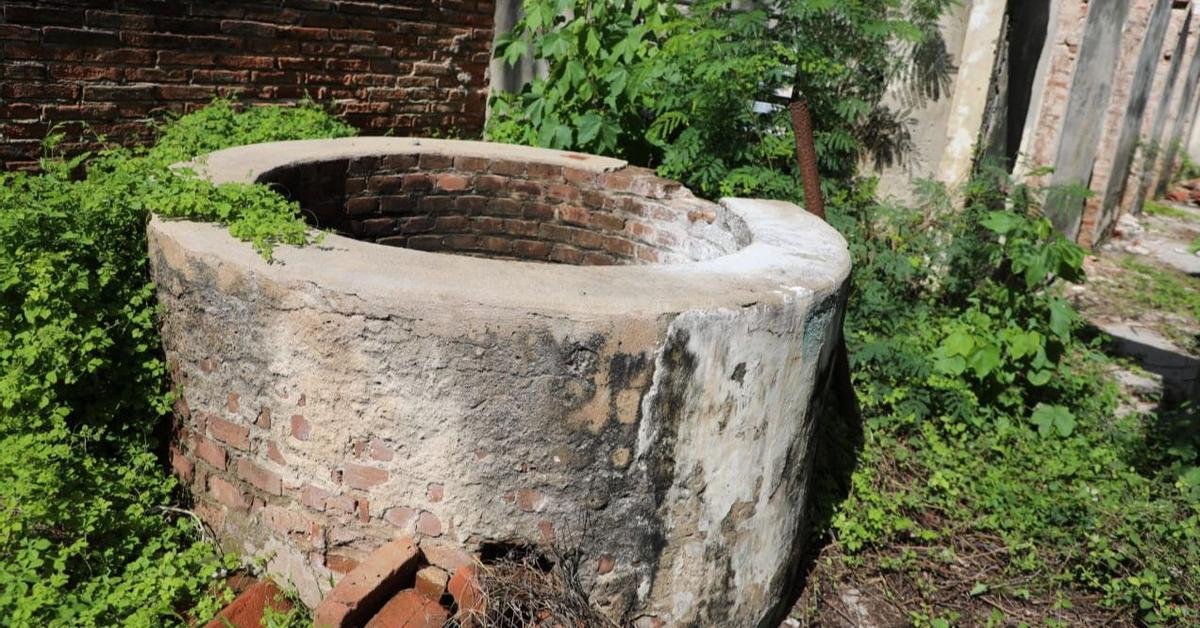
Madrid/Faced with continuous water supply problems, the residents of Las Tunas have built some 5,000 artisan wells in recent years, a number that continues to grow, according to a report from the ruling party Periódico 26. The solution is far from being cheap: “The cost per meter of depth is now over 20 thousand pesos,” warns journalist Esther de la Cruz Castillejo.
And even that outlay does not guarantee finding water. “I know a man from Las Tunas, for example, who is already going 13 meters diving and swimming,” says the reporter. At that rate, the excavation already cost them about 260,000 pesos.
“I know a man from Las Tunas, for example, who is already going 13 meters diving and swimming,” says the reporter. At that rate, the excavation already cost them about 260,000 pesos
But there is another problem: the proximity of the wells to the pits and latrines. Tania Vázquez Góngora, subdelegate of Territorial Planning and Urban Planning, remembers that the regulations require a minimum distance of 15 meters between these tanks, something difficult to guarantee in urban plots of just 150 or 200 square meters.
“Sometimes you don’t know if your neighbor has pits or latrines at the back of the house, for example, which are closer than they should be to the well you are digging; and you have the source of contamination there,” warns the official.
Lack of space even leads to digging holes in sidewalks and other public lands. Vázquez Góngora admits that inspectors can warn and fine those responsible, but they do not always manage to stop the works. “Sometimes, nothing else happens; but that’s as far as our faculties go,” he acknowledges.
In November 2023, when about 100,000 people from Las Tunas depended on tanker trucksa neighbor already described the consequences of getting supplies from a hole in the ground: “We spend weeks carrying water from a well, which, thank God, is there, but which has the neighborhood with itchy skin.”
Despite these risks, the legislation allows families to search for water under their own homes without first going through the Hydraulic Resources offices. “Authorization is not required for the extraction of groundwater for domestic purposes, or for animal supply for rational self-consumption purposes,” explains Erichel Martínez Betancourt, subdelegate of that organization, in reference to the Law 124 of Terrestrial Watersapproved in 2017.

/ Newspaper 26
In Las Tunas there are also 966 wells that are part of the “hydraulic heritage,” according to Martínez Betancourt. Of them, 124 are used to study the behavior of the water table and salinity, while another 212 are sources of underground supply. The official did not specify whether they are included in the approximately 5,000 artisan wells mentioned by the newspaper.
But not even wells built for community use are safe from abandonment. During the 2005 drought, 120 were opened in different parts of the city, most with hand pumps. Many were no longer used when supplies were restored. “We have already found around 20 full of debris. We will then have to check the quality of the water in the others that remain to be visited,” the official acknowledged to the official media.
Families have been looking for years for alternatives to a supply system that fails even when there is enough water in the dams. In November 2023, 90,000 Las Tunas residents they were without service despite the fact that the main reservoirs exceeded 75% of their capacity. Two damaged pumps had interrupted the supply.
The situation was not resolved the following year either. In November 2024, the province received new electric pumps after at least a year of problems with running water. The previous equipment had been practically without maintenance for more than two decades and, although the new ones began to be installed, the deteriorated pipes and conductors continued to prevent water from reaching the homes normally.
Added to these difficulties are recurring breakdowns. In February 2024, several exits In a newly installed conductor they once again left residents of the city of Las Tunas without service. In October 2025, almost 20,000 inhabitants of Jobabo, another municipality in Las Tunas, were more than a month without water due to a breakdown whose repair was complicated by the poor condition of the roads and the lack of fuel.
Hydraulic Resources assures that the water is “quite suitable for consumption from a physical point of view”, but the bacteriological conditions require specific analyzes
Martínez Betancourt places the Las Tunas water table at a depth of between four and five meters, depending on the season, and assures that “the water from the capital city’s aquifer,” with a low level of salinity, “is generally quite suitable for consumption from a physical point of view.” Bacteriological conditions, on the other hand, require specific analyzes.
These tests correspond to the Provincial Center of Hygiene, Epidemiology and Microbiology, but its director, Yumara Acosta García, recognized the difficulties in carrying them out. “The situation with the reagents is complex. This means that we mostly carry out physical-chemical analyzes and part of the bacteriological analysis,” he told the provincial newspaper. He assured that those who bring samples receive results, although not always immediately.
The report also points out the risk of salinity in the wells of settlements near the sea, in the municipalities of Jesús Menéndez, Puerto Padre and Manatí, as well as the lack of maintenance of existing facilities.
The construction and use of private wells has also been documented in other areas of the Island. In Sancti Spíritus, many residents queue in front of homes that They sell water extracted from the groundalthough blackouts paralyze the electric pumps. And in Alturas del Mirador, in Havana, residents reported in July that they had more than three months without supply and they had to resort to wells with water not suitable for drinking and even to the polluted Diezmero River.