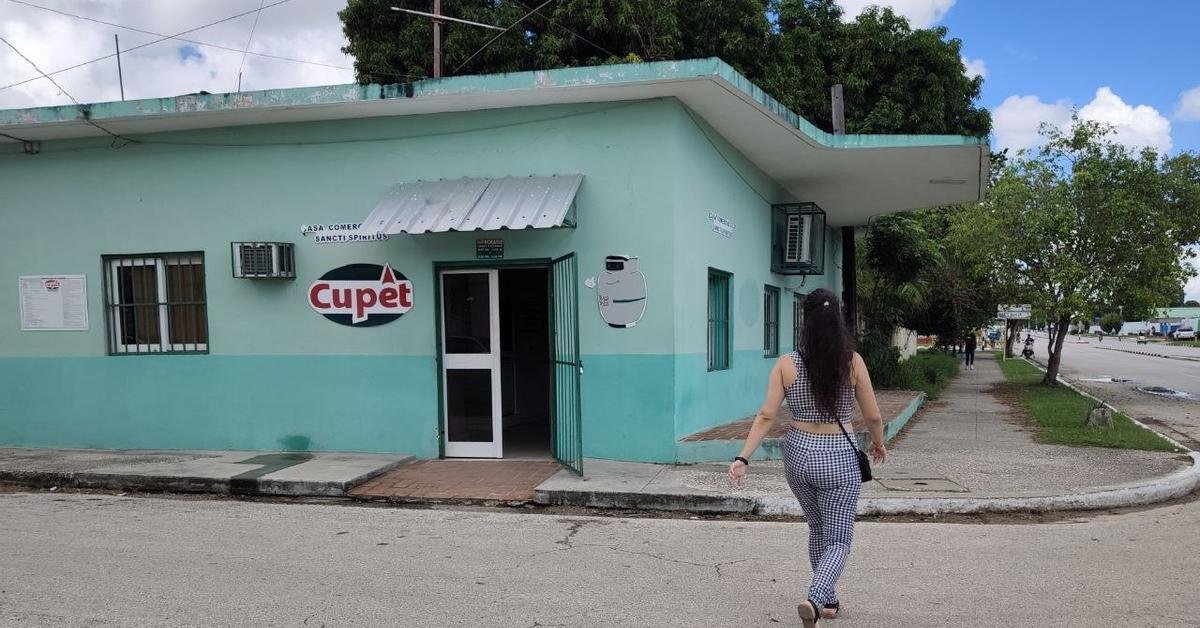
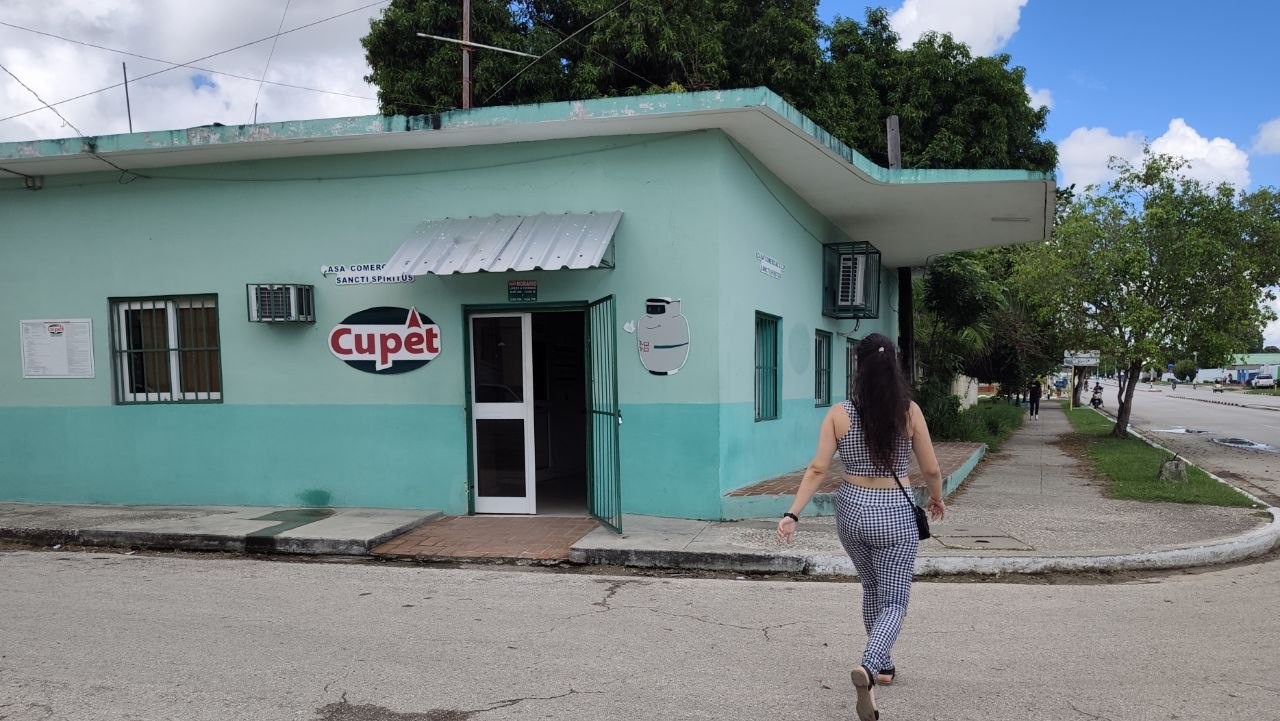
Sancti Spíritus/The state company Unión Cuba-Petróleo (Cupet) charges up to $80 for a cylinder of liquefied gas in the city of Sancti Spíritus, as confirmed 14ymedio. The new 20-pound balitas, filled and with their accessories, are offered at that price at the headquarters of the state company and at two other points in the city, one in the Colón neighborhood and the other in Los Olivos.
Payment is also required in cash. And that doesn’t make buying gas easy: interested parties must sign up for a list and wait their turn, depending on availability.
At the Cupet point on Santa Elena Street, in the same city, the modality is different. There the cylinder is offered for $55, as long as the customer delivers an empty bale to refill it. This sale is limited to health workers, banks and previously authorized work centers.
To put the cost of the product in perspective, the minimum wage in Cuba is 3,210 pesos per month, equivalent to about 3.65 dollars at the informal exchange rate – 880 pesos per dollar, recorded this day. Thus, an $80 cylinder costs almost 22 times the minimum monthly wage, while a $55 cylinder is equivalent to about 15.
The new balitas, 20 pounds, filled and with their accessories, are offered for 80 dollars at the headquarters of the state company and at two other points in the city.
Sancti Spíritus carried from October 2025 no regular state sales of liquefied gas. The interruption had triggered the clandestine market, where 10-kilogram cylinders were offered for up to 70,000 Cuban pesos, equivalent to the $80 they cost today. The resumption of Cupet sales represents an alternative for those who can pay for it, but the prices in dollars and access limitations are far from solving the population’s need.
This situation has contributed to crime in the province. This same month, two people from Sancti Spíritus were sentenced to 12 and 10 years in prison, respectively, for stealing liquefied gas cylinders from more than 20 homes. Two other people involved received sentences of two and a half years and two years in prison for participating in the resale of the stolen cylinders and illegally marketing the fuel through contracts with other consumers. The case illustrates the extent to which scarcity has turned a domestic resource into a commodity coveted by criminals.
The resumption of state gas sales, now in dollars, and the indignation it has caused among customers in Sancti Spíritus, coincide with reports of a similar situation on the Isle of Youth. According to testimonies published on social networks by residents of the special municipality, Cupet sells the cylinders there for $89.
“It is a total lack of respect for the Cuban people, it is excessive contempt and unjustifiable abuse towards us,” denounced a user on Facebook. The publication reflects the discomfort of consumers at prices that are unattainable. “It’s the feeling that you scream and no one listens; that you report and everything stays the same. And that wears you down. It’s tiring. It hurts,” wrote the Pinera.
“It is a total lack of respect for the Cuban people, it is excessive contempt and unjustifiable abuse towards us”
Given the energy crisis and the shortage of supply on the Island, the Cuban Government has presented the commercialization of liquefied gas in foreign currency as an alternative to finance fuel imports. However, the experience of recent months shows that the existence of points of sale in dollars does not guarantee a stable supply or solve the difficulties of those who do not have foreign currency.
Last June, 14ymedio verified that the bullets marketed by ProGas through the KMCero platform were sold for 24 dollars and were resold for 50, although in Havana some buyers would have paid up to 100 dollars for a single balita. The company, presented as private, used facilities and logistics channels linked to the state-owned Cupet, while numerous consumers continued without receiving their usual allowances.
Two months later, in August, ProGas points of sale They closed again after selling out stocks, according to testimonies collected by this newspaper. Customers reported that they could not get gas in pesos or foreign currency.
Last June, the US included the state-owned Cupet in your list of sanctioned entitiesa measure that blocks the company’s assets under US jurisdiction and prohibits transactions with it. Washington justified the decision by the company’s relationship with the military conglomerate Gaesa. The sanctions add obstacles to fuel import, processing and distribution operations in Cuba and aggravate the energy crisis that the country has been dragging on for years.