Madrid/“We went to Cuba to see how the fuel crisis is forcing Havana to open its economy.” This is how he titled the Wall Street Journal the information published this Wednesday by two of its reporters, who received a press visa of the kind that the Cuban regime gives out in dribs and drabs. The medium had not set foot on the Island since thaw and his presence is part of the deployment that the Government has made in recent months to bring its story to the American public.
The result of this trip is, for now, a video of just over 12 minutes in which it talks about an emerging private sector that contrasts with an impoverished population, which has no family or help from abroad. “We saw a Cuba that grows at two speeds,” they advance.
“If you don’t have money you die of hunger,” summarizes a retiree, Bárbara López Chávez, consulted for the occasion. The pensioner says she earns about 10,000 pesos between retirement and a small cleaning job, an amount that the media estimates at 13 dollars a month, although according to this Thursday’s informal rate it is more like 11.5.
“But if nothing arrives at the warehouse, mija”
When the reporter asks López Chávez how she can live like this and since when things have been so bad, she is blunt: “After Fidel died, this has gotten really bad.” It is at that moment that she is intercepted by Yindira Cerqueda, administrator of the soup kitchen to which the woman has to resort and who, taking her shoulder, reprimands her condescendingly: “Well, but the Revolution takes care of you,” she replies, adding that thanks to these services they can eat. The retiree, with a crooked expression, complains: “But nothing comes to the warehouse, darling,” she says, although she ends up agreeing that the dining room is at least a relief.
The dialogue, which takes place in the last two minutes of the video, demolishes the most optimistic part of the report, which points out the opportunity that the timid opening can represent for the private sector.
The first interviewee is Oscar Fernández, who aspired to become the largest exporter of dehydrated fruit in Cuba and has seen his plans “thwarted by US sanctions and the economic collapse of the Island.” This entrepreneur says that he began to build a factory on land rented by the Government, but the works had to be completed a year ago and now the only thing left is six months without electricity and some work that progresses in dribs and drabs.
“In this way, what was a state establishment is becoming, in fact, a private business”
Fernández is optimistic about the new measures of the Cuban economy – although he affirms that the authorities have taken them because there was no other option – and he trusts that things will go even better. “Of course it is going to change. We will be the owners of this entire company. I know it; I am certain that things are changing. Big changes, a 180-degree turn,” he says.
The reporter also approaches a formerly state-owned and now private bakery and highlights that this type of business opens up opportunities that did not exist before. “About two weeks ago, the State stopped supplying the ingredients to make the bread. People used to buy it for one peso per unit and could only take one. The administrator, instead of closing, decided to get the supplies on his own and continue selling bread, now at 50 pesos per piece, but allowing them to buy as much as they want. In this way, what was a state establishment is becoming, in fact, a private business,” he says.
The Minister of Foreign Investment, Carlos Luis Jorge Méndez, appears in the video, smiling when asked about the import of fuel from the United States. “It is ironic, yes,” he maintains. “It turns out that no one can sell fuel to Cuba and that the little fuel we have been able to receive comes from the United States. And one cannot do anything other than think that it is a way of subjecting ourselves to dependency. We find it totally unacceptable,” he defends. The official also admits that all types of goods are purchased in the neighboring country, but insists that this is not done following the usual international trade rules – requiring payment in advance and in cash, in accordance with the embargo rules.
“Until now we have operated in a kind of bubble where we competed alone against state companies, which gave us great advantages”
Also of interest is the participation of Oniel Díaz Castellanos, from the Auge consultancywho maintains that it is common for him to receive “many requests from companies in South Florida, some of them owned by Cuban-Americans, who saw a huge opportunity to supply the private sector. And that is happening on a large scale.”
Asked if the normalization of relations in the future generates uncertainty among the island’s businessmen, the specialist smiles. “The most intelligent in the private sector do have that fear. Until now we have operated in a kind of bubble where we competed alone against state companies, which gave us great advantages. We will have to compete with new actors who will arrive with more experience, greater resources and with the intention of quickly taking advantage of the country’s opportunities,” he argues.
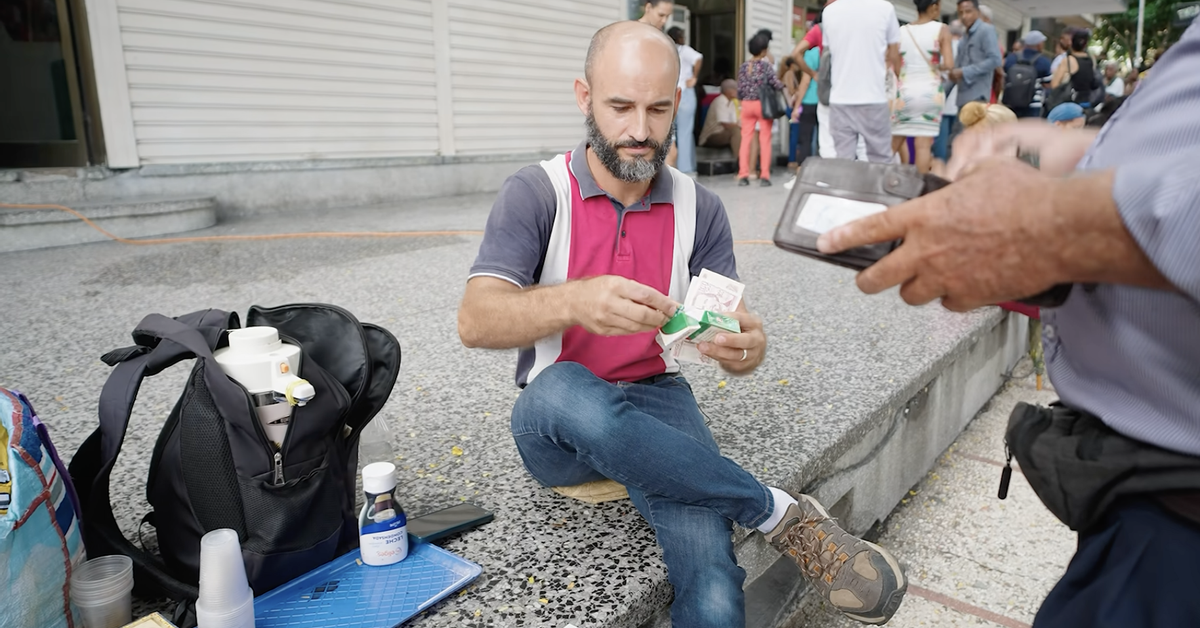
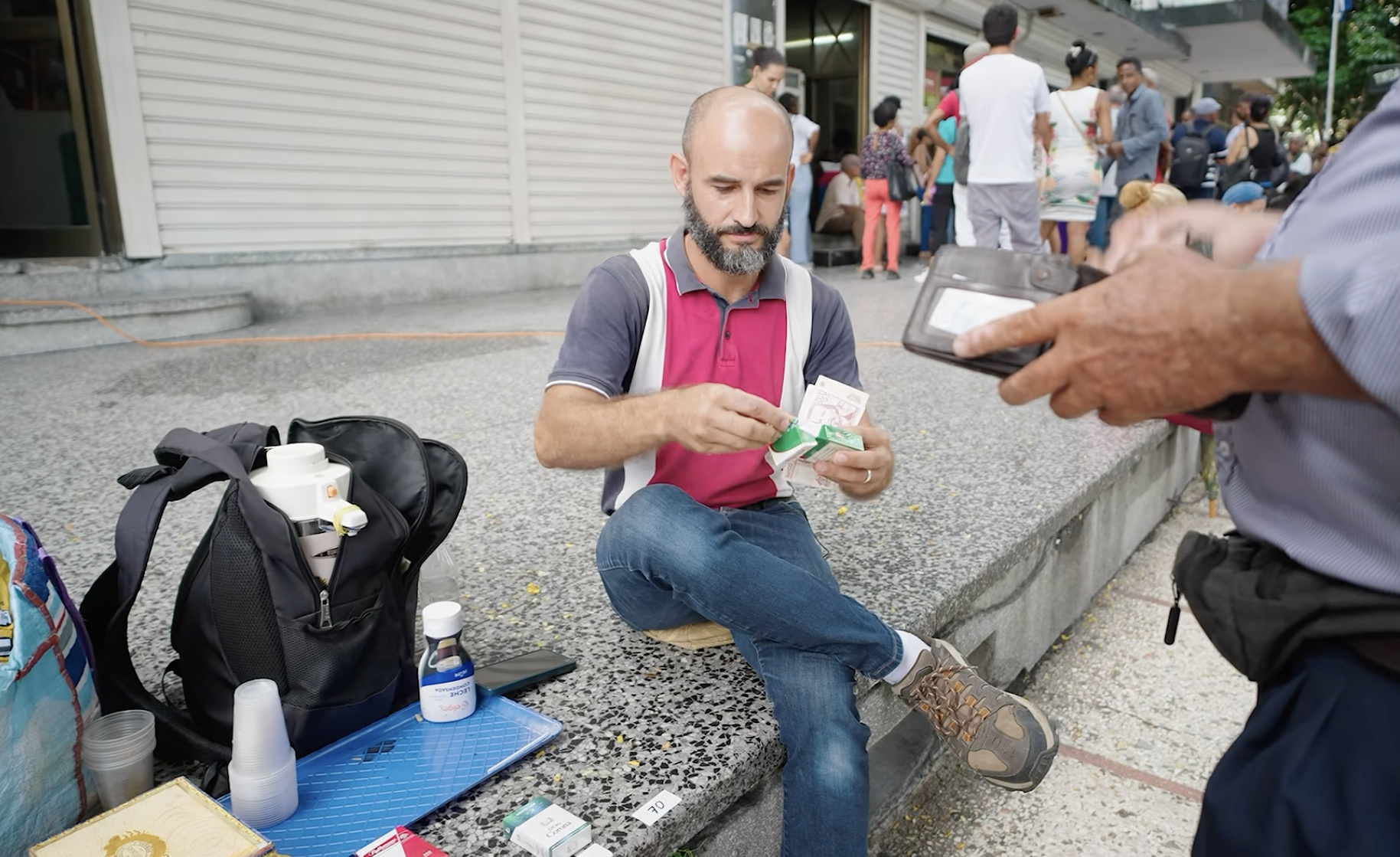
The reporter of Wall Street Journal It also approaches the informal sector. On the street, in line at a bank, he runs into Fernando Pérez Hernández, an industrial engineer who sells cigarettes and coffee to those waiting in line. On a good day he can make 10 dollars. “I am earning here in a day what I could earn in a month with the State,” he says, to the journalist’s astonishment. The seller maintains that he lacks the savings to start a MSME and regularize his work, but is surprising when asked about the current economic opening. “I fear that the essence of the project will be lost.” “What is what?” asks the reporter. “Social welfare,” he blurts out.