From Adriatic Doçi
There is a strained and paradoxical excitement in the circles of the Albanian opposition for the political changes in Serbia, where a movement (the most radical nationalist mosaic) overthrew Aleksandar Vuč from power after 14 years, who has played chess between the EU, Russia and China.
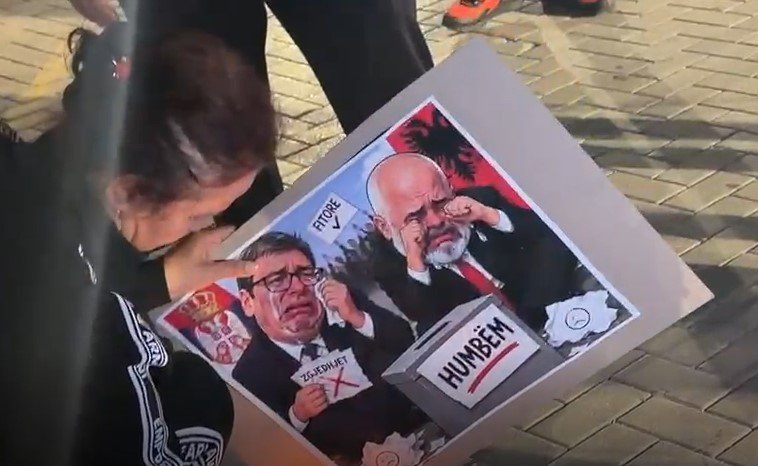
This excitement is a reflection of the illusion that Vucit is Edi Rama’s friend and that with his fall in Belgrade, Edi Rama will also fall in Tirana, imagining them as two ends of a bridge.
First, it has been said that the democrats from Nongrata were fed with lost illusions that Edi Rama’s days were numbered even when Nikola Gruevski lost power in 2016, when Milo Djukanovic lost power in 2020, when Nicolas Maduro was ousted from power in January 2026, when power changed in May 2026 in Bulgaria, when Viktor Orbán fell from power in April 2026, etc. After all these changes and upheavals in the Balkans and beyond, time showed that Edi Rama not only stayed, but also increased the number of mandates, strengthening the positions.
Second, the movement supported by students in Serbia, which consists of the most extreme nationalist elements, has a more radical approach than Vucic in relation to Kosovo. Ilija Srdanović, who headed the “Students win” list, has declared that Kosovo is part of Serbia. Not only that. The movement has warned the reconsideration of the dialogue agreements with Kosovo, approved by the Vucic government under the pressure of the US-EU. The winning movement has signaled the undoing of documents that provide for the respect of territorial integrity and the obligation that Serbia does not oppose Kosovo’s membership in international organizations.
Practically, the new government has come with the promise of turning back the relations between Kosovo and Serbia, pulling them towards the time of Milosevic. Only at this point can the joy of the opposition be justified, led by Sali Berisha, who is accused of having supplied Milosevic with oil by breaking the UN embargo, persecuted and accused the KLA as a Marxist gang with the language of Belgrade, and is accused of ordering the disappearance of Remzi Hoxha as a witness to his meeting with Milosevic in Ohrid.
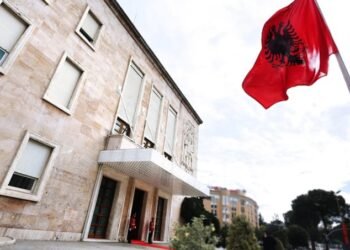
Third, the change of power in Serbia was dictated by a historic two-year movement of peaceful student protests, culminating in a political formation, forging a political representative and challenging Vučić’s 14-year rule in elections. In Tirana there was a similar movement, that of the Flamingos, but it lasted only two weeks, degrading into a bunch of charlatans who fought each other every night in front of the Prime Minister’s Office, each announcing their own imaginary government, manifesto and grotesque platform.
Instead of a political formation that could challenge Edi Rama’s power in elections, the summer movement in Tirana produced in the fall a post-Flamingo revolution, with groups of a guerilla nature, marking the biggest wave of violence and destruction since the darkness of 1997-1998.
If the Albanian opposition was caught by surprise and failed to fully align with the Flamingo movement, the PD is already organizing acts of vandalism, destruction and attacks on the police, in the name of student protest, sheltering, equipping and instructing molotov bands.
The capture and distraction of the student protest by the Democratic Party, turning it into a ghost of September 14, ’98, is likely to further strengthen the power of Edi Rama. The flow of participants as a distance from violence and condemnation of violence by the US-EU is a clear message, although a more inflammatory response is expected to be the result of the local elections.