“It is very troubling that Prime Minister Tusk and his circle, including the Ministry of Foreign Affairs, instead of using this opportunity to advance Poland’s interests, are reinforcing the impression of a divided voice. They are projecting outwardly that there is an internal struggle with the president. This weakens Poland’s interests, while close cooperation with France, especially on security matters, is in the Republic’s interest,” said Wojciech Kolarski, Secretary of State at the Chancellery of the President of Poland, commenting on the situation in Gdańsk and the meeting between the Polish prime minister and the French president.
On Monday in Gdańsk, Emmanuel Macron met with Poland’s prime minister, Donald Tusk. The meeting was connected to an “intergovernmental summit marking the Polish–French Friendship Day.” Talks covered, among other things, security, energy, and allied relations.
However, during the French president’s visit, no meeting took place with his Polish counterpart, President Karol Nawrocki.
Rafał Leśkiewicz, the president’s spokesperson, said that “Macron came to Poland at Donald Tusk’s invitation, and the Ministry of Foreign Affairs did not extend an invitation to President Karol Nawrocki.” According to Leśkiewicz, the prime minister “planned the visit in such a way that the presidents would not meet.”
Deputy Foreign Minister Marcin Bosacki stated that “the lack of a meeting was a decision of the French presidential palace.”
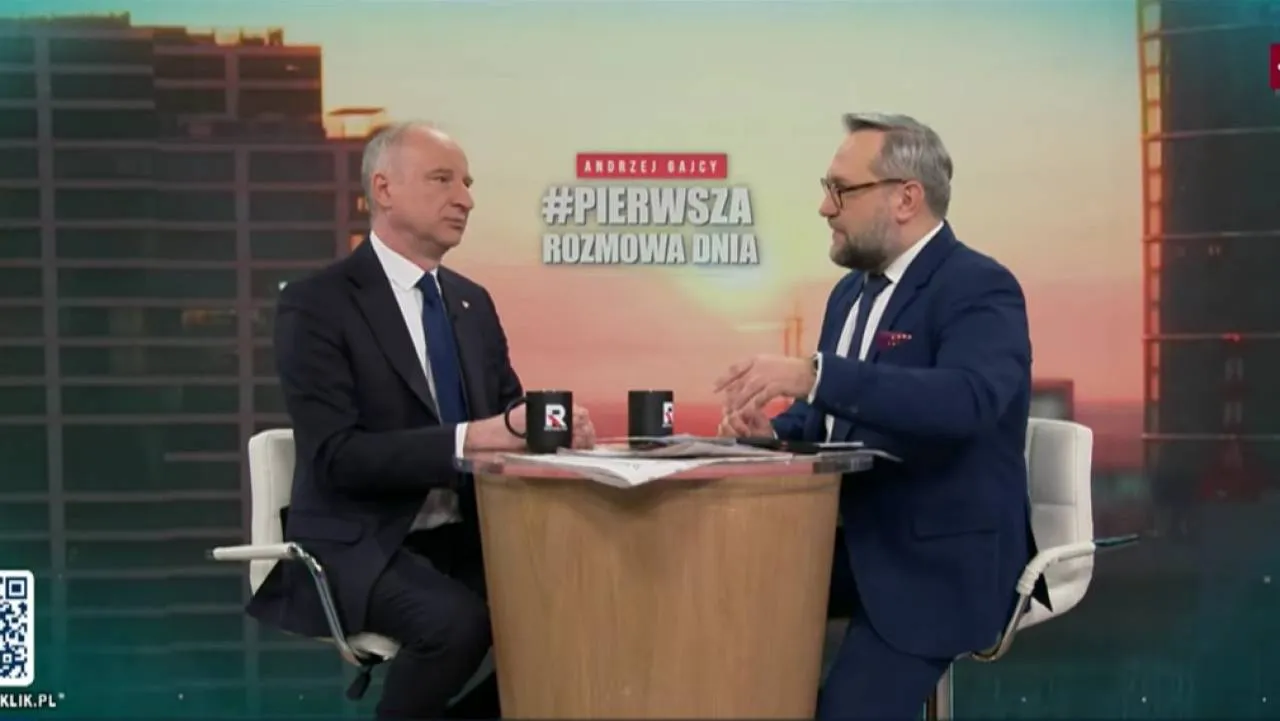
Speaking today on TV Republika, Kolarski expressed no doubt that Prime Minister Donald Tusk had blocked the possibility of a conversation between the presidents of Poland and France.
“I have no doubt that the intention behind organizing this meeting by Prime Minister Tusk, since he was the one who invited President Macron to Poland, to Gdańsk, and the entire format of the meeting (…) was to deprive the President of Poland of the opportunity to demonstrate that Poland speaks with one voice, that this voice is strong, decisive, and unified. From this perspective, it is very troubling that Prime Minister Tusk and his circle, including the Ministry of Foreign Affairs, instead of using this opportunity to advance Poland’s interests, are reinforcing the impression of a divided voice. They are projecting outwardly that there is an internal struggle with the president. This weakens Poland’s interests, while close cooperation with France, especially on security matters, is in the Republic’s interest,”
Kolarski said.
He added that the current tensions between the government and the Chancellery of the President stem from the fact that on June 1, 2025, Poles elected Karol Nawrocki.
“This remains an ongoing problem for Tusk and the entire camp he leads: there was supposed to be a different president, but this is the president we have, and they have to fight him because he is an obstacle,”
he said.
Kolarski argued that a meeting of the presidents would have reinforced the impression that “Poland speaks with one voice,” which is crucial for pursuing national interests.
“For party politics, for personal gain, Donald Tusk is using international policy, which should be a matter of unity. (…) President Nawrocki has repeatedly emphasized that we may differ on many issues, but security is a sphere where we should cooperate. Even at such a moment, after all, the French president’s visit concerned, among other things, security, the prime minister is not willing to cooperate,”
said the Secretary of State at the Chancellery of the President.