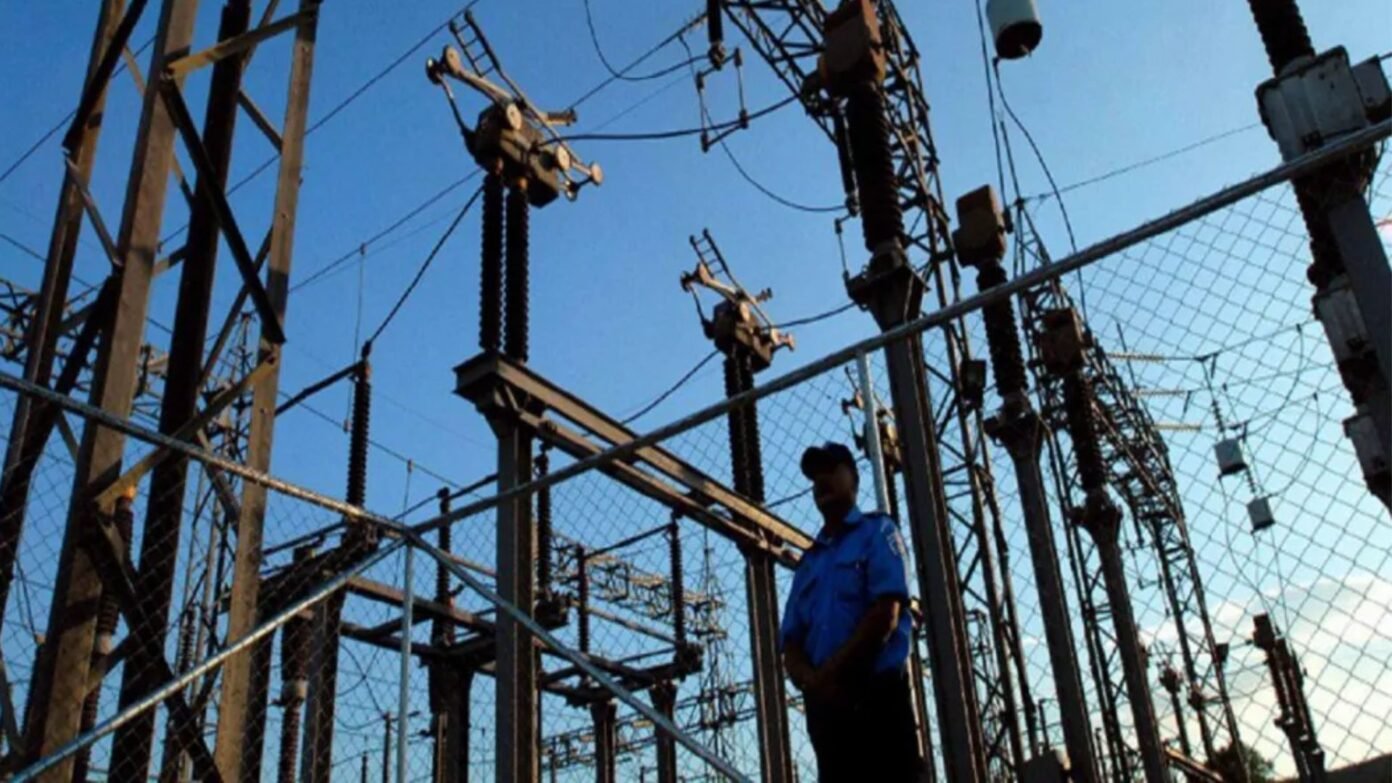
The Venezuelan electrical system, deteriorated by years of abandonment and lack of maintenance, requires a massive investment ranging between 15,000 and 40,000 million dollars in medium and long-term projects. Experts estimate that this effort will take between five and fifteen years to achieve reliable supply throughout the country.
This figure arises from the preliminary report prepared by technicians from the companies Siemens (Germany) and General Electric (United States) after their visit to Venezuela at the end of March 2026. The specialists inspected the Guri, Caruachi and Macagua hydroelectric plants, as well as the Bajo Caroní complex, in the state of Bolívar.
These facilities generate around 70-80% of the national electricity and present serious failures due to age of equipment and lack of maintenance, according to a report published by the german news agency Deutsche Welle.
First focus in Zulia
In a first stage, the work would focus on the state of Zulia, one of the regions most affected by recurring blackouts. The governor in charge of Venezuela, Delcy Rodríguez, recently announced these efforts and linked them directly to the diplomatic dialogue with the United States.
“Thanks to this diplomatic dialogue I can say that we are now in direct relationship with Siemens and General Electric to resolve the electricity problem in the state of Zulia,” Rodríguez declared.
The visit by the delegates of both companies occurred after the meeting that Rodríguez held in February with the US Secretary of Energy, Chris Wright, in Caracas. Later, in March, the US Secretary of the Interior, Doug Burgum, also met with her at the Miraflores Palace to discuss energy investment issues.
These contacts are part of the announcements of joint projects in the extraction and supply of gas, oil and electricity. Rodríguez publicly called on transnational companies to invest in the country.
Plans without dates
Siemens hopes to present a formal proposal to start the recovery plan before the end of 2026. From a technical point of view, the diagnosis confirms what Venezuelans experience daily: an unstable system that affects daily life, industrial production and oil extraction.
A reliable electricity supply is key to any economic recovery, highlights DW.
Opportunities and risks according to analysts
Luisa Ramírez, a political scientist at the University of Heidelberg, Germany, explains that the window of opportunity to stabilize the electrical infrastructure generates enormous demand.
This represents an attractive business for companies like Siemens, especially in a context of economic stagnation in Germany. Ramírez adds that business conversations during a possible transition can allow the company to develop business relationships under democratic conditions.
For her part, Diana Luna, an analyst at the Friedrich Naumann Foundation, agrees that Venezuela represents a high-risk country but also very attractive for investment.
“The best guarantee for companies is that a democratically elected Government is established,” he points out. Luna predicts that an initial investment from Siemens and General Electric could attract more direct foreign capital, because a stable electricity system boosts oil production and the development of other industries.
Political perspective
Some observers interpret Delcy Rodríguez’s announcements as a movement with political objectives. Ramírez indicates that Siemens already provided services to the Venezuelan State in previous decades, even under autocratic conditions, so this does not necessarily constitute a radical change.
However, the president in charge could use these advances to improve basic services and show restraint before the international community.
Luna adds that the ads seek to generate a favorable effect on the image of the Rodríguez government, who is in an electoral campaign stage with limited time.
“She needs to show that she is capable of making concrete improvements and at the same time advance under the accompaniment of the United States,” he says.
For its part, Siemens responded cautiously to the queries. The company indicated that it maintains contact with its team on the ground, evaluates the repercussions on its operations and prioritizes the safety of its employees while instability persists.
The reconstruction of the Venezuelan electrical system is presented as one of the most concrete steps in recent energy negotiations with international actors. Its success will depend not only on financial resources, but also on political stability and the conditions that guarantee the effective execution of the projects over the coming years.
With information from DW.com