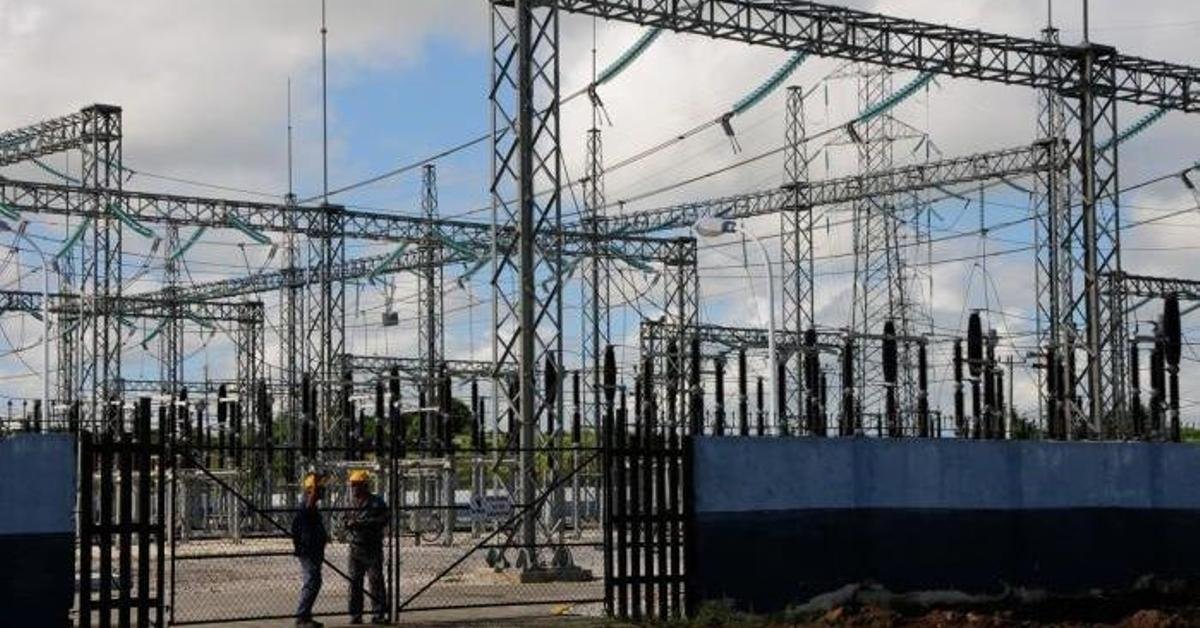
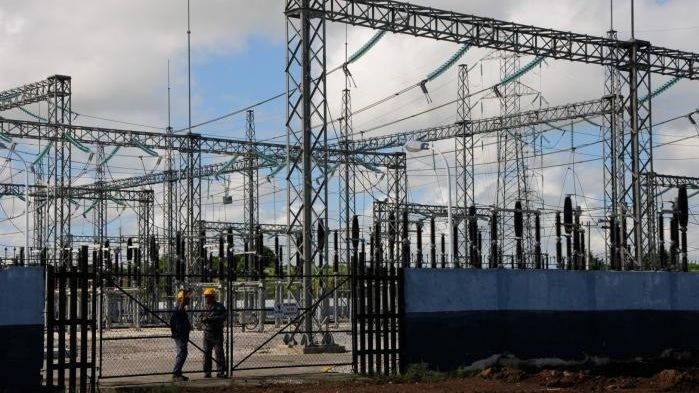
Havana/Another partial disconnection of the national electrical system (SEN) affected eastern Cuba this Saturday, after a breakdown in a high-voltage transmission line caused the separation of that region from the rest of the electrical grid. The incident occurs when the country accumulates eight total collapses in 2026 and numerous regional interruptions, in the midst of an energy crisis that keeps millions of Cubans without electricity for much of the day.
“The 220 kV Nuevitas-Tunas line trips, causing a partial disconnection of the SEN in the eastern zone,” reported the Unión Eléctrica (UNE) at 12:46 in the afternoon on their social networks. The state company did not initially specify the provinces affected, the magnitude of the loss of generation or the causes that caused that infrastructure to go out of service.
The damaged line connects the area of Nuevitas, in Camagüey, with Las Tunas and is part of the 220 kilovolt transmission network that allows electricity to be transported between different regions of the country. Its disconnection cut off the supply in the east, one of the areas most affected by blackouts and where thermoelectric plants are located that are essential for the operation of the system.
The new breakdown comes on another day of severe electrical damage. According to the official part of the UNE for this Saturday, at six in the morning the availability of generation was only 1,250 megawatts (MW), compared to a demand of 2,470 MW. At that time, 1,222 MW were already affected due to lack of generation capacity.
This Saturday’s breakdown is at least the fifth partial disconnection documented during 2026 by this newspaper
For the peak consumption hours, the state company forecast a demand of 2,900 MW, an availability of 1,250 MW and an impact of 1,680 MW. These forecasts were made before the new eastern disconnection was notified, so they do not reflect its possible consequences on supply.
The report also identified breakdowns in unit 2 of Felton and in units 3 and 6 of the Antonio Maceo plant, while three other units remained under maintenance. Added to these limitations are the difficulties of distributed generation, affected by the lack of fuel and the unavailability of equipment.
This Saturday’s breakdown is at least the fifth large partial disconnection documented during 2026 by this newspaper. The past February 4a failure in the Holguín high-tension network caused the separation of four eastern provinces –Holguín, Granma, Santiago de Cuba and Guantánamo–, where some 3.4 million people live. The incident also caused the Lidio Ramón Pérez plant, known as Felton, one of the main sources of electricity generation in that region, to shut down from the system.
Added to the partial falls are the eight total collapses that the SEN has suffered this year
One month later, the March 4the unforeseen departure of the Antonio Guiteras thermoelectric plant, in Matanzas, caused another partial disconnection that affected more than half of the national territory, from Camagüey to Pinar del Río. On that occasion, the failure was initially attributed to a leak in the boiler of the largest generating unit in Cuba. The restoration was especially complicated by a shortage of diesel fuel needed to operate distributed generation systems.
August was another particularly difficult month for the power grid. On day 1, a new disconnection It left a good part of the west and center of the country without service, with some 4.5 million inhabitants affected. The interconnection was able to recover almost seven hours later, although numerous circuits continued without electricity due to the generation deficit.
He August 27another disturbance in the transmission lines once again separated the eastern provinces from the SEN. The breakdown caused the shutdown of several thermoelectric plants, including Felton, Diez de Octubre, in Nuevitas, and Antonio Maceo, in Santiago de Cuba. The Electrical Union announced the reestablishment of the interconnection after ten at night.
Added to the partial falls are the eight total collapses that the SEN has suffered this year. The most recent occurred on September 18when the tripping of two transmission lines in the Matanzas area ended up completely disconnecting the national grid. The recovery of the interconnection took about 32 hours, although many homes remained in the dark after the authorities announced its restoration.