The World Health Organization asked Russia for more information about the death of a worker in a plague research laboratory in Siberia.
It is still unclear what exactly caused the worker to fall ill, but media reports sparked a flurry of speculation.
Russian authorities are still investigating the cause of death, but say everyone who came into contact with the lab technician tested negative for pneumonic plague.
What is pneumonic plague?
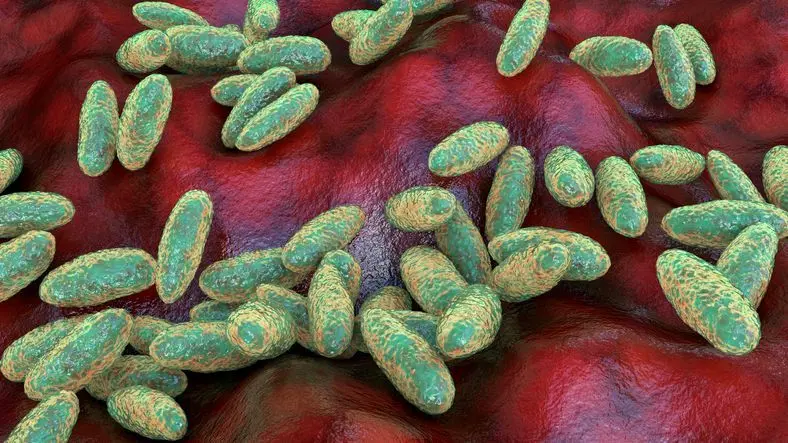
Pneumonic plague is a very serious lung infection, often described as the most virulent form of plague.
There are two other types of plague: bubonic, which affects the lymph nodes; and septicemia, which affects the blood.
Pneumonic plague can appear after an initial infection with one of these other types.
Symptoms include difficulty breathing, chest pain, and often coughing up blood.
It is considered more serious but less common than bubonic plague.
The overall number of infections with the three types of plague varies each year, but is probably between 1,000 and 3,000 cases.
Most are bubonic plague and many of them occur in central Africa, although cases also develop in other places, such as Russia, India, China and the United States.
“The plague itself has not disappeared: the bacteria that causes it, Yersinia pestispersists in animal reservoirs in many parts of the world,” said Piero Olliaro, professor of Poverty-Related Infectious Diseases at the University of Oxford.
“About 200 species of rodents can harbor the bacteria and reservoirs have been found in America, Eurasia and Africa,” he added.
“Therefore, sporadic cases continue to occur in humans, but established surveillance, infection control measures and effective antibiotic treatment are important tools to limit their impact.”

How is it spread?
Plague is an infectious disease caused by bacteria usually found in small mammals and their fleas.
It can be contracted from the bite of an infected flea or by handling an infected animal.
However, person-to-person transmission of pneumonic plague is also possible through coughing, expelling infected droplets into the air, which are then inhaled by another person.
Generally, this process requires close contact.
It can also develop if you have had septicemic plague and the infection subsequently spreads to the lungs.
The pneumonic plague is believed to be the main type of plague that caused what is known as the Black Death, the massive outbreak that killed millions of people across Europe in the 14th century.
Dr Zania Stamataki, associate professor of Viral Immunology at the University of Birmingham, said it is important for researchers to be able to study diseases such as plague.
“I understand why people find the idea of a plague in a laboratory alarming, so it’s worth explaining why this work exists,” he said.
“Plague is not a historical disease. It remains endemic in rodent populations in Africa, Asia and the Americas, and human cases occur every year, including outbreaks of the pneumonic form.”
“Diagnosis, vaccine development and monitoring of antibiotic resistance require laboratories that store and study the living organism.”
“This work is vital to prepare for possible outbreaks.”

Do you have treatment?
According to the World Health Organization, pneumonic plague has a very short incubation period, sometimes as little as 24 hours.
Experts warn that if not diagnosed and treated quickly, it is almost always fatal.
But the good news is that plague responds well to antibiotics if treatment is started early.
Dr Malick Gibani, Associate Clinical Professor of Bacterial Vaccinology at Imperial College London, says the infection is widely recognized as a serious threat to public health.
“Pneumonic plague is a very serious manifestation of the plague.”
“Some textbooks claim it has a 100% mortality rate if untreated and it is difficult to get accurate figures at present.”
“It is treatable with antibiotics, especially if it is started in time.”
“Therefore, anyone at high risk for potential exposure could be offered post-exposure prophylaxis with antibiotics and/or quarantine.”
In the Russian case, it is still unclear whether the deceased person was infected by pneumonic plague.
The Russian authorities published a statement in which they stated that the tests have not shown “any microorganisms associated with the patient’s professional activities”, so it is still not entirely clear what happened.
US President Donald Trump said Washington was looking at the case “very carefully”, while Secretary of State Marco Rubio declared there was no cause for alarm.