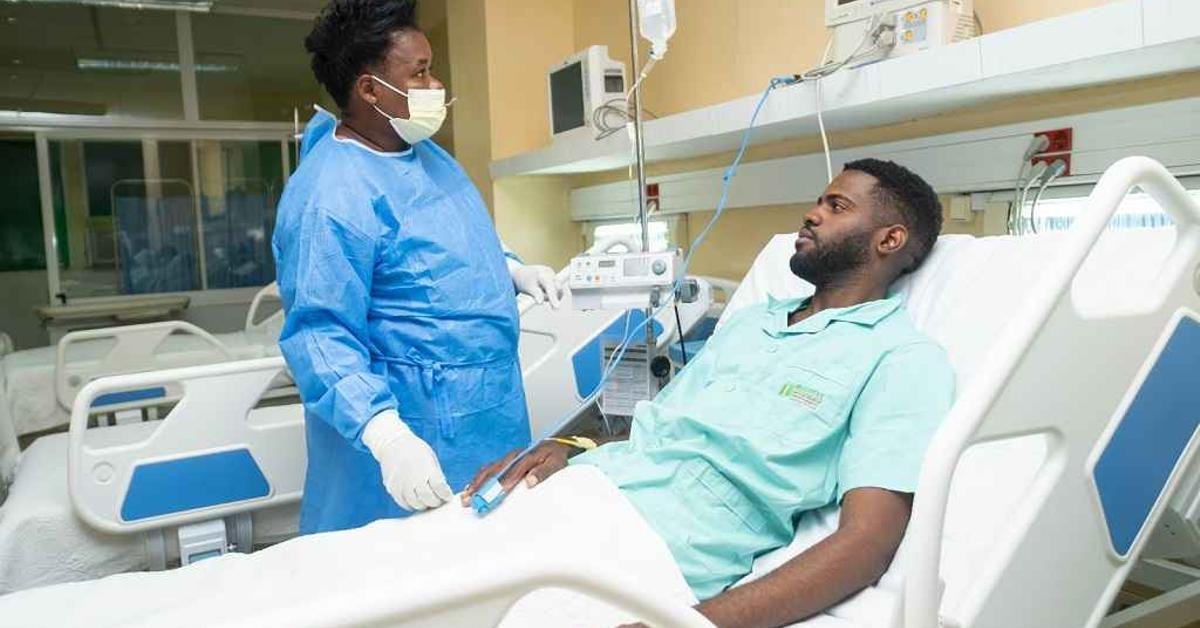
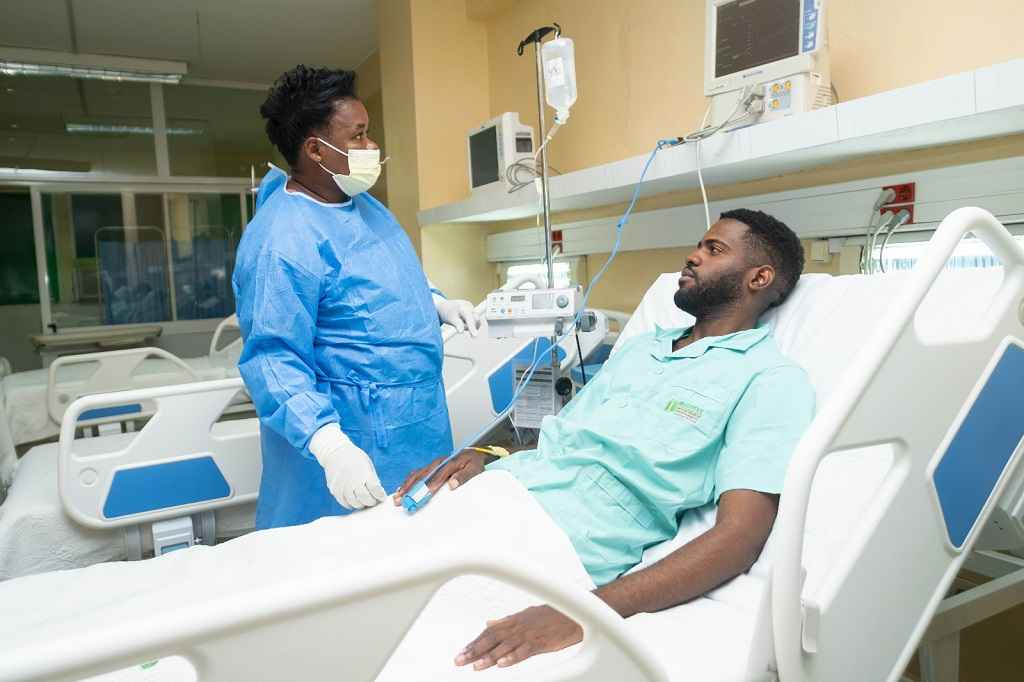
Havana/When Laura landed in Cuba in June, after three years of medical mission in Angola, she brought a mixture of relief and exhaustion. He had left behind years of work, late payments and the hope that, at least upon returning, he would be able to use the money accumulated during his stay in the African country. Months later, he summarizes the result with a dry phrase: “I haven’t managed to receive a cent.”
His case puts a face to a complaint that has been circulating among the Cuban brigades in Angola for some time. The contracts managed by the Antillean Export Corporation (Antex), linked to the Cuban military, establish the deposit in Cuba of a good part of the collaborators’ income and contemplate payment in dollars, subject to bank availability. In 2025, the unrest reached tense meetings in Luanda, where several health workers even threatened to sue the company for not being able to withdraw their savings in foreign currency on the Island.
Laura – with her name changed to avoid reprisals – has gone “more than four times” to branches of the Banco Popular de Ahorro in the city of Sancti Spíritus, where she lives. You have made a request to withdraw dollars in cash, but you are still waiting. For now, he explains, he can only have MLC (Freely Convertible Currency, for electronic use only) and a balance on a Classic card, in dollars, which is also used to buy gasoline, and even transfer funds from one to another. The problem appears when you try to convert those virtual numbers into real money.
With the stores in MLC unsupplied, the alternative ends where so many economic operations of Cubans: in the informal market
With the stores in MLC unsupplied, the alternative ends where so many economic operations of Cubans: in the informal market. “Sell the balance of the Clásica to access cash in pesos and then buy the dollars,” he explains. Each step involves a loss on the money you thought you were saving for three years.
The return was not the end of the logistical problems either. Laura assures that on her flight and on one or two subsequent returns, Antex stopped guaranteeing transportation from Havana to the provinces. “They make you sign a paper that you agree to manage transportation to your province; if not, you stay in Angola,” he says. He knows colleagues who have been in the African country for more than 20 months, waiting for capacity on a flight to return.
The goods acquired during the mission did not arrive with her either. Shipping must be self-managed and your belongings remain in Angola. Since TAAG’s direct flight in June, he says, there has been no other direct connection to bring them.
The Cuba he found after three years abroad does not resemble the one he left either. “As a guagüero would say, we are moving backwards,” he says ironically. Then he lists: “Misery, scarcity, abandonment, abuse, crime, disability.” He returned to his old position in Public Health, but it was short-lived. “I left it because the 5,000 pesos of my salary are worthless. Even selling candy makes more money.”
His assessment of Angola is equally bitter. In the three years he was there, “he did not reach one” the period in which he received the 200 dollars a month that he should have received for his expenses in the African country. Most of the time he received $100 and on two occasions he spent two months without getting paid. Complaints previously collected by 14ymedio They also described systematic delays, problems with vacations and professionals forced to extend their stays.
From Luanda, Daniel, a Cuban doctor currently working at the Hospital Materno Infantil do Camama Dr. Manuel Pedro Azancot de Menezes, confirms that little seems to have changed. “Delays have been the order of the day with the payment they must give us monthly,” he says. “We thought that with everything that has been put together with the Cuban medical missions in other countries they would treat us better, but everything remains the same“.
Daniel hopes that pressure from Washington on medical cooperation agreements will reach Angola and push its authorities towards direct contracts with health workers. Look as a reference to Calabriaalthough the Italian model has not eliminated the transfer of part of the salary to the regime either: doctors interviewed there acknowledged that they give up to half of what they receive to the State.
Laura, on the other hand, no longer expects reforms. When asked what his opinion is of Antex, he responds bluntly: “The worst thing is, they are only there to charge you.” And when faced with the possibility of recommending a mission to Angola to a colleague, his response is even more forceful: “Not even to my worst enemy.” He does not want for anyone, he says, “neither the ordeal of living there without an answer for anything nor the ordeal of bureaucracy and mistreatment from arriving at the airport until now.”