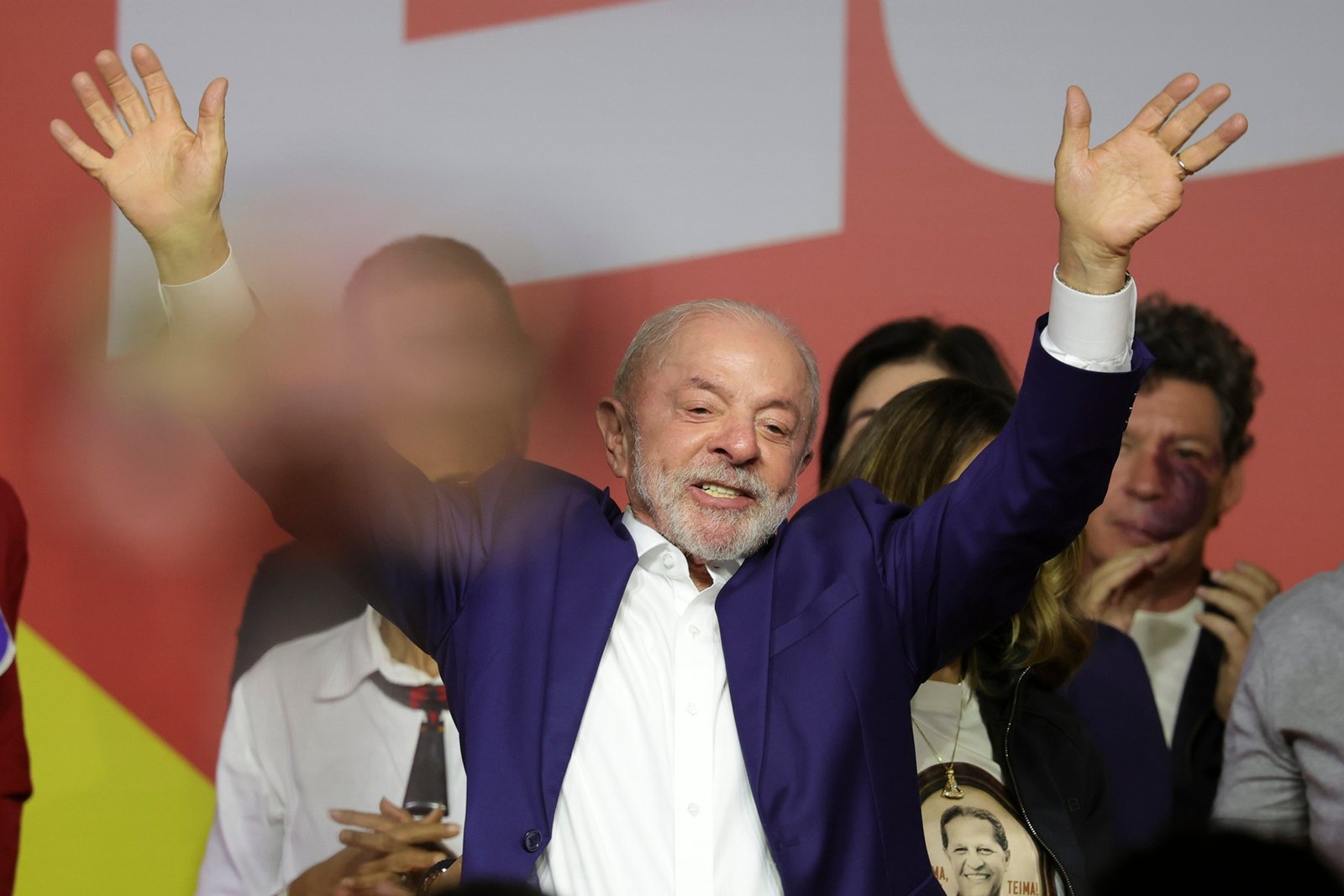
The rejection of the Workers’ Party, the erosion of the president’s leadership Luiz Inácio Lula da Silva and an economic situation that has not favored the center-left government could influence the result of the first round of the presidential elections in Brazil, in which The president was behind the senator Flávio Bolsonaro, candidate of the Liberal Party.
“There is a deep-rooted feeling in Brazilian society against the Workers’ Party and that added up, as did the erosion of Lula’s leadership in recent years. The economic situation has not helped him and that, of course, has played a role in this first electoral round,” says the political scientist. Jesus Mazzei, Former Venezuelan diplomat in Brazil.
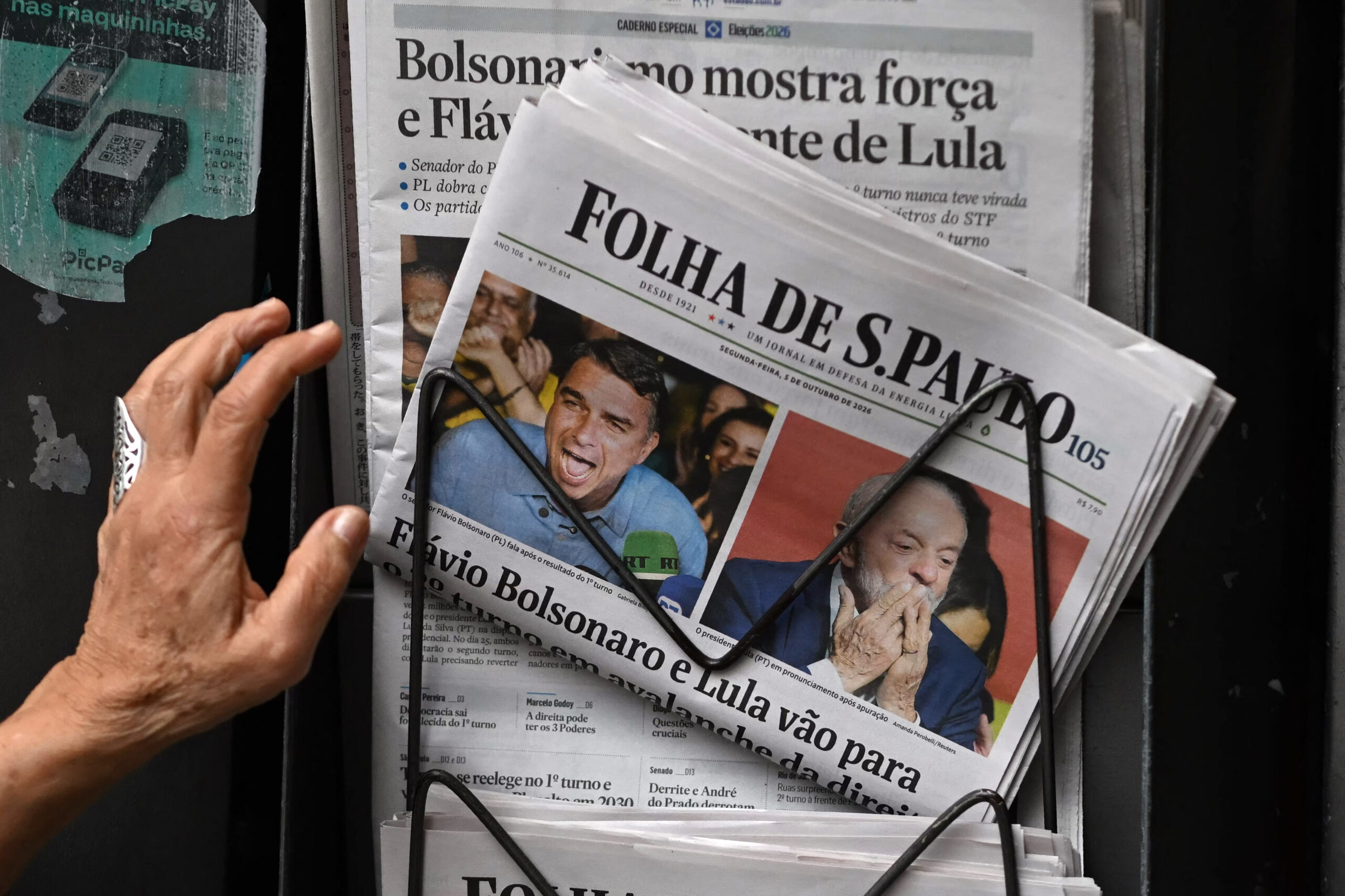
Bolsonaro and Lula will face each other on October 25 in the second round of the presidential elections, after none reached an absolute majority in Sunday’s elections.
With 99.99% of the ballot boxes counted, Bolsonaro obtained 47.03% of the valid votes, equivalent to 56.1 million votes, while Lula reached 45.16%, with 53.9 million votes, according to the Superior Electoral Tribunal. The difference, of just over 2.2 million votes, placed the son of former president Jair Bolsonaro in first place in the first round.
Mazzei says it is not surprising that Brazil goes to the second round, but Yes, the senator from Rio de Janeiro won in the first round, something that They did not anticipate the surveys. Most polling firms projected Lula’s victory at this stage by a margin of between three and four percentage points.
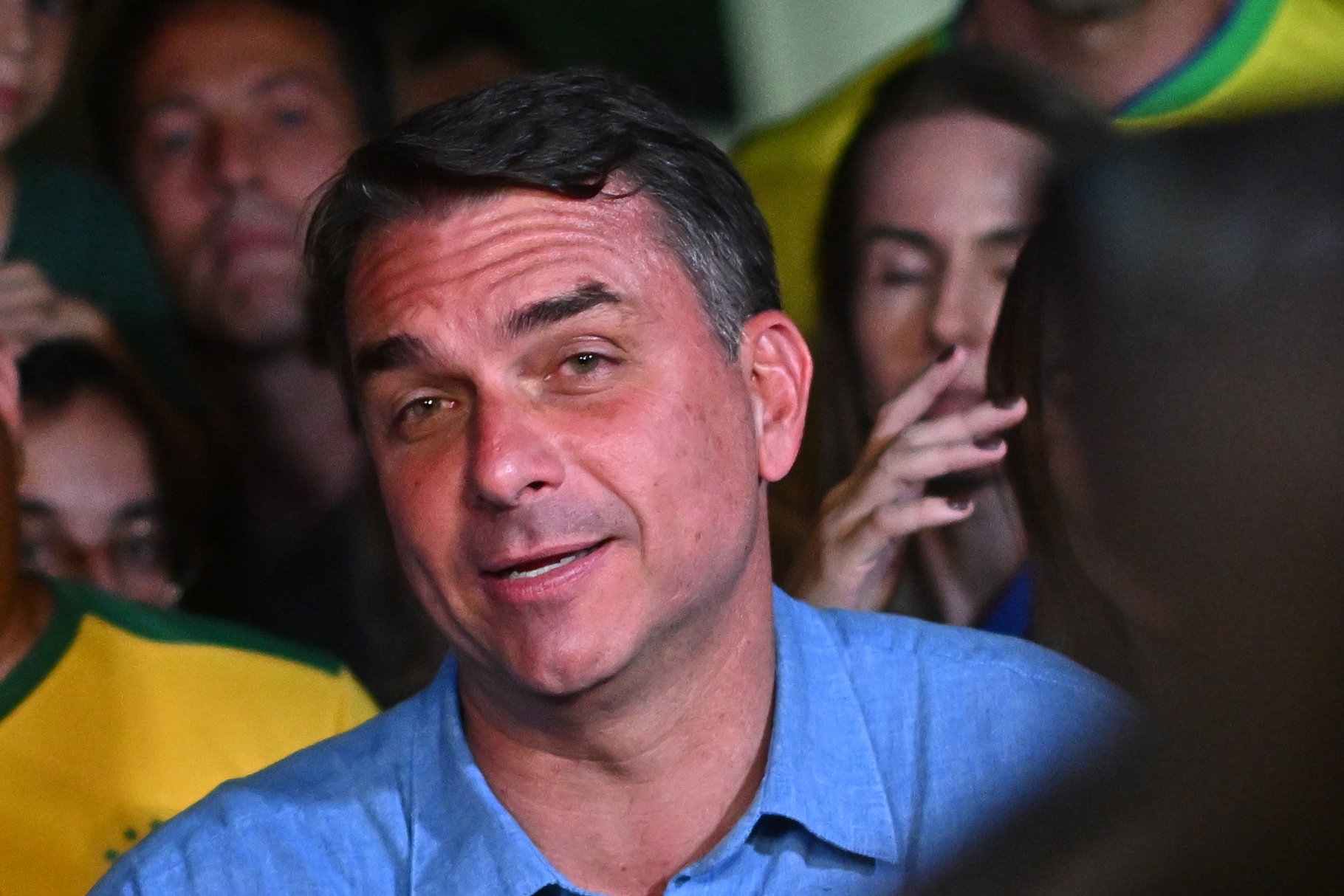
For the expert, Lula must try to consolidate a front “much broader” than the left, because otherwise it will be difficult to reverse the advantage obtained by Bolsonaro in the first round. Unlike the president, he points out, the senator did build a broad alliance between the conservative and liberal parties that supported his candidacy.
He adds that if Lula gets add the support of the candidates who were left out of the race, whose votes he estimates at 8%, could exceed the 50% necessary to win the Presidency. He also considers that one of the determining factors will be the ability of both to mobilize the undecided, which estimates between 20% and 25% of the electorate.
“Bolsonaro has favoritism at this moment. It’s exactly 20 days from today and anything is possible. I think Lula has to expand his electoral base, but now he doesn’t have it. It only has left-wing parties. It has to go far beyond the left, but the political center has been, if you can say it, swallowed up by the high polarization that existed between the two candidates,” he explains.
This polarization, he claims, benefited Bolsonaro.
The president of the PT, Edinho Silva, has already reported that Lula will meet with his campaign managers to adjust your message, analyze results by region and redistribute resourcess towards the states that may be strategic for his candidacy in the second round.
“Now it’s hand in hand. We will show Brazilians that Flávio Bolsonaro is dangerous and that he will not govern this country in a way that improves their lives. “We will try to dialogue with all the democratic forces in the country,” Silva said in statements to the press.
The Associated Press news agency reports that 3 of the 10 presidential candidates who participated in the first round have already announced that they will not support either Lula or Bolsonaro.
Bolsonaro, 45 years old, maintains close political alignment with his father, Jair Bolsonaro, and with the American president Donald Trump. Lula, 80, is seeking a fourth non-consecutive term in the Presidency, after having participated in seven elections.
“A hard blow for the PT”
If you lose in the second round, The Workers’ Party must renew its leadership and its ideological project for the third decade of the 21st century, considers Mazzei. The political scientist believes that, for reasons of age, Lula could step aside and promote change in the organization.
“Some of the most important leaders of the PT were defeated. For example, Marina Silva and Gleisi Hoffmann, who were seeking to be senators, were defeated. “That is a hard blow that the PT has to assimilate at this moment,” duck.
The Liberal Party also obtained 121 deputies in the Lower House, the largest support reached by a party in the history of Brazil, and achieved 28 of the 81 seats in the Senate in Sunday’s legislative elections. The result reinforces his representation in Congress and may condition the governability of the next president.
While the left coalition led by the Workers’ Party raised its representation in the Chamber of Deputies from 82 to 88 seats for the next period, which will begin in 2027.
“When one sees the x-ray of Bolsonaro’s electoral result, which implies, for example, the victory in Congress of the conservative groups, both in the Senate and in the Chamber of Deputies, and at the level of governors, “It is seen that it is a very important victory,” says the former diplomat.
The political scientist highlights that “it is not a strange fact” that Trump has shown sympathy for Bolsonaro, in the midst of tensions between Washington and Lula’s government.
On repeated occasions, Lula denounced alleged attempts by the Trump administration to interfere in the Brazilian elections. This year, the US government imposed tariffs on products from Brazil and took measures against Brazilian officials, including the withdrawal of the visa of the Brazilian ambassador in Washington, Maria Luiza Ribeiro Viotti.
Mazzei also identifies a trend towards the right in Latin American countries during the last two years, which coincides with the Republican’s return to the White House. However, he warns that this “conservative wave” is not homogeneous and that each country responds to particular political and historical circumstances.
“Peru and Colombia have some particularities, as do Chile and Argentina, where they are perhaps more solid. It cannot be seen as a homogeneous conservative shock wave. Each case responds to specific and different political and historical realities,” he says.
The expert emphasizes that there are also differences in the strength of the parties and in the margins with which the conservative candidates have won. He mentions as examples the narrowest victories in Colombia, with Abelardo de la Espriella, and Peru, with Keiko Fujimori, in the face of the broader triumphs of Daniel Noboa in Ecuador and Javier Milei in Argentina.
In the case of Venezuela, adds the political scientist, A victory for Flávio Bolsonaro would further boost the transition towards democracy in the coming months. “But I think that the relations between Brazil and Venezuela, if Bolsonaro wins, would be managed in a scenario of great pragmatism. That will be fundamental, because we are in a totally different international and regional context than we had in 2025,” he points out.
The next president will take office on January 5, 2027.