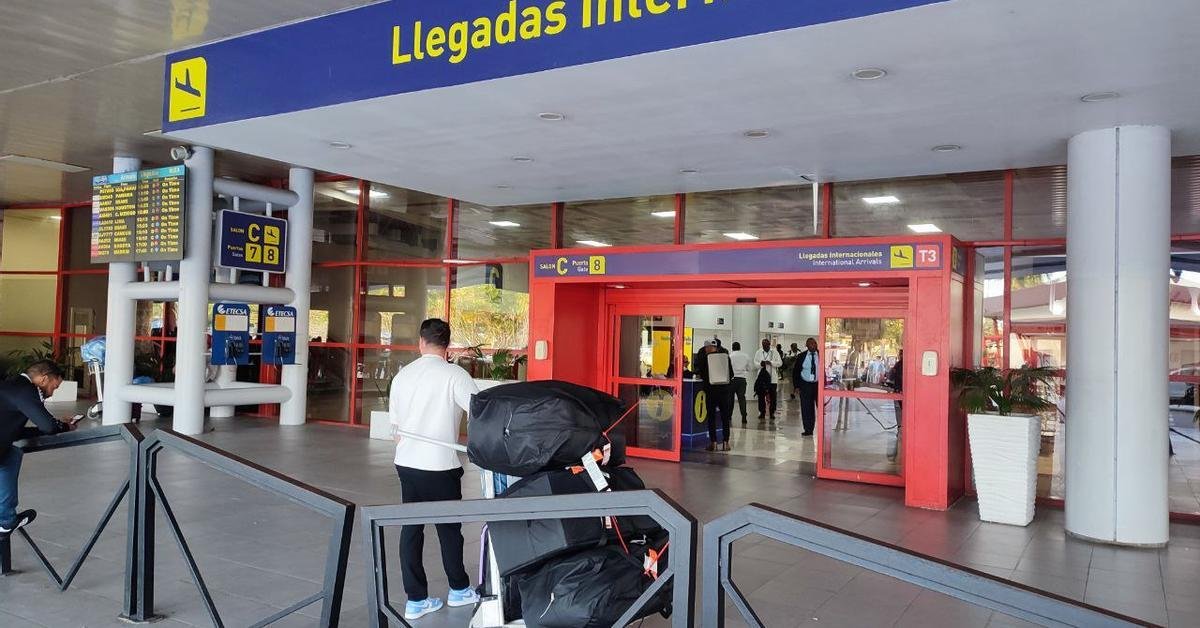
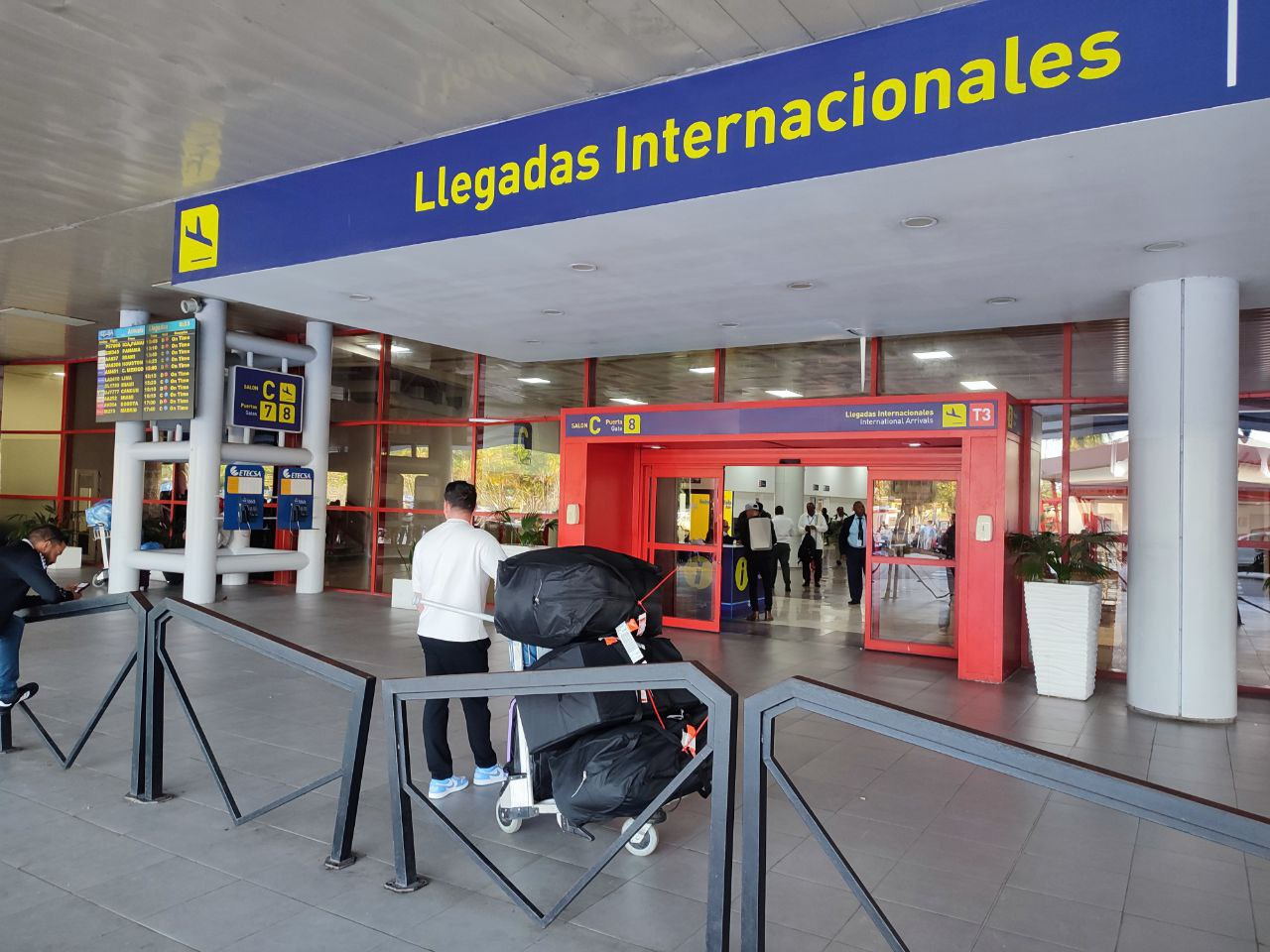
Madrid/Starting next week, when the Decree-Law published this Monday in the Official Gazettenatural persons in Cuba will be able to carry out imports on a commercial basis, both through luggage and through shipments, something prohibited until now. This is a structural change in tariff rules and form part of the 176 measures to reform the economy.
This allows travelers and package recipients to formalize before General Customs those products that, due to their quantity or “repetition”, exceed the current personal limits.
The decree replaces the automatic confiscation of certain surpluses with a second commercial clearance, with tariffs of up to 30%. Both the payment of the customs tax and the services of this office will be made obligatorily in dollars.
That is, Cuban Customs will allow travelers to legalize in dollars merchandise that exceeds established limits or that are considered commercial in nature, instead of directly proceeding to confiscate them. This, however, is maintained for certain violations, such as the case of goods whose entry is prohibited or fraudulent declarations.
Afterwards, a new office will be opened, independent of the previous one, for surplus products or products considered commercial.
When inspectors detect that part of the luggage exceeds the permitted limits or is of a commercial nature, the text provides, the merchandise that does meet the conditions of non-commercial import will be dispatched first. Afterwards, a new office will be opened, independent of the previous one, for surplus products or products considered commercial.
The rule itself gives as an example a passenger carrying 90 kilograms of women’s shoes. Customs may accept five kilograms as a non-commercial import and send the rest to a second office, in which the commercial regime and the corresponding payment in dollars will be applied.
Something similar happens with other products. In the case of merchandise valued by declaration, invoice or reference values, the regulations establish, in general, that up to five units of the same type may be admitted when their value does not exceed 50 dollars, and up to three when it exceeds that amount; The surplus can be transferred to the new commercial office. The law itself uses as an example five toilet bowls valued at $55 each: three would enter through the ordinary regime and the rest would go to the commercial office.
For commercial imports made by travelers, a progressive rate is established: up to $2,000, 15%; more than 2,000 and up to 4,000 dollars, 20%, more than 4,000 and up to 6,000 dollars, 25%, and more than 6,000 dollars, 30%. For shipments, a 30% tariff is applied directly. The calculation is made on the import value.
If the person does not agree to pay in dollars or reshipment “in the established terms,” the decree indicates, “Customs applies the corresponding administrative measure.”
The rule allows the use of national or international cards denominated in dollars and cash is limited to airports and entities authorized to do so. It also contemplates what happens if the passenger does not want to pay these fees in dollars.
Once the ordinary clearance is completed, Customs can begin the second clearance as long as the holder agrees. If he expresses his disagreement with payment in foreign currency, he can request the “reshipment” of the goods, “in accordance with the specific rules established for that procedure.”
If the person does not agree to pay in dollars or reshipment “in the established terms,” the decree indicates, “Customs applies the corresponding administrative measure, in accordance with current legislation.”
The resolution, which replaces a previous one from 2022, establishes specific rules for different categories. In household appliances, for example, up to two items of the same type are accepted, as long as they are varied and the total value remains within the corresponding limit. Equipment that exceeds the quantities or is considered commercial goes to the new dispatch procedure.
In computing and communications, up to three computers and up to five cell phones or smart phones are allowed, in addition to the specific limits established for other devices. The standard also establishes quantities and reference values for furniture, construction materials, tools, sporting goods and other merchandise.
The new regulation expands and specifies the possibilities of importing certain vehicles.
Passengers can import, under established conditions, up to two mopeds or electric motorcycles
Passengers can import, under established conditions, up to two mopeds or electric motorcycles. The import of a moped or internal combustion motorcycle of up to 250 cubic centimeters, with or without sidecar, is also contemplated, as well as electric tricycles or combustion tricycles of up to 250 cc with more than two seats and additional cargo or passenger capacity.
An electric or combustion moped or motorcycle, with or without a sidecar, or a tricycle that meets the established conditions is also permitted for shipments.
One of the benefits that remains is the possibility of importing a fully electric automobile or rural car only once. If it arrives accompanied by its corresponding charging station with renewable energy sources, it is exempt from customs tax. If you do not include that station, the corresponding tariff applies.
The text also provides that the importation of combustion motorcycles and certain tricycles by natural persons can be carried out once every five years.
Until now, in Cuba there was an exemption from paying customs tax for the non-commercial import of food, hygiene, medicines and medical supplies that arrive on the island as passenger luggage. That measure was issued in 2021, after the massive demonstrations of the July 11 throughout the Island, and was extended each time the deadline expired.