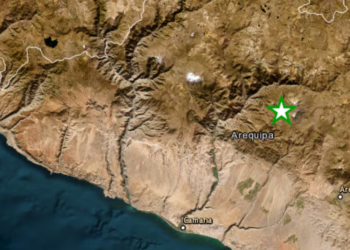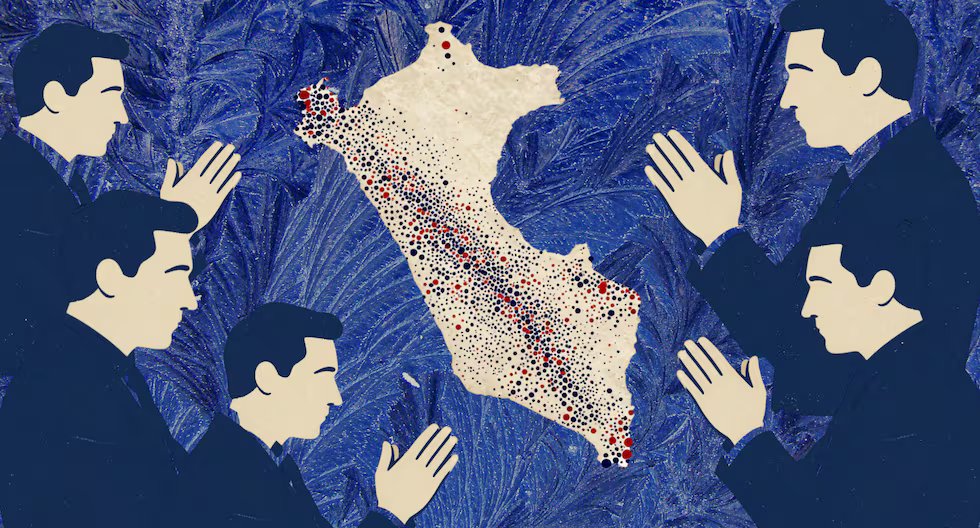
This is José Antonio Barrientos, in Quicacha (Arequipa); Rómulo Suyco in Lari (Arequipa); Régulo López in Straight (Amazonas); Víctor Mendoza in Luis Carranza (Ayacucho); and Alexánder Vásquez in Elías Soplín Vargas (San Martín).
With the exception of Elías Soplín Vargas – with 17 thousand voters – these districts house less than 1,600 voters each.
These candidates will obtain the mayoralty without having to face rivals at the polls, unless the null and blank votes exceed two-thirds of the total votes cast. This, in fact, has already happened to one of the lone candidates in the past: Rómulo Suyco was also the sole candidate in the Arequipa district of Lari in the 2022 municipal elections but, even without competition, he obtained only 15.22% of the valid votes, compared to 84.78% of white and null votes.
If the minimum number of votes is not reached, the law provides for the holding of a complementary election, while the outgoing authority remains in office under an extension of mandate, explains electoral legislation expert Silvia Guevara.
Explore the profile, electoral journey and party history of the unique candidates in the following visualization:
The absence of jurisdiction is not limited to these five cases. In 55 districts of Peru there are only two political options for the elections on October 4. In another 229 there are only three registered lists. Altogether, almost 300 districts—representing one in every six municipalities in the country—offer citizens three or fewer voting alternatives.
This shortage coexists with districts with a small population, with a high concentration of candidates per inhabitant. In San Joaquín (Yauyos), with a registry of 249 voters and a single voting table, 28 candidates were registered (4 for mayor and 24 for councilors). 11% of the population of this district aspires to public office.
For Guevara, having two or three electoral options is not negative per se, as long as there is plurality. It indicates that the legal limit of 30% of invited candidates on the lists makes it difficult for political organizations to have a presence in more constituencies. “Many times they don’t have enough members in that constituency, so they don’t show up,” he explains.
Javier Albán, an expert in electoral law, agrees that the problem is not the number of candidates, but rather their ability to represent the interests of the population.
“There can be a competitive election based on two candidates, as long as both represent to some extent part of what the population is asking for,” he explains.
At the opposite extreme, the subnational map registers a dispersion of the number of candidates at the regional, provincial and district levels. Some regions border on 20 candidates for regional governor, regardless of the size of their population. Tacna, for example, equals Arequipa and Lima with 19 GORE candidates, while Lambayeque and Piura top the national list with 20 candidates each.
At the provincial level, Metropolitan Lima leads the number of options for mayor with 27 registered lists, followed by Arequipa with 20 and Maynas with 19. Provinces such as Chiclayo (18), Barranca, Huaral, Ilo and Trujillo (all with 17) also lead the ranking.
This fragmentation, however, reaches its critical point in the capital. The districts of Metropolitan Lima with the largest electoral population have more than 20 candidates for district mayor. San Juan de Lurigancho leads the ranking with 24 applicants, followed by Ate (23), Los Olivos (23), Villa María del Triunfo (21), Carabayllo (20) and San Juan de Miraflores (20). These figures contrast with the Latin American average, which ranges between four and six candidates per municipal constituency.
The country is divided into 26 regional-level constituencies (the 24 departments and El Callao), divided into 196 provinces and 1,892 districts. Each of these jurisdictions is headed by an authority elected by popular vote. Besides Ecuador, Peru is the only South American country with three hierarchical levels of subnational government.
The regional comparison also reveals a high proliferation of political subdivisions: Colombia, with 20 million more inhabitants than Peru, has 1,102 municipalities; Chile has 345 communes. Despite this density, in 2022 Congress enacted Law 31567, which declared the creation of 44 additional districts of national interest.
With almost two thousand top-ranking subnational authorities elected by direct vote, Peru is ranked as the third country in the region with the largest number of subnational authorities, surpassed only by Brazil and Argentina.