Archie Mitchell – BBC Business Reporter
Oil prices have plummeted after Iran announced this Friday that the Strait of Hormuz would be “completely open” to commercial ships as long as the ceasefire agreed with the United States and Israel persists after weeks of bombing.
The price of a barrel of Brent crude fell to US$88, after exceeding US$98 early on Friday.
The Strait of Hormuz is a narrow strip of water connecting the Persian Gulf with the Arabian Sea, through which a fifth of the world’s oil and liquefied natural gas transits.
US President Donald Trump welcomed Iran’s statement, but maritime organizations are still verifying it.
Iranian Foreign Minister Abbas Araghchi declared: “The passage of all commercial vessels through the Strait of Hormuz is declared completely open for the remainder of the ceasefire.”
Global markets rallied following the announcement.
“Passage for all commercial vessels through the Strait of Hormuz is declared fully open for the remaining period of the ceasefire,” declared Iranian Foreign Minister Abbas Araghchi.
World markets also reacted higher to the announcement.
The main US stock indices rose in the first operations of the day. The S&P 500 advanced 0.8%, while the Nasdaq and the Dow Jones Industrial Average (DJIA) both rose more than 1%.
European stocks also posted gains in response to the news. Paris’ CAC index and Frankfurt’s DAX rose more than 2%, while London’s FTSE 100 rose around 0.5%.
The Strait of Hormuz has remained virtually closed by Iran since the US and Israel launched military strikes against the country in late February.
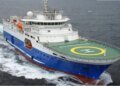
Tanker ships have been unable to transit the area, dramatically reducing the amount of oil and gas available on global markets and causing a sharp spike in prices.
Before the conflict, Brent crude was trading below US$70 per barrel.
But with the war, the barrel surpassed the US$100 barrier before reaching a high of more than US$119 in March.
While Iran claims that the Strait of Hormuz is “completely open” and President Trump has expressed his recognition, the international shipping body, BIMCO, has expressed concern – through a notice to operators – regarding persistent risks in the area.
Jakob Larsen, director of safety and security at BIMCO, said: “The status of mine threats in the traffic separation scheme is unclear, and BIMCO believes shipping companies should consider avoiding the area.”
“This means that, at this time, the traffic separation scheme has not been declared safe for traffic.”
Meanwhile, the head of the International Maritime Organization (IMO) is trying to clarify the details behind Iran’s commitment to reopen the Strait of Hormuz.
IMO Secretary General Arsenio Domínguez commented on social media: “We are currently verifying the recent announcement regarding the reopening of the Strait of Hormuz, with regard to its conformity with the principle of freedom of navigation for all merchant ships and with the guarantee of safe passage through the traffic separation scheme established by the IMO.”
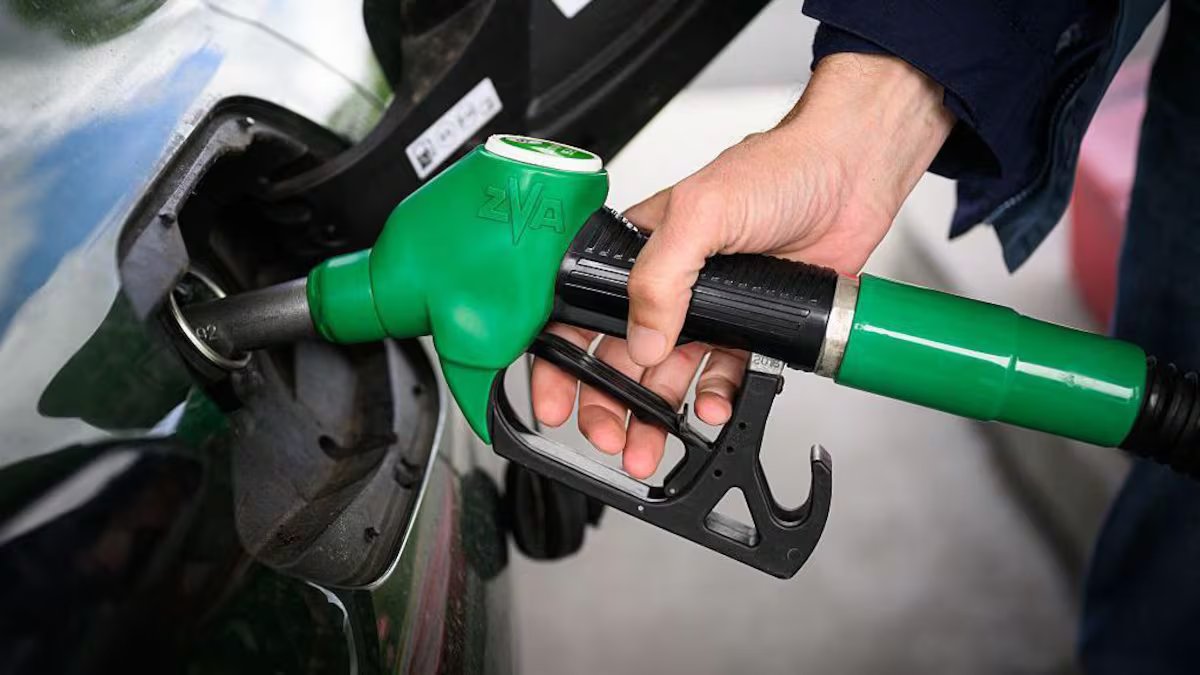
Sharp spikes in the price of oil have made gasoline and diesel more expensive for drivers, as well as raising concerns about the supply of jet fuel, raising fears that airlines will be forced to suspend flights.
Sharp increases in the price of oil have raised the cost of gasoline and diesel for drivers, as well as raising concerns about the supply of jet fuel, raising fears that airlines will be forced to suspend flights.
The closure of this strategic waterway has also disrupted an important supply line for fertilizers – used by farmers – raising the possibility of a rise in food prices as a result of the conflict.
A third of the world’s key fertilizer chemicals transit the strait, and their prices have risen sharply since the outbreak of war.
In search of a “permanent pact”
Iran’s decision to reopen the Strait of Hormuz came after the ceasefire agreement reached between Israel and Lebanon.
US President Donald Trump celebrated the move and wrote on the Truth Social social network: “IRAN JUST ANNOUNCED THAT THE IRAN STRAIT IS TOTALLY OPEN AND READY FOR FULL TRANSIT. THANK YOU!”
Trump added that Iran had agreed to “never close the Strait of Hormuz again… and that it will no longer be used as a weapon against the world.”

However, in a later post, he noted that the naval blockade his country imposed on Iran this week will remain “in full force and effect” until a permanent pact is agreed to end the war.
Despite Iran’s announcement, an oil and gas shipping operator told the BBC that the news “doesn’t change anything” in the immediate future.
“We do not consider it necessary to take unnecessary risks; our company’s position is that we will not be the first to cross the strait,” said the operator, who preferred to remain anonymous.
Another company, Stena Bulk—which operates oil tankers in the region—reported that it is “closely following the evolution of events.”
“The safety of our crew and our vessels governs each of our route decisions; therefore, we will not carry out the transit until we are certain that it is safe to do so,” the company added.
Kieran Tompkins, economist senior of climate and raw materials at the consulting firm Capital Economics, said that the ceasefire – which expires in nine days – “offers only a narrow window of opportunity for oil tankers to navigate the strait, load and leave.”
“This suggests that the number of vessels entering the strait may not yet return to pre-war levels, but it does provide an opportunity for trapped oil tankers to exit,” he added.
For his part, a supply chain expert – Professor ManMohan Sodhi of Bayes Business School – pointed out that consumers will continue to feel the pressure even if a long-term peace agreement is reached.
“Supply chains will take months to normalize,” he said.
click here to read more stories from BBC News Mundo.
Subscribe here to our new newsletter to receive a selection of our best content of the week every Friday.
You can also follow us on YouTube, instagram, TikTok, x, Facebook and on our channel WhatsApp.
And remember that you can receive notifications in our app. Download the latest version and activate them.