Madrid/The dengue epidemic in Cuba in 2026 is looming stronger than ever, when there is still a month left to reach the usual annual peak. As reported by the Global Dengue Observatory (Global Dengue Observatory) dated September 18, so far this year the Island has registered 7,133 cases, approximately 7.4 times more than expected for these dates.
As expected at this time of year, the report states, the number of infections is increasing. The platform, which collects information on the disease in all countries “in real time”, not just from government data but from different organizations of the World Health Organization (WHO), the Health Information Platform of the Americas (Plisa) and the Pan American Health Organization (PAHO), estimates that last August, there were 3,214 cases of dengue in Cuba, “a figure much higher than what would be expected”, and also higher than that of July, with 2,173 infections.
The last month with officially reported cases was June: there were 298, seven times less than the following month. On the Island, the month in which the maximum peak is usually reached is October.
The expression falls short when comparing the Island’s graphs with those of other countries in the region, all of them below the world average.
The Observatory concludes that “the dengue situation in Cuba this year is above average.” The expression falls short when comparing the island’s graphs with those of other countries in the regionall of them below the world average. On the continent, only Guyana is close to the Cuban parameters, with 56,293 cases so far this year, which is 6.7 times what was expected.
The situation on the Island is also complicated by the concurrence of other arboviruses, especially chikungunya, and a situation of extreme shortages in hospitals, where not even the most basic supplies are found. Just last August 29, died of dengue hemorrhagic fever in Nueva Gerona (Island of Youth) the sister of Cuban pitcher Héctor Mendoza, María Luisa Mendoza, at only 27 years old. As reported at the time Full Swingthe Héroes del Baire municipal hospital did not even have serum to treat her.
Although authorities do not publish updated data, sporadic local reports have been confirming a general increase in infections. In Sancti Spíritus, in August, the incidence rate of suspected dengue cases registered an increase for five consecutive weeks.
“We have not had hospitalized patients with warning signs in the week. However, some children have needed admission to Intensive Care at other times; hence the great importance of knowing the warning signs of dengue to act accordingly,” he then told Escambray Yurien Negrín Calvo, deputy director of the Provincial Center for Hygiene, Epidemiology and Microbiology, who assured that epidemiological surveillance was reinforced in the face of “the growing trend of suspects of dengue and non-specific febrile syndromes.”
The country closed 2025 with more than 81,900 cases of dengue and chikungunya, and at least 65 associated deaths, according to the Pan American Health Organization
In Guantánamo, at the end of July, 23 suspected cases of dengue were recorded in one week, a figure that led to the municipalities of Imías and San Antonio del Sur being placed on epidemiological alarm. On August 10, Radio Guantánamo reported a new upward trend in the provincial capital, with 18 suspected cases concentrated in the southern zone and confirmed circulation of serotypes 2, 3 and 4 of the virus, the latter associated with more serious forms and a greater hemorrhagic tendency.
For its part, in Pinar del Río, in August it was reported that febrile syndromes increased by 17.8%, with suspicions of dengue, chikungunya or acute respiratory processes in most communities during the last week evaluated.
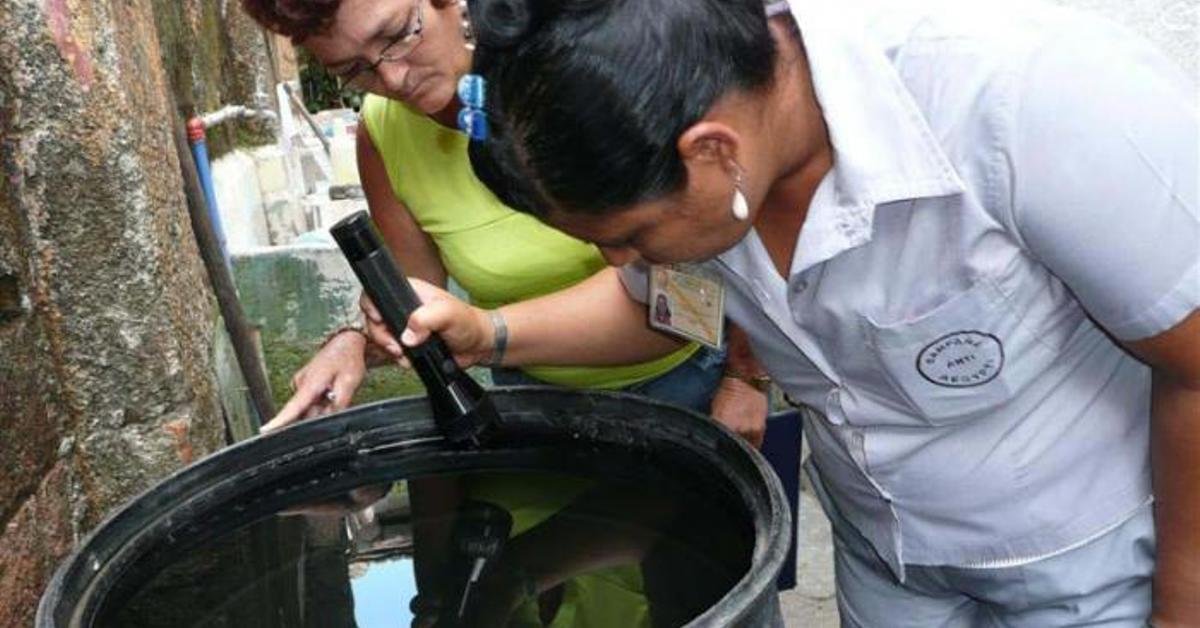
On June 11, the vice minister of the Ministry of Public Health, Carilda Peña, told the state press that a “reinforcement of epidemiological surveillance” had been decided in view of the summer season and warned about the simultaneous circulation on the Island of the four serotypes of dengue.
As for chikungunya, there are no updated figures, although the virus is present on the Island and has even been able to leave the country: in Spain this summer More than a hundred infections were reportedof which 20 arrived from Cuba.
The country closed 2025 with more than 81,900 cases of dengue and chikungunya, and at least 65 associated deaths, according to the Pan American Health Organization.