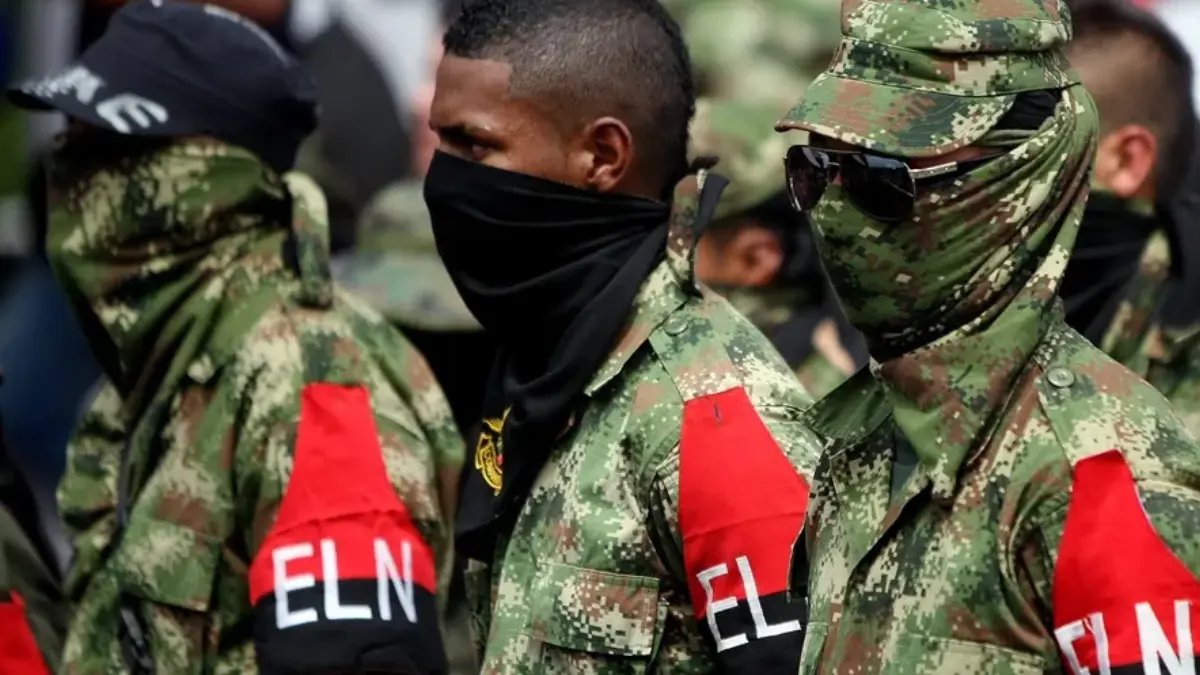
An updated x-ray of intelligence on the National Liberation Army (ELN) shows that the organization maintains a structure of 7,204 members (327 more than at the end of 2025), distributed between 3,542 men in arms, 3,388 members of support networks to terrorism and 274 members of urban structures. The document, updated in July of this year and known by EL TIEMPO, not only measures the number of men that the organization retains, but also identifies 65 structuresits territorial distribution, the fronts with the largest number of members and the composition of its strategic direction.
The update allows you to follow the ELN deployment across six war fronts —Darío Ramírez Castro, Southwestern, Western, Northeastern, Northern and Eastern—, in addition to the National Urban War Front. Under these structures there are five regional directorates, 34 territorial fronts, six urban fronts, 20 companies, three urban cells and two commissions. The intelligence map shows that the organization does not operate as a concentrated block: Your device extends from the border with Venezuela to areas of the Caribbean, the northeast, Magdalena Medio, Antioquia, Chocó, Valle del Cauca, Cauca and Nariño.
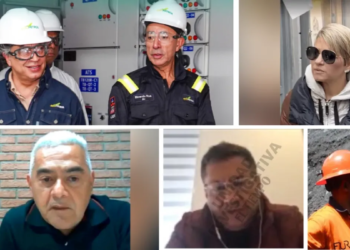
From left to right: ‘Pablito’ and ‘Antonio García’, who would be in Venezuela. Photo:Private file
The largest component is in the Northeastern War Front, which intelligence attributes 2,320 members. Its deployment includes 17 structures and has a presence mainly in Norte de Santander and areas near the border. There appear, among others, the Carlos Armando Cacua Guerrero Front, with 270 members; the Luis Enrique León Guerra Front, with 197; Héctor Rafael Cabrera Lombana, with 267; Juan Fernando Porras Martínez, with 363, and Camilo Torres Restrepo Front, which reaches 400 men and it appears as the territorial structure with the largest number of members within that war front.
Photography that also delivers intelligence locates companies and structures in that region with a smaller number of men, but distributed over different parts of the territory. Among them are the companies Cúcuta, Cinera, Yulitza, Caribe, Félix, Capitán Francisco, 4 de Septiembre, Comandante Diego and Héroes del Catatumbo. Added to them is the Nueva Colombia-Mining Unit company, with 108 membersin addition to a structure identified as Jesús Rubiel Delgado León.
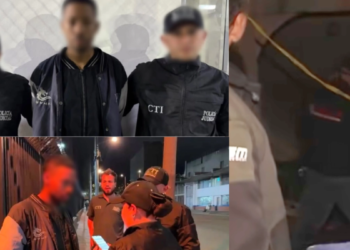
The Public Force has increased offensive actions against the group. Photo:Courtesy
It is precisely on part of that corridor where the Public Force currently has one of its operations concentrated against the ELN. The objective is set on dismantle the stronghold that the organization maintains between Araucathe south of Cesar and the connections to Catatumbo and Venezuela, a strip used to communicate structures, move men and sustain the organization’s device in this region of the country.
During the last few days, the presence of the Public Force has increased at those points. The operations, which have included US intelligence supporthave allowed blows to be dealt against ELN structures established in the area. The deployment seeks to affect both its armed components and the connections that the organization maintains between Colombian and Venezuelan territory.
Within that line of command appears alias ‘Silvana Guerrero’. Intelligence information indicates that currently would be found in Venezuela and from there he would be commanding the criminal actions of the ELN in that region, while Public Force operations advance over Colombian territory to affect the structures and corridors that remain under their influence.
Eln search poster. Photo:Courtesy
Another of the blocks with the greatest numerical capacity is the Eastern War Front, with 1,565 members. The information locates nine components there: the Domingo Laín Sáenz Front, with 544 men; José Daniel Pérez Carrero, with 196; José David Suárez, with 116; Adonay Ardila Pinilla, with 214; Efraín Pabón Pabón, with 210; in addition to structures and companies that complete the device. Its presence is projected over Arauca and sectors of Casanare and the eastern border, an area that appears marked on the map as one of the main spaces of concentration of the ELN.
In the Darío Ramírez Castro War Front, intelligence counts 1,045 members distributed in 16 structures. The largest component there is the José Antonio Galán Front, with 141 members, followed by the José Solano Sepúlveda Front, with 162. Also included are the Guillermo Ariza, Héroes de Santa Rosa, Edgar Amílkar Grimaldos Barón, Resistencia Guamocó, Capitán Mauricio, Héroes y Mártires de Anorí, Compañero Tomás and Alfredo Gómez Quiñones fronts, in addition to several companies. The device It is concentrated mainly between Antioquia and southern Bolívar.
Towards the west of the country, the report registers 945 members in the Western War Front. There are the Manuel Hernández ‘El Boche’ Front, with 279 men; Ernesto Che Guevara, with 250; Cimarrón Resistance, with 103; Cacique Calarcá, with 133, and the Néstor Tulio Durán company, with 174. Added to these structures is an urban component in Medellín of six members. The map places a good part of this front on Chocó and runners towards Antioquia.
eln Photo:eln
In it Northern War Frontthe estimate is 578 members. Its structure is divided between the Luciano Ariza Front, Gustavo Palmesano, 6 de Diciembre, Eduardo Atencio, Heroinas de la Resistencia, Danilo Caicedo and several companies. The document locates there a presence that crosses sectors of Cesar, Magdalena and La Guajira and that connects with areas close to the Venezuelan border.
Further south, the Southwestern War Front appears with 477 members. It is made up of the José María Becerra Front, Manuel Vásquez Castaño, Luis Carlos Cárdenas Arbeláez and several companies. The largest component is José María Becerra, with 203 members, followed by Manuel Vásquez Castaño, with 160. Its radius of action appears concentrated mainly over Cauca, Valle del Cauca and southwestern areas.
The update also includes a chapter on the National Urban War Frontto which 274 members are attributed. The information identifies structures in Bogotá, Cúcuta, Medellín, Venezuela and Cali, while indicating others that are “in the pipeline” in Neiva, Barrancabermeja, Popayán, Cartagena, Bucaramanga, Armenia and Pereira. Among the structures already accounted that of Cúcuta stands out, with 146 membersfollowed by the so-called Reinaldo Ardila Gómez, located in Venezuela, with 94.
Eln. Photo:EFE
This urban component allows us to observe another part of the device that does not depend exclusively on rural fronts. According to the document, the Eln preserves structures specifically identified for cities and, at the same time, it projects presence towards other capitals and urban centers. In Bogotá appears the urban front Jorge Eliécer Gaitánwhile Medellín and Cali also appear within the distribution presented by intelligence.
At the top of the organization, the document identifies a strategic direction composed of 26 members. Of them, five correspond to the Central Command—COCE—12 to the National Directorate, eight to the so-called Ideological Department and one appears as a representative leader. The figure allows us to separate the driving level from the territorial and urban components that appear displayed in the rest of the map.
READ ALSO
The known information also allows us to dimension how the organization is currently distributed: almost half of its 7,204 members correspond to the armed componentwhile another block of similar size belongs to the support networks. The latter are part of the scheme through which the territorial structures They support information, supply, mobility and support activities to the fronts deployed in different regions.
The map also shows that the concentration of men is not uniform. The war fronts Northeast and East bring together 3,885 membersmore than half of the entire structure recorded in this update. This distribution coincides with the corridor on which the Public Force has been concentrating part of its operations: the northeast, Arauca, the south of Cesar, Catatumbo and the border connections with Venezuela, while the intelligence agencies follow the movement of their commanders and the structures that operate from both sides of the border.
Justice Editorial
Justicia@eltiempo.com