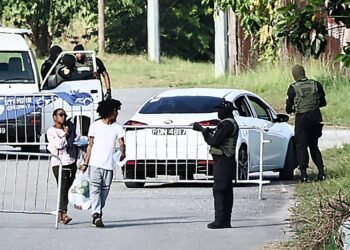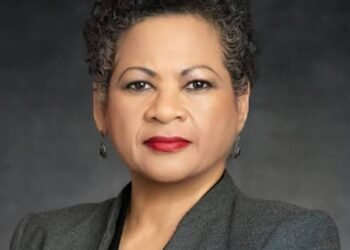
Prime Minister Kamla Persad-Bissessar says police officers conducting operations in designated special zones will be required to wear body cameras under the Government’s revised Zones of Special Operations (ZOSO) legislation.
Speaking in the House of Representatives yesterday, Persad-Bissessar said Government intends to debate a revised version of the Law Reform (Zones of Special Operations) (Special Security and Community Development Measures) Bill, 2026 tomorrow, hours after the State of Emergency (SoE) expires at midnight tonight (September 17).
The Prime Minister said the legislation includes safeguards designed to balance enhanced powers for the protective services with protections for citizens.
“Under the Special Operations Bill 2026, police officers conducting special operations and Defence Force members providing military assistance must be trained in human rights, lawful use of force, engagement with residents, and conflict de-escalation,” Persad-Bissessar said.
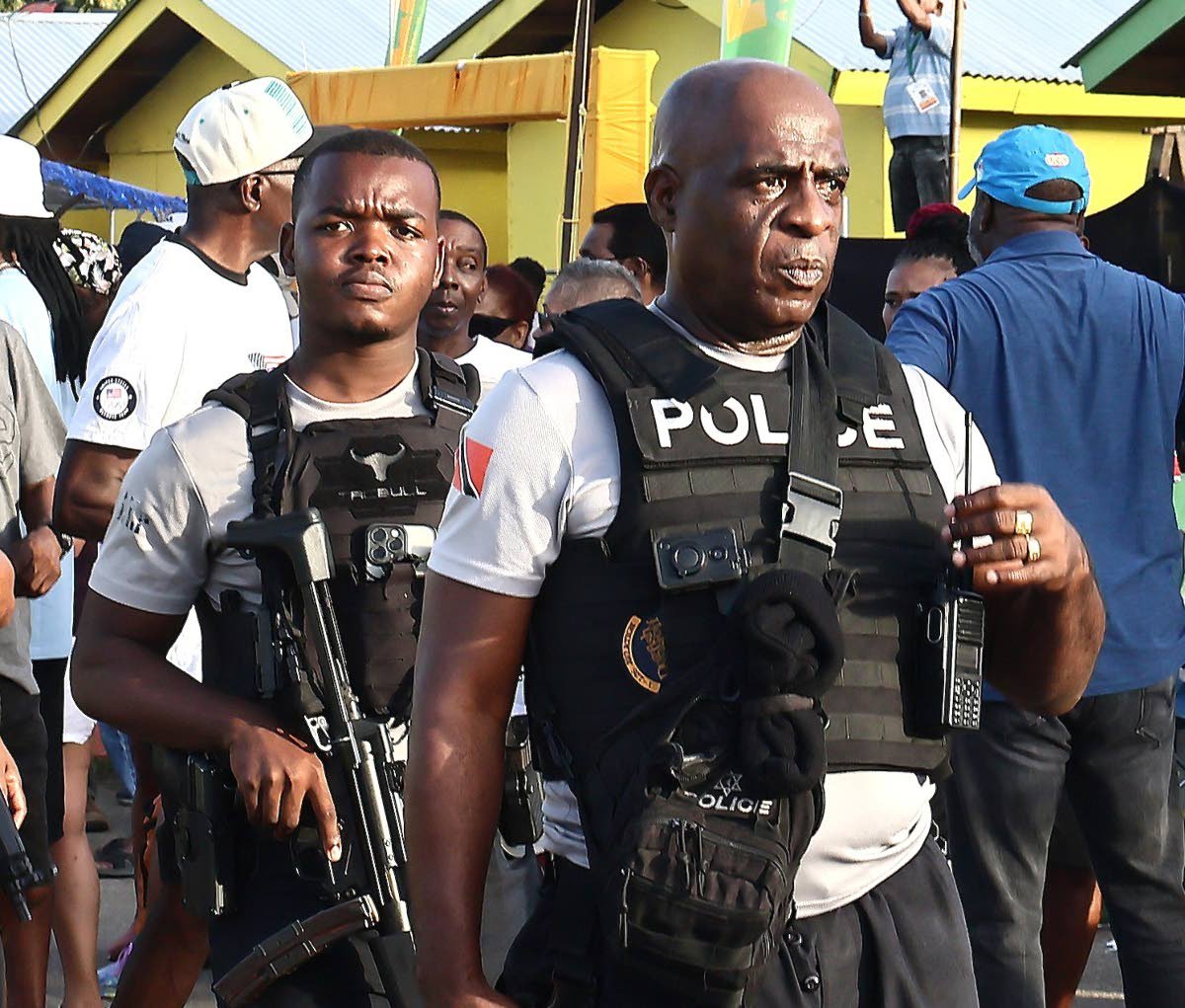
She highlighted the use of recording devices during operations, stating: “Within closed areas, officers must use body-worn cameras, register weapons, and formally record complaints.”
Persad-Bissessar said detainees would be entitled to medical care and visitation rights, while expanded powers of search, arrest and detention would remain subject to judicial oversight.
The mandatory requirement for body cameras is significant because it was a major point of contention during debate on the previous ZOSO Bill.
That legislation, which failed to secure the required three-fifths majority in the Senate earlier this year, stated that members of the joint force would wear body cameras “as far as is possible, having regard to available resources.”
The Law Association of Trinidad and Tobago (LATT) criticised that provision, arguing it weakened accountability measures. The association noted that resource limitations had often been cited as a reason officers were not equipped with body cameras and recommended that the devices, or an alternative recording mechanism, be mandatory during ZOSO operations.
During the Senate committee stage in January, Independent Senator Dr Desirée Murray also proposed amendments to make body cameras compulsory rather than contingent on availability.
Murray additionally sought provisions granting oversight agencies access to body-camera footage, including the Police Complaints Authority, the Police Service Commission, and TTPS units responsible for investigating police officers.
The accountability concerns were heightened by the extensive powers proposed under the legislation, including search, arrest and detention powers, as well as the involvement of Defence Force personnel in security operations.
Persad-Bissessar yesterday said the revised legislation addresses concerns raised during debate on the earlier version.
“This bill has been revised from the one that was originally debated here and in the other place,” she said.
“This bill, therefore, combines strong operational powers with clear protections for citizens and parliamentary accountability and oversight.”
She added that the provisions “directly address concerns raised about the previous legislation.”
Persad-Bissessar argued that the Opposition now has no reason to oppose the revised bill, which she said would require only a simple majority for passage.
However, the Government has not yet publicly outlined the changes that removed the requirement for the three-fifths special majority that applied when the previous legislation came before Parliament.
The actual legislation, published online hours after the PM’s statement, does not make their use mandatory in every circumstance. It instead provides that a police officer or member of the Defence Force “shall, as far as is possible having regard to available resources, use a body-worn camera” while conducting special operations in a closed area. This qualification means the requirement remains contingent on the availability of body cameras and other resources.
The provision mirrors wording contained in the previous ZOSO Bill, which stated that members of the joint force were required to use body-worn cameras “as far as is possible having regard to available resources.”
Questions also remain about whether the Trinidad and Tobago Police Service (TTPS) currently has enough functioning body cameras to comply with the proposed mandatory requirement if multiple special zones are established.
Guardian Media contacted Commissioner of Police Allister Guevarro yesterday to determine how many body-worn cameras are currently operational and whether the TTPS has sufficient devices to meet the requirements of the revised legislation. Up to press time, there was no response.
In January, senior police officers told Guardian Media that fewer than 200 body cameras were operational across the TTPS. Deputy Commissioner of Police Junior Benjamin said there were about 190 active cameras, while Guevarro later estimated that approximately 180 were “actually usable.” Benjamin acknowledged at the time that the number was inadequate to meet the service’s needs.
Since then, the TTPS has sought to expand its body-camera programme.
In June, the service announced an Expression of Interest for the supply, delivery and commissioning of body-worn camera systems. The TTPS described the devices as essential to transparent and accountable policing, providing an objective record of interactions between officers and the public.
The TTPS also noted that the procurement process would have to address issues including data storage and management, officer training, privacy protections and legislative requirements.
Under the revised ZOSO framework outlined by Persad-Bissessar, the Commissioner of Police would appoint a Head of Special Operations for each policing district, while the Chief of Defence Staff would appoint a Head of Military Assistance where military support is required.
Where violent crime, gang activity or illegal weapons present a serious threat and conventional policing is considered insufficient, an area could be temporarily closed. Authorities would then be empowered to establish cordons, impose curfews, regulate entry and exit, and exercise enhanced powers of search, seizure, arrest and detention, subject to judicial oversight.
Persad-Bissessar also warned yesterday that the end of the SoE would not signal any relaxation of the Government’s crime-fighting efforts.
“The State of Emergency may end. There will be no sanctuary for you. We will find you,” she said.
“We will dismantle your networks. We will seize your drugs and your guns and criminal proceeds and bring you before the courts of the land. No money, status or political connections will save you.”
The Prime Minister said Government would continue to use the “full lawful power of the State” against criminal networks after the emergency measures expire.
She also rejected what she described as a “two-tiered justice system,” insisting that people suspected of criminal activity in affluent communities would be treated the same as those in traditionally high-crime areas.
“Money must no longer buy immunity. Status must not prevent investigation. Political connections must not provide protection,” she said.
Persad-Bissessar argued that the legislation would allow the protective services to maintain pressure on violent crime without extending a nationwide SoE.
However, Opposition Leader Pennelope Beckles-Robinson questioned the Government’s timetable for debating the revised legislation.
Following the Prime Minister’s statement, Beckles-Robinson asked when the bill had been formally laid in Parliament, noting that a debate tomorrow would leave the Opposition with limited time to examine the revised provisions.
Persad-Bissessar responded that she had been advised Parliament had received the bill and was completing the necessary administrative processes.
“If not yet on the paper, it will be done before the sitting ends,” she said.
When concerns were raised over whether the Opposition would have adequate time to review the legislation ahead of tomorrow’s proposed debate, Persad-Bissessar pointed to the extensive debate on the previous bill.
“You debated this bill here for days. You went in the Senate for four days, and you’re going to feel you don’t have enough time?” she asked.
“If it’s today and Friday, we have to fight the crime now.”
Key concerns raised over initial ZOSO Bill in Parliament (January 2026)
Opposition — House of Representatives
Keith Scotland — Raised concerns that ZOSO would restrict constitutional rights, including freedom of movement, property rights and due process, and warned against effectively replacing the SoE with another extraordinary security regime.
Kareem Marcelle — Warned that innocent residents could bear the burden of cordons and curfews and questioned whether particular communities would repeatedly be subjected to extraordinary restrictions.
Stuart Young — Questioned the concentration of power in the Executive to declare ZOSOs and argued that residents in designated communities could face disproportionate interference with their constitutional rights.
Independent Senators
Dr Desirée Murray — Raised concerns about body-camera accountability, proposing that oversight bodies such as the PCA, PSC and TTPS investigative units be expressly guaranteed access to footage so they could not be denied the data.
Dr Marlene Attzs — Warned that ZOSO designations could stigmatise entire communities, with innocent residents becoming collateral damage, and called for clear, transparent criteria for selecting zones.
Anthony Vieira — Raised concerns about vague criteria such as “rampant criminality” and called for stronger safeguards, objective criteria, proportionality and civilian oversight of the extraordinary powers.
Michael de la Bastide — Called for a sunset clause, suggesting the legislation expire after a fixed period unless Parliament renewed it, forcing a review of whether ZOSO powers worked and whether they had been abused.