An elderly merchant asked to recover his business in it Hacienda Santa Barbara Shopping Centerin Bogotá, after an eviction carried out by the domain forfeiture authorities in 2021. A few weeks ago, however, the Superior Court of Bogotáwith a presentation by Judge Freddy Miguel Joya, denied the request by establishing that you allowed too much time to pass to file a claim. As EL TIEMPO learned, the file goes deeper, as it revealed that store 106, identified as C134 in the shopping center, has a whole history of crime and drug trafficking.
From the documents and evidence that are in the file, it was established that before the Prosecutor’s Office undergoes a process of domain forfeiture latent, with file 4950, related to the premises. As read in the sentence, the November 30, 2007 initiation resolution was issued and precautionary measures were declared of extinction on various assets, including the aforementioned commercial premises. The process is so advanced that the March 18, 2021 the Special Assets Company completely seized the property and handed it over to the Real Estate Bienes e Inmuebles Rojas SASas provisional depositary. He then took it back into possession in 2025.
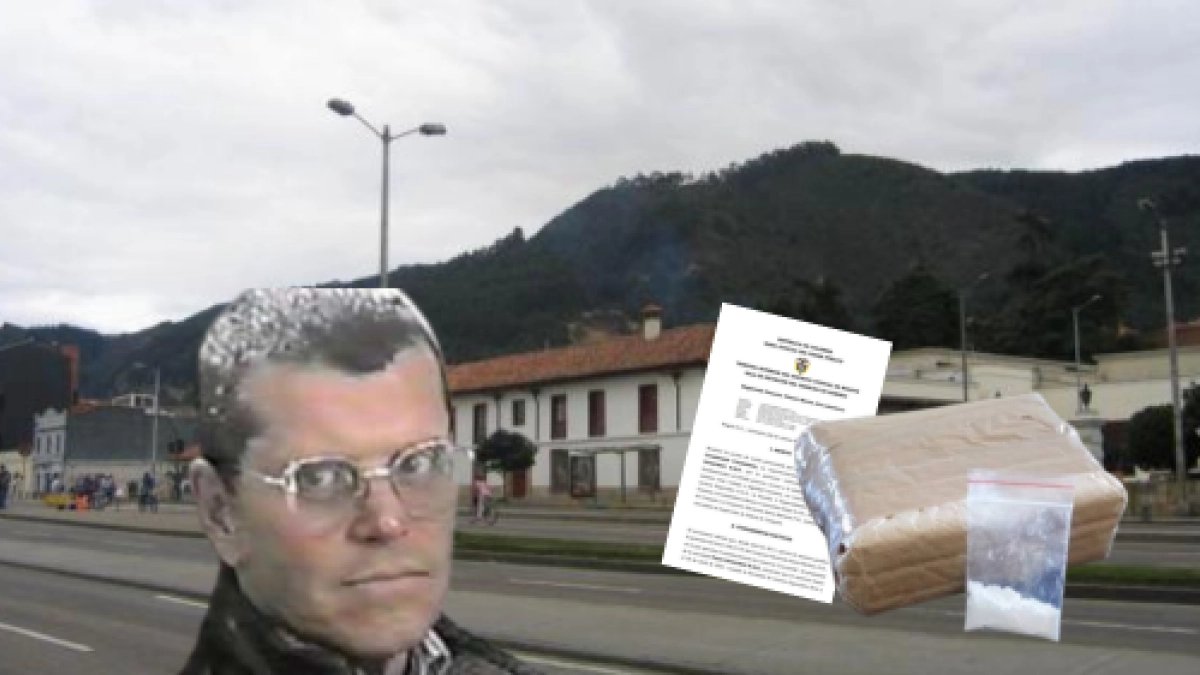
The file from the Santa Barbara location is in this document. Photo:Judicial Branch
The Prosecutor’s Office, the file reads, “has as its purpose verify the legal origin of these assets and rule out that they come, directly or indirectly, from drug trafficking activities carried out in Colombia, Chile, Ecuador and the United States by Hernán Prada Cortéswho currently is deprived of liberty in this last country.” The case is still pending, despite the fact that it is almost 20 years old, given the plurality of assets that the drug trafficker would have acquired and the need for international cooperation requested by the Prosecutor’s Office.
Hernán Prada Cortésnicknamed “El Ramazote” or “Papito”, is a Colombian noted as one of the great bosses of drug trafficking in recent decades, which was kept secret in contrast to Pablo Escobar or the Rodríguez Orejuela brothers. Judicial records, mostly revealed in Chile, explain that this drug trafficker focused on generating big profits and in creating sophisticated mechanisms to launder and hide them, using several countries as a platform, including the southern one.
Its true criminal structure came out in 2006when the authorities of Ecuador executed the Operation Twin Towersconsidered the largest anti-drug procedure carried out up to that time in that country, lasting five months. The investigations that arose from there determined that Prada Cortés He led an organization dedicated to money laundering from drug trafficking, and that the United States pointed him out as responsible of having sent up to seven tons of cocaine to that country.
The photograph recovered from the drug trafficker. Photo:The Counter
“This cocaine mafia boss, who moved more than US$ 49 million with his shipments to the United States, he walked through Santiago in a Ford Explorer and vacationed with his son Andrés at the winter center,” the report reads.Colombian drug trafficker’s apartment seized in Valle Nevado‘, from the digital medium El Mostrador, from 2010.
Prada Cortés ended up being extradited from Colombia to the United Stateswhere currently serving a sentence of more than 20 years prison, after being found responsible for having brought more than seven tons of cocaine to the coast of Florida between 1998 and 1999. His son, Andres Prada, was captured in 2013 by the Ecuadorian authorities “as he was unable to justify the origin of the assets that were in his name (real estate and companies),” explained the Ministry of Government of Ecuador.
Returning to the file of the commercial premises, it is known that the Prosecutor’s Office decreed precautionary measures about that and other assets. However, for years the “Coccinelle” trading establishment, of the company Thaigi Investment SAScontinued to operate there with total normality, according to what its representative told the court. Rubén Darío Colmenares Colmenaresowner of 100% of the shares of that company, assured that since April 2011 exercised peaceful possession of the premises.
Hacienda Santa Barbara. Photo:Carlos Ortega. EL TIEMPO Archive
However, that situation changed completely when the April 26, 2021the SAE executed an eviction procedure. The merchant stated that in that procedure could not remove all the merchandise that he had in the premises. According to what he said, months later, the February 2, 2022, reached an agreement with the SAE and the real estate agency to return for his belongings, but he was only able to recover some documents and noticed that several belongings were missing, without anyone giving him an explanation. Already in 2024, he tried to enter the shopping center again, this time accompanied by the Police, but the security personnel and the administration they denied access.
Apiaries decided to go to the guardianship actionalleging that due process, access to justice, minimum living standards, work and human dignity had been violated. In his lawsuit he explained that he is an elderly person and that the company went bankrupt because it could not dispose of or sell its merchandise. in your guardianship requested that the Prosecutor’s Office be ordered declare the expiration of the precautionary measures that have been imposed on the premises for almost two decades, that possession of the property be returned to him, and that the administration of the shopping center allow him to enter without restrictions, also giving him a copy of the keys.
In the process, the Local Mayor’s Office of Usaquén and the Police Inspection said they were completely unrelated to the case, since they never participated in the eviction. The real estate agency that was in charge of the premises told its own version, ensuring that it did coordinate several days with Colmenares to remove its belongings.that he himself left the removal of a shelf pending and that he finally returned the property to the SAE in February 2025. The SAE also insisted that it only fulfilled its legal functions by recovering the property.
In reviewing the case, the Court did not go into analysis whether or not there was a fundamental violation. Its decision was based on two filters that all protection must overcome to reach a successful conclusion: immediacy and subsidiarity. Regarding the first, the magistrates were emphatic in determining that, between the 2021 eviction and the presentation of the guardianship, more than four years passed. Likewise, the Court recalled that the domain forfeiture process is still open in the Prosecutor’s Office and that there, and not in the guardianship, is where the merchant can exercise his right of defense.
Jhoan Sebastian Cote Lozano
jhocot@eltiempo.com
@SebasCote95 in X
MORE INFORMATION IN THE JUSTICE SECTION