MIDDLEBURG — The indispensable and often underexposed role of Surinamese and other Caribbean women in the colonial past – the so-called foremothers – is currently central to the Dutch heritage sector. In the historic Cloisters of the Abbey in the town of Middelburg, the exhibition ‘The Shared Power’ attracts a lot of attention.
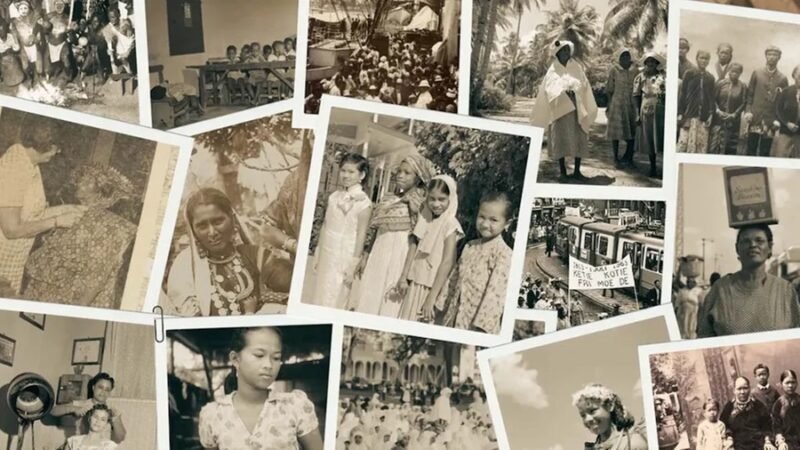
The exhibition portrays the lives, resistance and resilience of fifty historical foremothers, where the profound Surinamese contribution leaves an unmistakable mark on the whole. The exhibition is the result of two years of intensive and interdisciplinary research by the organization Our HERitage.
“The stories of women who laid the foundation for contemporary Suriname under difficult circumstances are receiving the historical recognition that they have been denied for decades”
While traditional archives have often reduced the lives of women under colonial rule to cold figures or marginal footnotes, a different perspective has been chosen for this exhibition. The reconstructions of fifty lives are largely built on the living input of the communities themselves.
Surinamese stratification and resistance
Through oral history, family traditions and the in-depth knowledge of descendants, fragmented traces of the past have been transformed into powerful, human portraits. The selected foremothers come from twelve different regions and eleven subcultures. It is precisely within the Surinamese stratification that the power of the exhibition emerges.
The exhibition not only highlights the unimaginable resilience of enslaved African women on the plantations and their resourceful forms of resistance, but also pays explicit attention to later generations of indentured servants. The stories of women who laid the foundation for contemporary Suriname under difficult circumstances are receiving the historical recognition that they have been denied for decades.
By focusing on themes such as identity, migration, motherhood and survival, ‘The Shared Power’ transcends the one-sided narrative of victimhood. It strikingly shows how these Surinamese and Caribbean primal mothers shaped the culture, spiritual traditions and social structures that continue to have an impact in the diaspora and in the motherland to this day.
Symbolic confrontation
The fact that these stories can be seen in Middelburg carries a heavy symbolic load. Zeeland and the infamous Middelburg Commercial Company played a key role in the transatlantic slave trade to the Surinamese plantations. The confrontation between this charged Zeeland history and the tangible Caribbean-Surinamese heritage was further explored in depth on September 4 during the accompanying public program ‘Trade, Faith and Conscience’ in the Abbey. Researchers and descendants examined moral dilemmas within the colonial administration and the tension between economic interests and personal conscience.
The project proves once again that the history of the region is not complete without the voices of the women who have silently supported society. The traveling exhibition can be viewed until September 17 in the Cloisters of the Abbey in Middelburg.