In fact, August has been a bad month for Alphard.
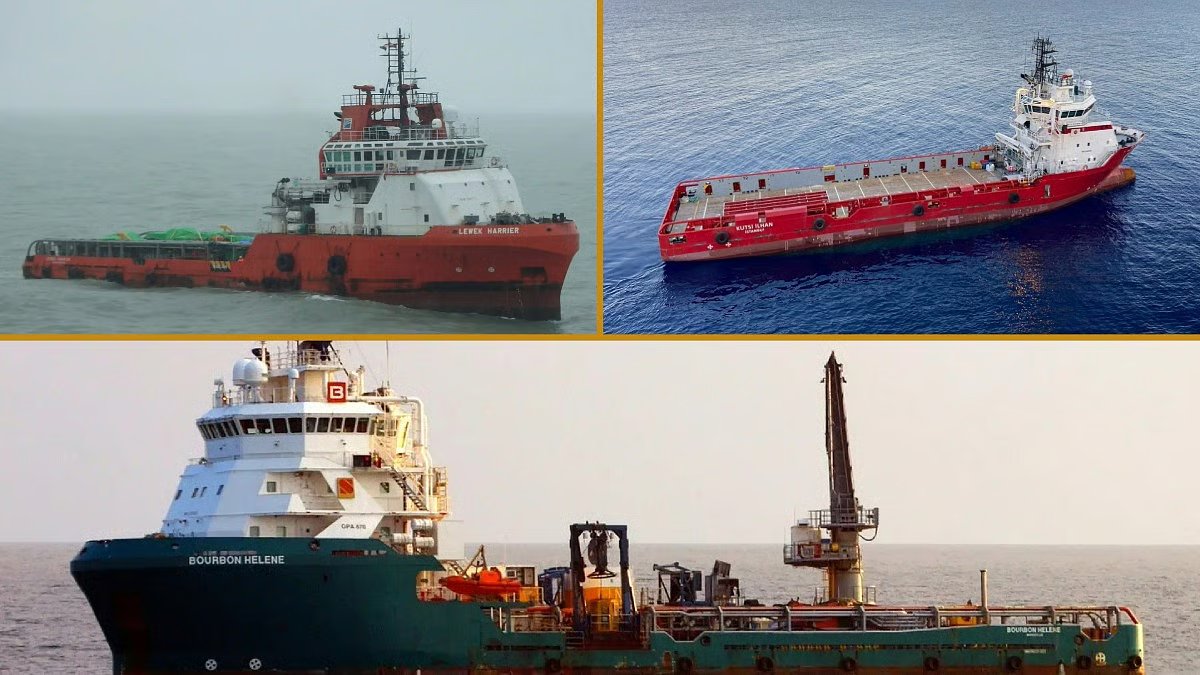
On August 18, the Maritime Administrator of the Republic of the Marshall Islands issued a safety investigation report into a fire on board the company’s 2006-built, DP2, 87 tons bollard pull anchor handler AM Pride (the former Lewek Harrier, which Alphard acquired in February 2024).
The ship suffered a serious fire in September 2024, which led to the abandonment of the vessel off South Africa. It was subsequently rescued adrift and blacked out by a salvage tug. Thankfully, nobody was killed or seriously hurt, but the Marshall Islands report made it clear that this was mostly a matter of luck.
The flag state pointed out that it publishes marine safety investigations of marine casualties and incidents to promote the safety of life and property at sea and to promote the prevention of pollution. The Marshall Islands stressed that marine safety investigations conducted by the administrator do not seek to apportion blame or determine liability.
We welcome responsible flag states that publish their investigations, as this enables lessons learned to be cascaded through the industry and shared widely to prevent recurrence.
And there are quite a few lessons from the events on AM Pride that fateful day. As normal, the industry press has been much quicker to publish news of the fire than news of the excellent investigation report into the causes and the lessons learned. I know myself that if I write a piece of some horrible industry catastrophe, I will get far more clicks and likes on X than when I publish a piece on how to prevent such incidents.
Rein in V.Ships!
The vessel was under the management of V.Ships Offshore at the time of the incident. Most of the officers and crew were both new to the vessel and new to V.Ships, and there had been an 80 per cent crew change around the week before the fire broke out.
The facts of the incident speak for themselves. The investigator concluded that most likely, movement or spillage of goods or liquids introduced moisture into the sockets on the port side bulkhead of the recreation room, which caused an electrical tracking defect that ignited the conflagration.
Adding to the problem was what happened when the sockets in the recreation room developed the fault that caused the fire, according to the Marshall Islands report:
“[the room] was used as a storage space containing plastic parts for the ongoing replacement of sanitary facilities in the accommodation, cleaning liquids, aerosol cans, bottled drinking water, a mattress, a stock of safety shoes, stored electrical items such as a water cooler, windscreen wiper motors, spare CCTV cameras, and a television. An exact inventory was not kept by the crewmembers.”
The report noted that, “there was no indication that possible fire hazards had been assessed as part of a management of change process before converting this room into a storage space.” Really?
The fire was spotted at 10:00 as dense smoke filled the accommodation, but the crew were never able to establish where it was located, so they mustered rather chaotically, then blacked out the ship and left on a helicopter, leaving the vessel drifting near PetroSA’s FA Platform:
“Many doors inside the accommodation, including fire doors, were open and the ventilation was operating in full recirculation mode when the fire broke out. These conditions facilitated the smoke rapidly spreading through the entire accommodation and complicated the determination of the source of the fire and subsequent firefighting activities.
“Around 11:00, it was observed that crewmembers had not succeeded in locating the exact source of the fire or in controlling the fire. Subsequently, the master decided to lock down the accommodation and engine room and to shut down the main engines. Arrangements were made for the evacuation of the vessel by helicopter.”