This is an excised chapter from ‘Found at Sea’ – an unpublished biography of noted surf explorer, Martin Daly.
“Just this Tuesday I read a recent article about another expedition to locate Amelia Earhart’s plane,” reckons author Gra Murdoch, “and it reminded me of a chapter I’d written in Martin’s bio.
“Phil Jarratt edited the manuscript a year or so back and, forced to bring the word count down to something remotely publishable, axed entire chapters, including this one. Anyway, it’s a ripper tale about an enduring Pacific mystery. I thought the Swellnet crew might enjoy.”
It’s the early 2010s, Martin falls in with a fella in Majuro by the name of Dick Spink, AKA The Spinkster – a jovial, intelligent high-school teacher with a carefree approach to casual wear and a propensity to sunburn. The Washington-based Spinkster’s importing prefab aluminium boats to the Marshalls, and Martin enjoys his eccentric company.
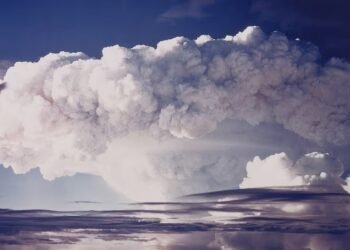
Martin first met Spink at Tony de Brum’s house. Tony de Brum’s a giant of Marshallese history: he’s been Foreign Minister, Minister for Environment, Presidential Candidate and Kwajalein Senator. As a nine-year-old, Tony witnessed the Bikini Atoll Castle Bravo detonation from his old boy’s fishing boat in the Likiep Atoll. Fifty years later he takes nuclear nations to court in the Hague (earning a Nobel Peace Prize nomination). He steers the Marshalls to independence in 1986; On Martin’s suggestion, de Brum creates the world’s largest Shark Sanctuary in 2011; but his biggest achievement as a statesman is bending the 2015 Paris climate negotiations to the good of all vulnerable Pacific Island nations. In short, Tony’s a good egg.
Tony’s house in Majuro is a meeting place for dignitaries, and one afternoon Martin, along with his Marshallese patron Ramsey Reimers, finds himself there, rubbing shoulders with some heavy hitters. As well as Reimers and de Brum, there’s chiefs from Kwajalein and various other elders, all in their 60s and 70s. They’re enjoying kava and red wine at Tony’s table, talking the usual: politics, climate change, Marshall’s history, when Amelia Earhart comes up in the conversation. The Spinkster coughs and pipes up – what’s that about Amelia Earhart?
For those who don’t know of her: Amelia Earhart was America’s beloved aviation pioneer, a trailblazer who – along with navigator Fred Noonan and her twin-engine Lockheed Electra – disappeared without trace during her bid to become the first woman to fly around the world in 1937. Earhart cut a stylish, swashbuckling figure, all the more so for her slim, athletic build, penchant for trousers, and androgynous short hair.
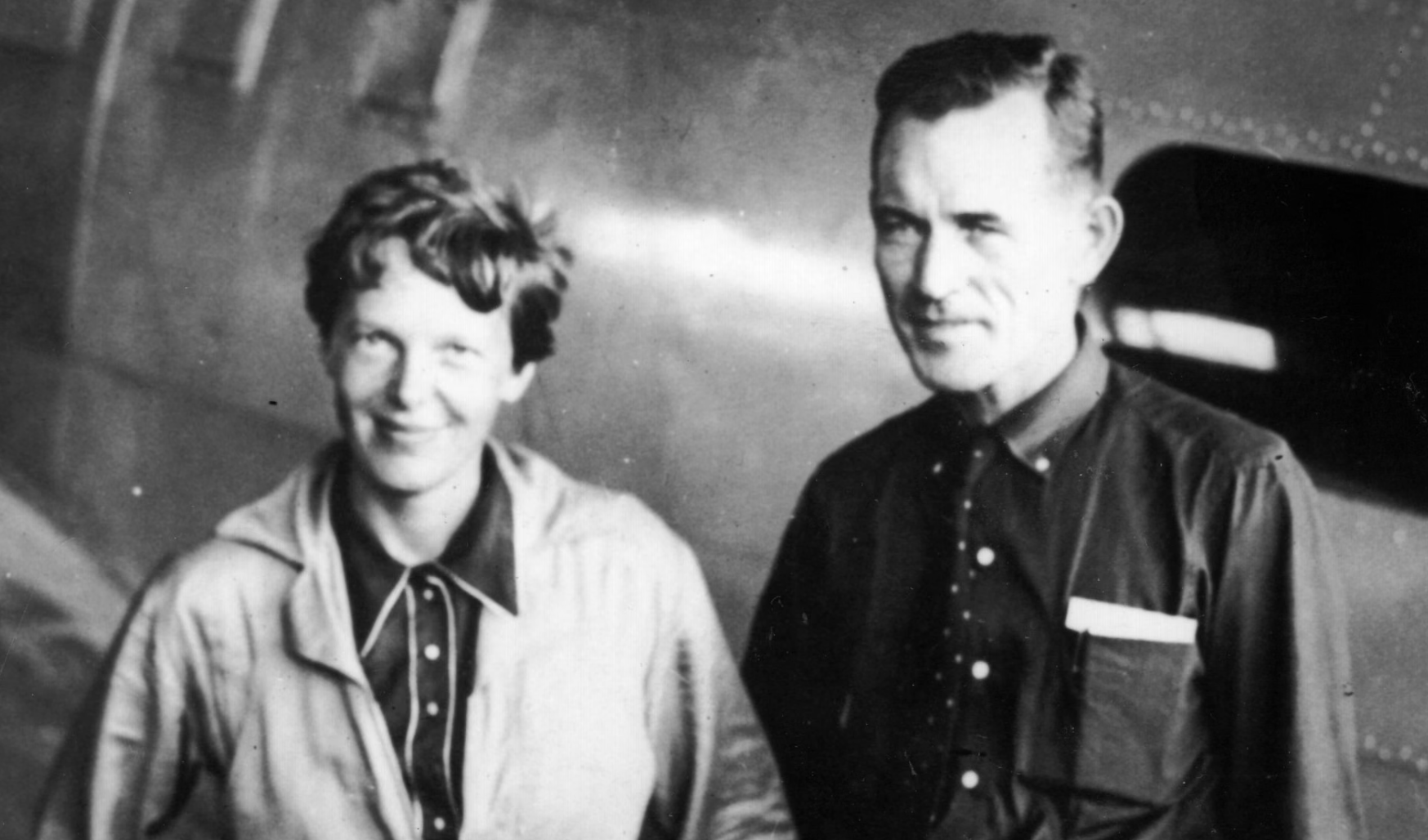
Pioneering aviator Amelia Earhart and her navigator Fred Noonan
With the Pacific as her last hurdle, Earhart was flying from Lae, New Guinea, to a refuelling stop on remote Howland Island when she and Noonan vanished. The location and nature of her demise has been one of the more intriguing mysteries of our time, one that’s spawned searches, theories and claims aplenty.
The Spinkster asks about Amelia Earhart, and all the old chiefs just go, like it’s no big deal, “Oh yeah, everyone in the Marshall Islands knows she crashed on Mili Atoll, the Japanese took her and her navigator to Jaluit.” Dick’s immediately fired up, wants to know more.
Martin’s got enough on his plate without another wild goose chase. The Spinkster, on the other hand, is frothing to throw himself into this mystery, and when a film shoot takes Trader south-east to Mili, Martin figures it wouldn’t hurt to have a poke around.
We’re heading down there anyway, so I tell Dick why don’t you come along? Let’s see if we can find Amelia? I’m not really that captivated with the whole thing, but I want to help Ramsey and the old boys out. Ramsey tells us more of the story: Old mate was fishing in his canoe over this particular coral bommie and saw this big silver plane crash on the reef. They waited for the tide to come in, pumped up a yellow boat, came across to the island and she buried a briefcase under a tree before the Japanese turned up.
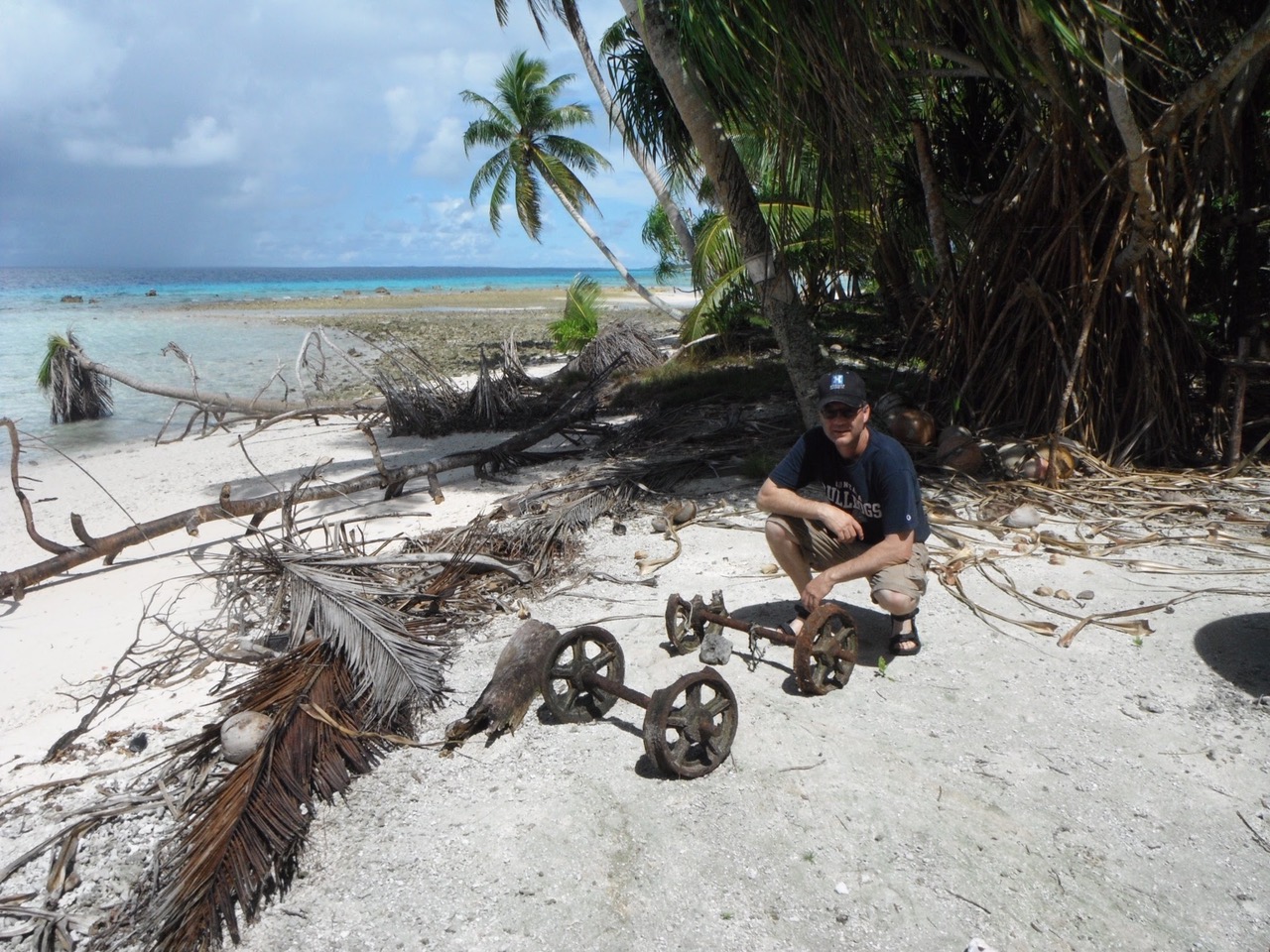
The Spinkster and a set of rusting axles that correspond with Japanese rail carts (Spink)
According to Ramsey and the elders, the Japanese came in the cargo ship Koshu Maru, and deployed carts used for transporting ammunition to drag the aircraft across the reef over to the lagoon side of the island and onto a barge which they towed to Jaluit. Ramsey’s father ran a store and would overhear the Japanese talking about the female aviator. From there, pilot, navigator and plane were shipped 2,000 miles west to the Japanese stronghold island of Saipan, where Earhart and Howland were held as prisoners, dying by execution or dysentery before the Liberation of Saipan by allied forces in July 1944.
And I go, oh, that’s a great story. So, Ramsey, if we’re going to look for something, given the plane was salvaged, the only thing we can probably find is something that broke off the aircraft. Part of the undercarriage, a propeller blade or a wheel.
Trader takes the expedition to the island where Earhart was supposed to have crashed. Aerial imagery shows the island’s morphed in shape over the last 90 years, and so now thick jungle lies where local eyewitnesses – a number of Marshallese were conscripted as labour – claimed the plane was dragged across the reef. Using a metal detector, the team dig up an old campsite, there’s bits and pieces a foot or so under the sand, a few sets of rail wheels that correspond with Japanese transport carts.
We find a curved aluminium shard, about a foot long, that’s turned up along the edge, shaped and engineered identical to a panel on Earhart’s undercarriage wheel well. I dig up an aluminum plate, like an old baking tin where you make a donut shaped cake. It’s pretty innocuous and I throw it to the side in a pile of scrap. There are other things at different layers, World War Two ammo and so on.
The Spinkster takes bits and pieces back to Washington, finds Jim Hayton, a forensic aircraft analyst. He lab tests the shard and though it matches Earhart’s plane, it’s not conclusive. When shown photographs of the excavation site, he zeroes in on the baking tin and says “I think I know what that is, did you bring it?” Ahhh… no. Face palm.
I return to Mili, retrieve the tin and send it to Jim Hayton, who identifies it as part of a Goodyear air wheel dust cap, the kind used on a Lockheed Electra. Hayton sources a Goodyear wheel, places the crumpled cover over it, and it’s a perfect fit, right down to the o-ring wire that locks it in. It’s the full Cinderella slipper moment,
So you have to ask: how does such a specific piece get to that location where the locals said that she crashed? It’s too much of a coincidence. I mean it’s so accepted in the Marshalls it’s on their bloody postage stamps.
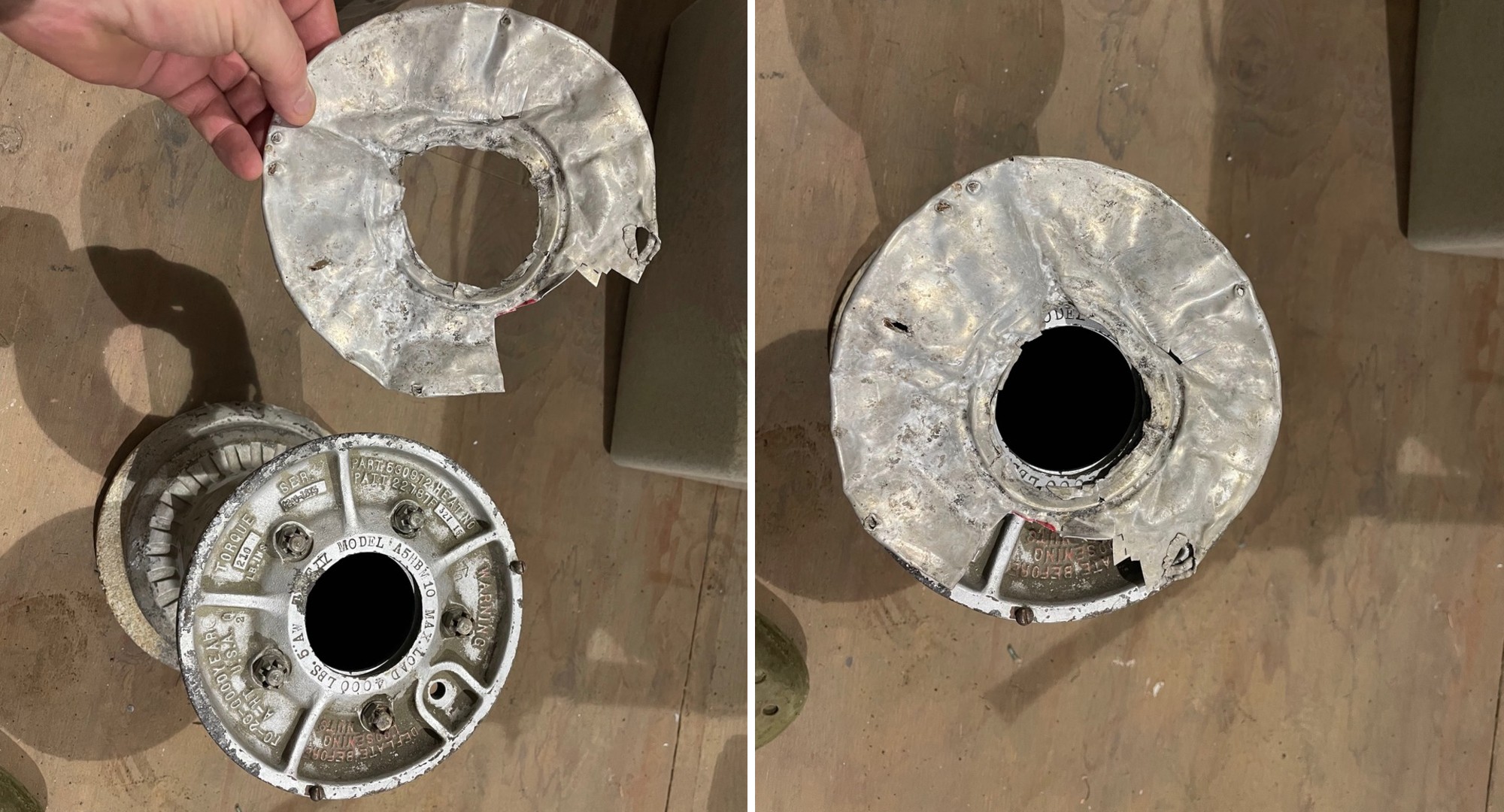
The perfectly matching ‘baking plate’ (Spink)
Spink’s clue-sniffing trail connects him with two like-minded fellas, retired U.S Treasury Agent Les Kinney and former FBI assistant director Shawn Henry.
Like Spink, these blokes have heard too many accounts from too many Marshall Islanders about the man and the woman “who dressed like a man” being rescued at Mili and held at Jaluit, accounts of the salvage of the plane, accounts from Saipan about “The Woman Flyer” who the Japanese forbade mention of. All accounts that no-one had reason to fabricate, let alone the means to corroborate.
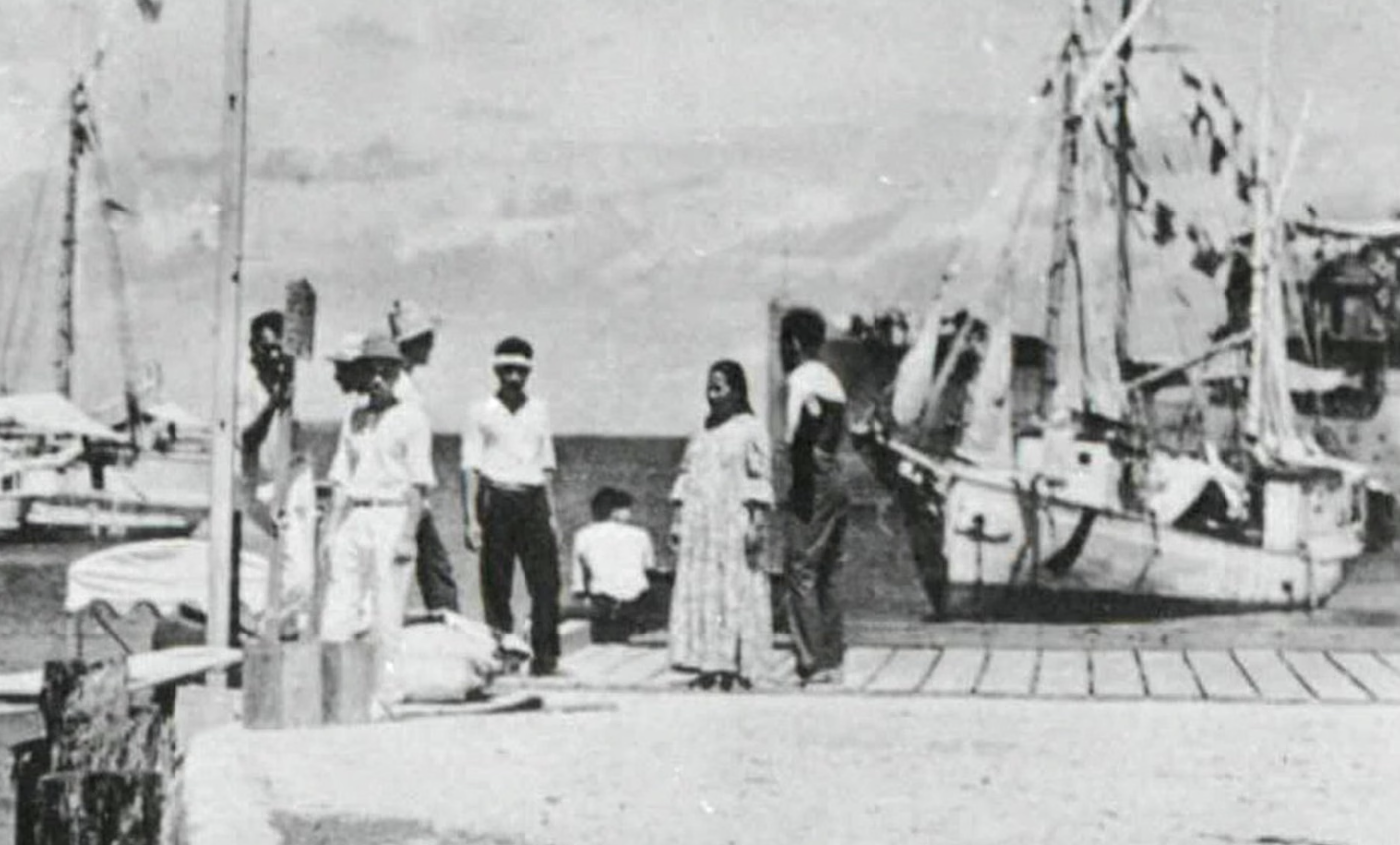
Kinney spent his retirement sifting through documents in the U.S national archives, finding snippets connecting Earhart to the Marshalls and Saipan, but runs into classified brick walls whenever pursuing those leads. His persistence is rewarded, however, when he comes across a mis-filed photograph.
The pic is, well, interesting. If viewed through a believer’s eyes, it’s a slam dunk that shows Earhart and Noonan on the dock in Jaluit, with the Koshu Maru – replete with plane-on-barge – in the background. And while it’s certainly not conclusive in your writer’s eyes – especially given revelations to follow – it’s certainly intriguing.
The more you study this photo, the more tantalising it becomes, like one of those magic eye puzzles where one moment – yes, it’s them I think – the next, hmmm, could be anyone, really, What can’t be denied is this: the ship in the background is definitely the Koshu Maru; there’s something plane-like behind it (though it’s blurry); and there are two Caucasians among the half-dozen Islanders – perhaps Noonan facing the camera, perhaps Earhart sitting with her back to the camera, with her swimmer’s shoulders, trousers, short hair, face in profile. Apart from the missionaries, Westerners were rare in Japanese-controlled Jaluit.
Crucially, no-one was aware of this photo for the decades that the Mili/Koshu Maru/Jaluit narrative had been circulating, so it’s not like the account was tailored around the photo.
According to Martin, Les Kinney’s deep dives turn up more snippets, suggesting that Admiral Nimitz acknowledged she died in Saipan as captive of the Japanese, who took her for a spy. And that a G.I found the briefcase containing Earhart and Noonan’s documents in a blown Saipan safe. Supposedly it was handed over to an officer and disappeared up the chain of command, never to be seen.
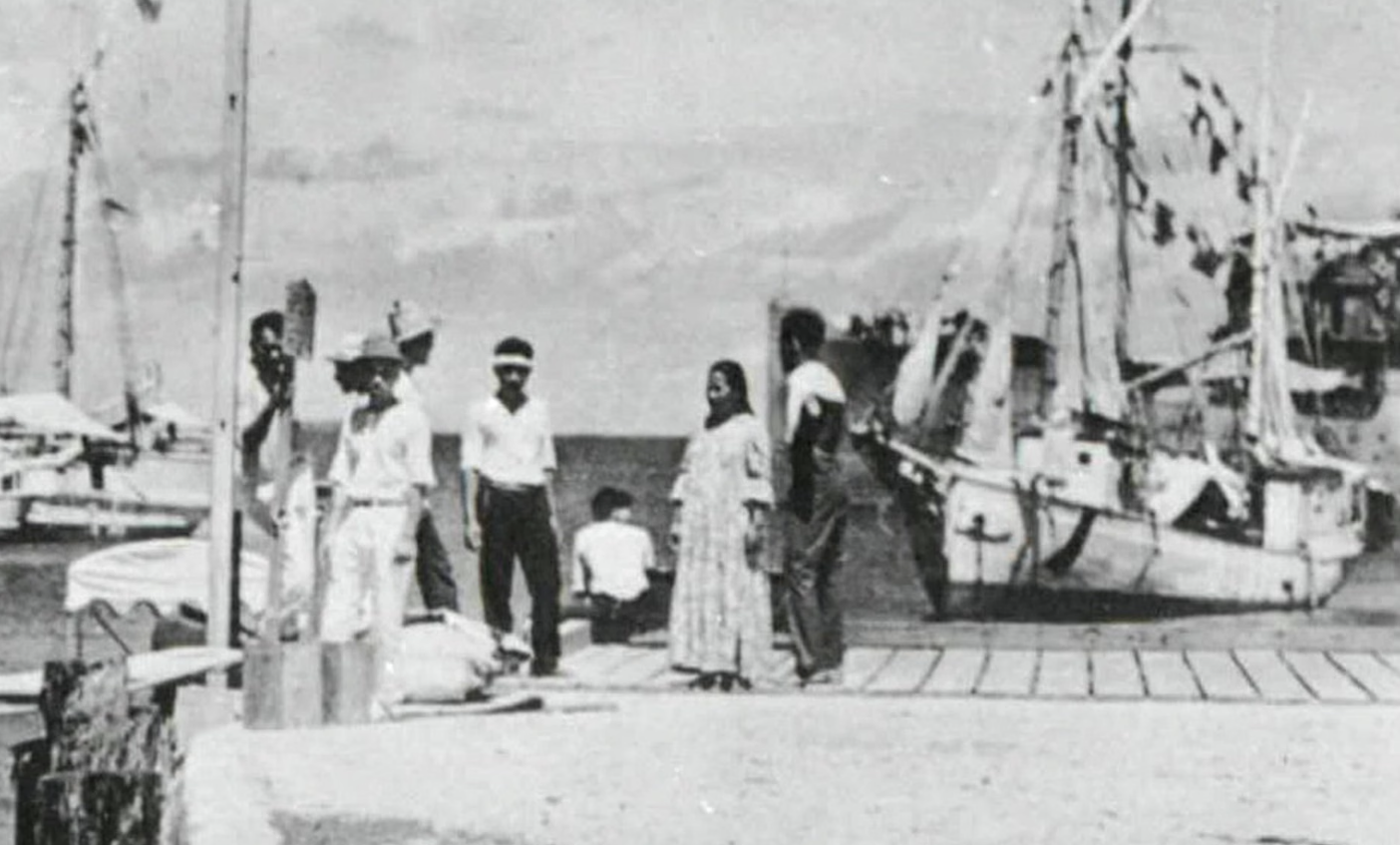
Evidence or ambiguity: The Koshu Maru sits at dock with, apparently, Fred Noonan, furthest left, and Amelia Earhart, crouching with back to camera.
In 2017, The History Channel airs a two-hour documentary, Amelia Earhart: The Lost Evidence, with Shawn Henry the hard-nosed agent driving the investigation forward, Kinney the studious researcher, supported by the Spinkster (in some great outfits), Jim Hayton, a dignified, frail Tony de Brum, interviewed weeks before his passing, and a handful of elderly witnesses from the Marshalls and Saipan. Daly and Trader pop up in expedition footage cameos. The doco, well constructed – if a little melodramatic – alleges a cover-up, claiming that the US government knew of her whereabouts but did nothing to rescue her.
The show smashes viewership records for the History Channel! The Marshallese government drafts a statement endorsing the findings, and it looks like key elements of the Amelia Earhart mystery are solved. Pop the champagne!
Only, ah, not quite. The show’s pulled after a single airing. Japan allegedly leans on the Marshallese government to kill their statement on threat of withdrawing aid, and a Japanese military blogger finds a copy of the contentious photo in his national archives that gives it a publication date of 1935, two years before Earhart’s mission. For Mili believers, the debunking is all too surgical and convenient…and does little to address the witnesses and the specific debris anyway.
It’s an almighty conspiracy rabbit hole we could lose ourselves down here, so let’s just peer over the edge at some of its more interesting features.
First up. Why would the U.S, after mounting a massive search for Earhart, go to such lengths since to hide and obfuscate so many documents relating to the event? One far-reaching explanation might be this: By the late 30s, with global tensions heating and Japan pushing into the Pacific, the U.S had cracked their ciphers, were monitoring their communications, and knew Earhart was being held by the Japanese – but to confront them would be to give the game away. And so, they kept quiet.
Extrapolating quite a stretch further, did the US keep schtum about this ever since, because disclosure could imply that they might have known about Japan’s Pearl Harbour ambush years later, and allowed the attack to happen to muster support for their entry into the war?
Gotta say, that’s way too far a reach in your writer’s eyes.
Maybe it was less heinous, and more about saving face, as Martin speculates:
Amelia Earhart was America’s Princess Di. Imagine if Princess Di was captured by Al-Qaeda and lived for five years in captivity, and the government knew about it, and took no steps to rescue her – that’d be pretty hard to come back from in the polls. Who knows, that briefcase could be in some CIA locker still.
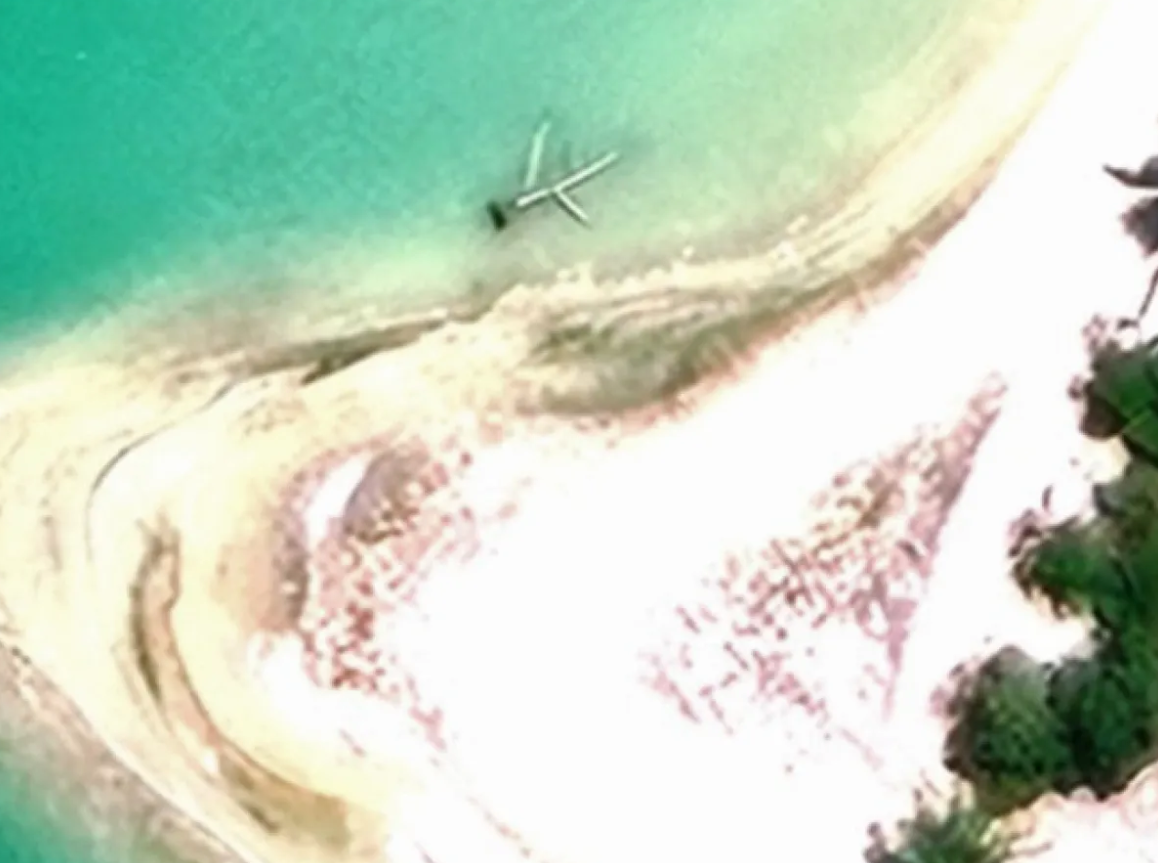
This photo appears to show a plane wreckage and is the impetus for the current expedition to Nikumaroro Island (Archaeological Legacy Institute)
Rival Earhart theories abound: the most persistent comes courtesy of the very-well-funded International Group for Historic Aircraft Recovery (TIGHAR) which proposes Earhart and Noonan landed on Nikumaroro Island, 350 nautical miles south west of Howland. Full credit to TIGHAR for persistence, they’ve been to Nikumaroro a dozen times since 1989, armed with ever more sophisticated detection devices, and have turned up tantalising titbits, but nothing conclusive.
The most compelling argument for Nikumaroro Island is its proximity to the Howland target, and critics of the Marshalls theory point to its distance from Howland, and claim it was too far off course, and Earhart and Noonan’s fuel reserves couldn’t have gone the distance – but it’s further from Lae (Earhart’s point of departure) to the target island of Howland, than it is from Lae to The Marshalls.
And in February 2024, an exciting and credible claim was made by Deep Sea Vision, a U.S based sea exploration company who conducted a massive sonar scan of the region around Howland Island. Sonar-generated imagery appears to show a plane-shaped object on the sea bed 15,000 feet deep, about 160 km from Howland. At time of writing, DSV are mobilising a follow-up expedition with a ROV to get photographic evidence…so by the time this book is circulating…who knows?
And, really, the Marshalls theory is done no favours by the C word that accompanies it – conspiracy. Though the US government’s secrecy merits a raised eyebrow, offshoot theories about Earhart returning to the US and living under a pseudonym drags otherwise diligent investigative work into unhelpful Elvis-sightings territory.
Perhaps the most intriguing aspect of this all remains in the oral histories of the people of the Republic of the Marshall Islands. As Spink told Nat Geo in a 2015 interview:
I heard the same consistent story from too many people in the Marshalls to dismiss it. They say, “She landed at Mili. Our uncles and aunts, our parents, and our grandparents know she landed here.”
//GRA MURDOCH
Stay tuned for more information on ‘Found At Sea’.