
All views and claims expressed in this article belong solely to the author and do not necessarily reflect the views of Dominica News Online.
Dominica, the island of my birth, was never simply the “paradise” of tourist brochures. It was a nation alive with industry, culture, and agriculture – a land where labor was dignified, where enterprise blossomed in small workshops and grand factories alike, and where civic order and cultural pride gave us strength. Today, as I behold the dependency and idleness that mars too much of our society, I remember another Dominica: one virile and self-reliant, where the people made their own way and stood tall in their dignity.
The title of this essay, “Beggar the Nation,” is deliberate. In economics, there is a principle known as a “beggar-thy-neighbour policy” – a short-sighted approach by which one country attempts to solve its own economic woes by measures that worsen the plight of others. Such policies may enrich a few, but ultimately, they impoverish the whole. In Dominica, we have inverted this principle inward. By neglecting agriculture, industry, and the disciplined cultivation of a dignified culture, the new oligarchy has fostered a “beggar-the-nation” ethos. They enrich themselves and their inner circles, while leaving the rest of the island to drift into dependency. What was once a proud people of initiative and creativity is too often reduced today to handouts and idleness.
Lime, tobacco, and citrus – The foundations of industry
Dominica once stood as the lime-producing powerhouse of the British Empire. At Bath Estate, immense works pressed limes into cordial, pure juice, and lime oil that flavored teas and cocktails in faraway England. The Roseau Valley was lined with lime groves, its frothing river crossed by a great suspension bridge. When the sluice gates opened at the factory, tons of pungent lime peel tumbled into the water, filling the valley with a sharp perfume – as if all Roseau had been baptized in lemonade.
At Hillsborough Estate, rows of tobacco fed the machinery of J.A.S. Garraway & Company. It was there I earned my first wages as a nine-year-old in the 1970s, working summers while at Goodwill Junior High, splitting “reject” cigarettes and returning the salvaged tobacco to the hopper.
Next to the Goodwill Junior High School (to its northern flank) stood the ice factory where locals bought ice blocks two feet square and six inches wide- before refrigerators became commonplace. The ice blocks would be often hauled away in crocus bags, covered in sawdust to slow them from melting under our blazing sun. The blocks of ice were split into smaller pieces with an ice pick (a tool that is now almost extinct) and stored in ice chests or ice flasks until needed. The many ice cream vendors around the island who made that treat in hand-cranked tubs needed the ice to place around the metal cylinder within which flavored (vanilla, chocolate or peanut) milk resided. As they rotated the cylinder with a hand crank, the ice cream would form. The sturdy ice cream ladies of that era were wonders to behold. The one lady I remember well from that time was a “Ma Taste Me” who would walk around Roseau with an ice cream tub on her head, crying out “Taste me. Taste me,” to elicit sales.
Next to the ice factory there was the citrus boxing plant, a seasonal giant of the agro industry. During harvest, hundreds of trucks groaned their way into Roseau, bulging with grapefruit and oranges destined for the United Kingdom. The delicate paper used to wrap the grapefruits and oranges to prevent them from bruising during shipment was used by the young ones of my generation to make kites during the kite-flying season of the summer when school was out.
The town pulsed with the energy of commerce, the weight of the fruit symbolizing the labor of farmers from every valley and hillside. And the spinoff of securing the kite paper from the citrus packing shed boosted our artistry in crafting toys that took flight.
Nearby, the DOMTRAC dealership displayed bulldozers and heavy machinery – gleaming steel, tracked and towering – a visible emblem of a young nation’s attempt to move mountains. Where DOMTRAC once stood, the AID Bank now rises, but in my memory lingers the clank of steel tracks and the sharp, oily perfume of machines that promised progress. Our late friend Vando Sampson of Mahaut, a superb mechanic and the brother of nurse Susan Sampson, was a master mechanic at DOMTRAC. Industrious and serious, Vando was always neatly clad in his khaki work clothes.
In the 1960s, when I entered elementary school, there was Karam Beverages (KB), the inner-city soft drink factory at Pound. As children of the Roseau Mixed Infant School, we darted there at recess, eyes wide with the lure of freeness. Inside, a stern man inspected bottles under a bright lamp, casting aside any that bore the tiniest speck. Those bottles, marked as “rejects,” were treasures to us. We begged him for rejects through the window, and when he relented, we gulped the sweet fizz through our shirt collars, leaving grape, cherry, and orange stains across our uniforms – the joyful badges of freeness.
The culture of small enterprise

Equally vital were the small vendors, mostly women, who sustained our local culture of sweets and snacks: coconut tablets, tamarind balls, farine coco, doughnuts, and rough cakes. These were our nourishment before foreign franchises and imported junk foods infiltrated our markets. That culture of local enterprise nourished not just our bellies but our dignity. It kept money in our communities and pride in our hands.
Soft Drinks, boat building, rum, and bread
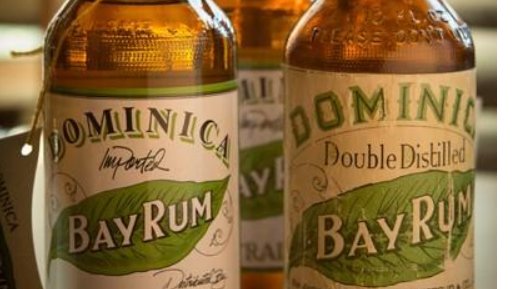
Industry bubbled across the island. On Valley Road we had a Coca-Cola factory. On Goodwill Road, and later at Morne Daniel, Ju-C and 7-Up were bottled. Rum was a proud tradition too: Belfast, River Estate, Bagatelle, and Machoucherie rums, joined by the ubiquitous Bay Rum.
At the mouth of Portsmouth’s Indian River, boat builders crafted boats with cabins and diesel engines – some 70 to 80 feet long. One such notable boat builder was Captain Neville Wade, who today – well into his eighties – is building another masterpiece of maritime industry – an industry which is fast disappearing. How can we, as an island, allow the culture of boat building to disappear? Today, to survive, we must build more boats, not less. Our survival depends on such industries.
And then there was Eric’s Bakery – the brainchild of Eric Shillingford, who studied mechanical engineering in Luton, England, before returning home to build the first automated bread and cake factory in the Eastern Caribbean. The bakery, rooted in the legacy of his mother Ena “Nurse” Moses Giraud and his stepfather Alec Giraud, became a powerhouse of modern food production. Cream crackers, milk buns, coconut turnovers, and pan bread were carried by bread vans across the island. With four depots in Roseau, each with its own lemonade machine, Eric’s offered sustenance and a vision of progress that was uniquely Dominican.
Radio, Stock Farm, and scientific agriculture
Behind the Roseau Public Library, Jeff Charles read news for the Windward Islands Broadcasting Service (WIBS). We schoolchildren peered through a glass window in the broadcasting booth’s door to watch him at work. The station’s antenna loomed from Stock Farm hill to receive and transmit radio signals until Radio Dominica was born in 1970. When Jeff Charles was not reading the news or commentating on cricket games, we listened to Radio Trinidad, Radio 610 of Trinidad, or Radio Antilles during the day.
Beneath that antenna stretched the Government Stock Farm, a living laboratory. Holstein and Zebu cattle grazed in barbed-wire pastures; automated milking machines supplied fresh milk. Tilapia swam in the pond; Scottish Saddleback pigs grew to 600 pounds in the piggery. Farmers came for calves and piglets, carrying the Farm’s bounty back to their villages.
In the fertile northern portion of Dominica, the many banana groves were our green gold. So extensive were our banana cultivations that oftentimes a yellow crop-dusting plane would zoom overhead applying pesticides. That dynamism in agriculture built a proud rural class of rural folk who earned enough not to depend on handouts from politicians looking for votes
The profusion of agriculture products on the Dominica of my youth was born of organized scientific agriculture that proved we could feed ourselves.
Mining, timber, and soap
At Tarish Pit, bulldozers mined pink pumice – as fine as talc – for terrazzo and tiles across the Caribbean. At Canefield, cane fields gave way to DomCan Timber Ltd., a Dominica–Canada venture whose sawmill cut towering gommier trees. Sawdust filled the air for hundreds of yards, while giant trucks with chained logs groaned along our narrow roads.
At Mahaut, Dominica Coconut Products manufactured soaps acclaimed worldwide – proof that our small island could compete on the global stage.
Civic order and cultural guardians
Roseau itself was a town of order and discipline. The elegant Public Library opened our imaginations to worlds beyond Dominica. Our newspapers – The Chronicle, The Star, and The Herald – chronicled the local debates of our still-maturing democracy.
But discipline was also enforced on the ground. There was Frank, the truancy officer, who pedaled through town on his bicycle, scooping up stray children lolling about the Botanic Gardens or splashing in the crystalline Roseau River at Under Power or Big Stone. If Frank caught you, it meant a trip to the fort, the old Police Headquarters, and an awkward reunion with your parents.

Then came Solomon “Town Board,” the sanitary inspector. He peered into yards, ensuring garbage was cleared and stagnant pools treated. Woe betide the household that did not sprinkle Jeyes disinfectant, purchased from the Dominica Dispensary. His vigilance kept the capital clean, disciplined, and healthier than it might otherwise have been.
We have sought to restore that order through the revival of the Dominica Cadet Corps when Prime Minister Rosie Douglas took office in 2000. Established in 1910, the cadet program had died off after independence. With the leadership of old cadets like myself, Major Francis Richards, and Major David Andrew, and new leaders such as Major Lincoln Robinson, the cadet program has struggled with limited means to blunt the wayward trend among our youth. More must be done to rally such beneficial civic leadership institutions such as Cub Scouts, youth and students organizations, Boy Scouts, Girl Guides, Red Cross and 4H Clubs that gave our young folk noble purpose in life.
Creole nationalist – Mable Cissie Caudeiron at center left in head tie

Culture and the creative nation
Industry was matched by cultural ferment. Carib and Arawak Cinemas screened Hollywood blockbusters like Spartacus and The Sound of Music, African American landmarks like Shaft and Buck and the Preacher, and Caribbean films like The Harder They Come.
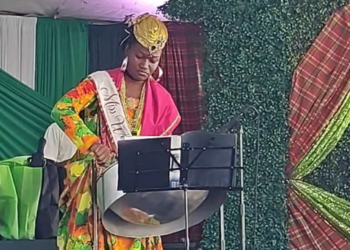
Mable “Cissie” Caudeiron spearheaded a Creole cultural revival, preserving traditional dances and songs. From her foundation arose the Siffleur Montagne Chorale of Jean Lawrence, the Waitu Kubuli Dance Theatre Company of Raymond Lawrence, Le Belle Fiat of Rose Caines, the Le Jeune Étoile Chorale, and Alwin Bully’s People’s Action Theater. Together, these groups nurtured a proud and creative Dominican identity.
Their artistry taught us that there was no shame in hard, productive labor – whether on stage or in the field. For work, honestly done, frees the mind and builds the social and economic muscle of a nation. By contrast, handouts and dependency create a weak, flabby society, fit only to be dominated by others more purposeful in their living.
It was Premier Edward Oliver LeBlanc – poet, agriculturist, visionary – who gave political form to this awakening. His unselfish dedication to education, agriculture, industry, and justice made him a leader of rare integrity. He embodied the creed of self-reliance.
The soundtrack of a nation – Our bands
If industry built our hands and agriculture fed our bellies, music nourished our spirit. Dominica’s bands gave us pride and identity. From Gaylords Power Union and De Boys and Dem to the mighty Swinging Stars, Ophelia Olivacee and Belles Combo, music defined our youth. Much later on came the explosion of cadence-lypso with Exile One, Grammacks, and later the heartbeat of villages in Midnight Groovers.
Other groups like Black Affairs, Vibrators, Every Mother’s Child, Naked Feet, Liquid Ice, and even the carnival pop styling of Brian Rock, who sang like our own local version of Michael Jackson with a band atop a truck during carnival time – they all gave Dominica a vibrant, unique, confident sound. Our bands were more than entertainment – they were cultural ambassadors who showed that small as we were, we had rhythm, creativity, and a dignified voice of our own. The avalanche of filthy music was not common then as today.

(Listen here – Mèsi Bondyé – by Siffleur Montagne Chorale)
Lessons from my youth
While our parents were civil servants, we children tended to our little garden in the Roseau Valley. From my earliest days at the Roseau Mixed Infant School, through Goodwill Junior High, Dominica Grammar School, Sixth Form College, and even while teaching before leaving for university, I raised chickens, rabbits, goats, cattle, and pigs almost daily.
When my brothers Wellsworth, Lawson, and Samuel left for overseas studies, I had to grow up quickly as “the man of the house,” especially as our father was often stationed at the Portsmouth or Melville Hall Fire Stations. On weekends, I carried a cane in season, bananas year-round on many a weekend, cut coconuts to feed the chickens regularly, secured lime peel and coconut meal for the cattle, and gathered zebgwa for goats and sheep, diligently.
The youth of my generation were seldom idle. By the sweat of our brow, we made it. That discipline and industry carried us abroad as shining examples of what Dominica could produce – young men and women who stayed away from drugs, gangs, and wayward behavior, and who gave our island a good name.
But one cannot plant apples and expect to pick oranges. What shall we say of our youth today, when the culture of industrious effort is neglected, when foreign contractors are brought in to build our major projects while Dominican youth loiter, waiting for handouts? This dependency syndrome is the creation of politicians who lack vision, moral rectitude, and any true dedication to their people.
Beggar the nation
Instead of building upon the foundation of earlier generations, too many of today’s leaders have embraced a politics of patronage. They have created a Dominican version of the “beggar-thy-neighbour” policy – enriching themselves and their inner circles while leaving the majority impoverished. In their neglect of agriculture, their abandonment of industry, and their trivialization of culture, they have fostered beggary of the spirit.
Rather than cultivating initiative and enterprise, they distribute favors; rather than building factories and farms, they import workers and reward loyalty. This oligarchy has allowed the island’s potential to go to seed, trading the long-term wealth of a nation for the short-term riches of a few.
Conclusion: Rise again
The Dominica of lime works and rum distilleries, of sawmills and soap factories, of cinemas and chorales, of vendors, bands, and bakeries, was a nation that earned its keep. It was also the Dominica of Cissie Caudeiron’s folklore, Jean and Raymond Lawrence’s chorale and dance theatre, Rose Caines’s Le Belle Fiat, Le Jeune Étoile Chorale, Alwin Bully’s People’s Action Theater, and Edward Oliver LeBlanc’s vision – a society rooted in dignity, self-reliance, and justice.
To restore that spirit is to reject the beggary of dependency and to revive the ethos of Casimir, Loblack, Allfrey, and LeBlanc. Hard productive labor frees the mind and builds a nation’s strength, while idleness and handouts corrode its foundations.
The Dominica I knew was not a paradise – but it was honest, industrious, and dignified. While a colonial entity, we were moving forward with a social democratic spirit. We had a Dominica Labour Party government committed to educating the common folk and bettering the condition of the masses, not merely themselves, party hacks or their immediate families. That is the legacy of civic leadership, flourishing agriculture, dynamic industry, and good governance, worthy of reclaiming, lest we truly beggar the nation.