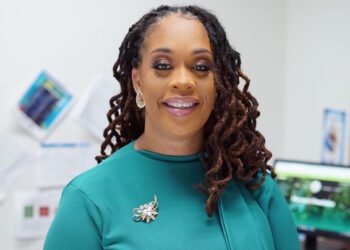

Opposition Leader Jesma Paul-Victor said the cost of living in Dominica remains the public’s greatest concern.
During her response to the 2026-2027 National Budget presentation on Thursday, she noted that while the government understandably celebrates major capital projects, ordinary Dominicans continue to ask simple questions.
“Why is life becoming so expensive?” she asked. “Families measure the economy differently. They measure it at the supermarket, at the gas station, at the pharmacy, when they pay rent, when they purchase school uniforms, when they receive electricity bills, when they attempt to save for the future.”
She said no budget can be considered successful if impressive infrastructure exists alongside increasing economic insecurity within households.
Paul-Victor added that while macroeconomic indicators may point upward, many families continue to struggle with the cost of essential goods and services.
“Food, housing, transportation, utilities, healthcare, education. These are not optional expenses. They are necessities,” she explained.
While Paul-Victor acknowledged that the government has taken steps to cushion households through targeted tax and duty concessions on selected essential goods, she pointed out that those measures provide welcome relief, “but relief alone cannot become permanent policies.”
“Mr. Speaker, on behalf of the hardworking people of Dominica who want to do more with their money, I want to thank the government for the 10 percent flat tax on incomes, the removal of compounding in the calculation of taxes on imported goods and the extension of the factory,” she asserted. “I think the minister said until September; I think we should make that December,” she suggested.
She advocated for focus to be placed on policies that directly and indirectly affect the household experience as a sustainable path towards improving living standards.
“Our long-term objective must be to increase household purchasing power by raising productivity, supporting higher incomes, and reducing the structural cost of doing business in Dominica,” she explained.
The opposition leader expressed that employment is the bridge between economic growth and social progress.
“When people have stable employment, families become more secure. Businesses expand, communities thrive, government revenues increase,” she noted.
Moreover, Paul-Victor mentioned that the Honourable Minister of Finance, Dr. Irving McIntyre boasted about economic growth of 4.5 percent last year, which exceeded the global average of 3.5 percent and the regional average of 3 percent.
“But was this growth only visible in concrete? It must be visible in kitchens, in pay packets, in business incomes, in opportunities for young people,” she said. “This budget comes at a pivotal moment in our national development. International economic conditions remain uncertain. Climate change continues to threaten small island states. Global investment patterns are shifting. International scrutiny of citizen by investment programs continues to evolve, as the minister himself acknowledged.”
She noted that these realities require prudence rather than complacency.
“They require diversification rather than dependence. They require institutions that command confidence at home and abroad,” Paul-Victor emphasized.
She argued that some persons may expect today’s debate to become an exchange of slogans. “We reject that approach,” she remarked. “The people of Dominica deserve something better. They deserve an opposition prepared not merely to criticize but to contribute. Not merely to identify weaknesses, but to propose solutions. Not merely to point out risks, but to offer alternatives.”
In her view, every dollar appropriated by this parliament must produce measurable value. Every project must demonstrate tangible benefits.
“Every promise must ultimately be judged by results,” she stated.
Exploring the impact of construction on the job sector in recent years, Paul-Victor scrutinized the stability of the employment boost.
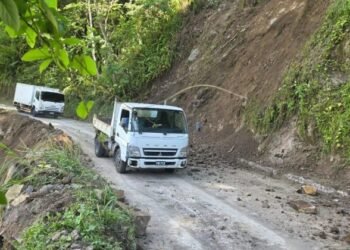
“The question before us, however, is what happens after construction ends? When the airport is completed, when the geothermal plant is fully operational, when the marina opens, when major road projects conclude, will sufficient permanent employment exist to absorb the skilled workers who have contributed to these national projects?”
Paul-Victor stated that every major infrastructure investment should be accompanied by a clearly articulated employment transition strategy.
“Construction must lead to commerce. Commerce must lead to enterprise. Enterprise must lead to permanent jobs,” she explained. “That is how investment becomes lasting prosperity.”