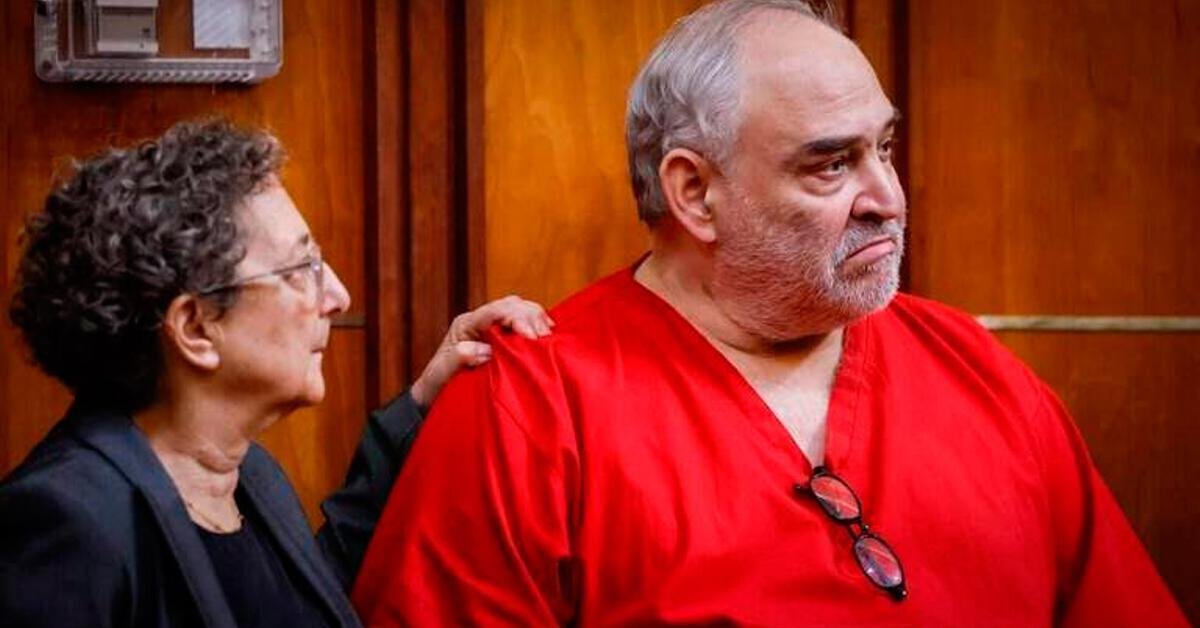
Havana/Judge Zachary James of the Miami-Dade Circuit Court sentenced the Cuban to the death penalty Rafael Andres62, for the 2005 murder of compatriot Ivette Fariñas, a 31-year-old waitress at the La Carreta restaurant at Miami International Airport. The magistrate ratified the capital punishment of the jury that last November had nine out of 12 of its members vote in favor, emphasizing that the crime was “atrocious, horrible and cruel.”
In his sentencing, James reiterated the murderer’s viciousness by pointing out, based on the forensic report, that the victim “suffered 30 minutes of agony.”
Andrés had already been convicted of killing another woman. The feminist platform Alas Tensas recalled that the convicted man “in 1988 received a nine-year prison sentence for the murder of Linda Azcarreta, 32, but was released after serving approximately 18 months. Eighteen years after that crime, he murdered Ivette Fariñas.”

/ The New Herald
During the trial, the Prosecutor’s Office maintained that the accused should be sentenced to death by pointing out that he used a spare key to enter the victim’s home, stabbing her several times in the chest, hitting her in the face and head” until he revealed the PIN code of her bank card. Then he strangled her with the power cord of a rice cooker before leaving her apartment engulfed in flames.
The trick of defense attorney Joyce Brenner, who last April appealed the Spencer hearing – a post-verdict procedure in Florida where the defense presents mitigating evidence – was of no use, to prevent Andrés from entering death row.
Judge James dismissed the testimony of Chadwick Willacy, a man sentenced to death for beating a neighbor with a hammer and setting her on fire in 1990 in Palm Bay, who was executed on April 21. The man assured that Andrés always talks to them about religion, family and cooking recipes.
The New Heraldwhich was following the sentence, indicated that the Cuban offered an extensive statement in which he stated that “he never pretended to be an angel, but that since (the second murder) he has dedicated his life to Jesus Christ.” However, he did not mention his victims or the impact his murders had on their families.
“My actions speak louder than any words,” Andrés declared, noting that his execution would not bring his victims back to life and that he would dedicate the rest of his stay in prison to preaching religion and guiding other inmates.
/ The New Herald
“That man does not deserve to exist,” declared the son of the first victim, René Azcarreta to the same medium after hearing the sentence. “He lost that right when he killed my mother… and then he did it again.”
To which he added: “Rafael Andrés took my mother’s life from this world, in the most violent and senseless way imaginable.” Although he received a second chance, “he used it to deliberately, repeatedly and violently destroy another family… The same hands, the same violence. A different family destroyed,” he said. “That’s not a mistake. That’s his nature.”
As of July 26, 2026, the Florida Department of Corrections had 241 people sentenced to death: 240 men and one woman. Of that total, 15 came from cases processed in Miami-Dade, around 6.2%.
Of the 12 foreign prisoners sentenced to death in Florida, five are Cuban. One of them is Omar Blanco, convicted of a homicide that occurred in 1982, when during a robbery at a home in Broward County he murdered John Ryan in front of his wife. Since then, his defense has focused legal resources on alleged deficiencies during the trial and on questions about his mental capacity.
Another case is that of Leonardo Franqui, sentenced for his participation in the robbery of a bank in Hialeah in 1992, an event in which police officer Steven Bauer died. His conviction has been the subject of controversy due to his intellectual disability and doubts raised about the statements of some of his co-accused.
Among them is Pablo San Martín, also sentenced to capital punishment. His defense has requested a review of the case on several occasions, arguing mental health problems, in addition to questioning aspects of the judicial process that led to his sentence.
For his part, Marbel Mendoza was convicted of the murder of Conrado Sotto, a businessman dedicated to currency exchange, whom he attacked during a robbery to deprive him of the day’s collection. Although he has promoted different legal appeals, mainly due to the lack of unanimity of the jury, the courts have ratified the conviction.
The fifth Cuban is Manolo Rodríguez, convicted of a homicide committed in 1992 in Miami-Dade County. According to the investigation, he murdered Bárbaro Bobby Simón after a dispute related to personal matters and subsequently tried to hide the body.