Banks have begun receiving programs for the second semester, and “Shorouk” reveals the details:
Dealers enter implementation and the first files are transferred to the banks after the ministerial approval
The procedure affects those who obtained the first visas from the Ministry of Foreign Trade
Ensuring that import licenses are directed towards real producing institutions
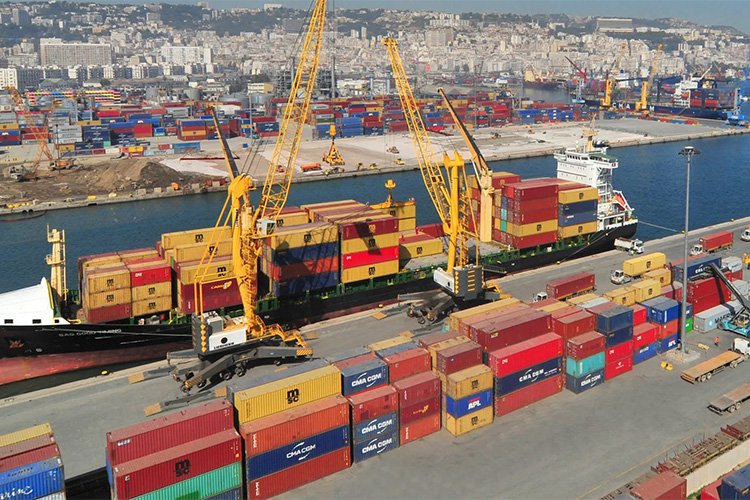
The process of importing the second semester of 2026 entered, on Wednesday, the stage of actual implementation, after public and private banks officially began receiving discretionary programs for importers, and a number of economic dealers were able to initiate their banking procedures for the first time according to the new mechanism and according to data obtained by “Al-Shorouk”.
This transformation coincides with the launch of a strict digital system of control, which relies on determining the geographical location (GPS) of factories and production units, and linking data to various concerned departments and bodies, allowing immediate verification of the validity of information, revealing fake or unexploited factories, and restricting the use of import licenses to real producing institutions, in a step aimed at tightening control, accelerating the processing of files, and enhancing transparency in the management of import operations.
In detail, several public and private banks, starting on the morning of Wednesday, July 8, 2026, officially began receiving the estimated import programs for the second semester of 2026, after the services of the Ministry of Foreign Trade and Export Promotion completed the annotation process on the first files that met the conditions, according to what Al-Shorouk obtained from sources in several public and private banks.
The same sources confirmed that a number of economic clients were already able to initiate banking procedures related to their files, an indication that the process has entered the actual implementation phase, days after the start of studying applications through the digital platform approved by the Ministry.
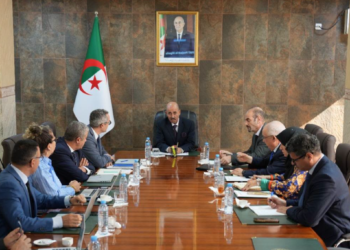
This development comes as an embodiment of the strict instructions given by the Minister of Foreign Trade and Export Promotion, Kamal Raziq, during the working meeting that he chaired earlier this week with the central administration frameworks, where he stressed the necessity of immediately starting to study and annotate the files of economic dealers immediately after completing them via the digital platform, without any delay, while adopting real-time processing of requests according to the principle of first-come-first-served filing, in a way that guarantees speed, transparency, and equality among all dealers.
The Minister also directed sector officials to harness all human and organizational capabilities, by allocating shift teams that continue their work continuously, to ensure immediate handling of requests and accompany economic clients in the various stages of processing their files.
In the same context, the Ministry of Foreign Trade and Export Promotion had enhanced the digital platform for the import estimation program with a number of new features, including adopting geographical location (GPS) for factories and production units, and linking data to the databases of various sectors and concerned bodies, allowing real-time verification of the validity of the information provided, revealing fictitious or unexploited factories, and ensuring that import licenses are directed towards real producing institutions.
Earlier this week, the Minister of Foreign Trade and Export Promotion, Kamal Raziq, ordered the immediate start of studying and noting the requests of economic customers for the estimated import programs for the second semester of 2026, immediately after completing their deposit via the digital platform, while adopting real-time processing of the files to reduce their deadlines.
During a working meeting with the sector’s executives, the Minister stressed the necessity of immediately handling requests according to the principle of first-come-first-served filing, while employing alternate teams to ensure continuity of service and take care of the concerns of economic customers without interruption.
He also stressed that completing the study of the files remains linked to settling the clients’ status vis-à-vis the tax authorities and social security funds, as they are among the basic conditions for completing the procedures. In the same context, Raziq called for continuing to accompany exporters and provide them with various facilities, in a way that supports national exports and improves the business climate, within the framework of the state’s trend towards digitizing administrative services, accelerating file processing, and bringing the administration closer to economic operators.
The Minister of Foreign Trade and Export Promotion also called on public institutions that benefit from licenses to mark their discretionary import programs to actively engage in the new digital platform and make optimal use of the green corridor, stressing that these mechanisms will contribute to accelerating the processing of files, simplifying import procedures, and enhancing transparency in the management of operations.
According to a statement by the Ministry of Foreign Trade and Export Promotion, seen by Al-Shorouk, the Minister supervised, on Tuesday, at the Ministry’s headquarters, the opening of a workshop that brought together representatives of public institutions benefiting from special licenses to mark their discretionary programs within the framework of processing and management. It was devoted to explaining the mechanisms of using the digital platform for the discretionary program for imports, and how to benefit from the green corridor designated for these institutions, which entered into force starting on July 1, 2026.