
All views and claims expressed in this article belong solely to the author and have not been independently verified.
There is a moment in many public debates when someone says a sentence that is supposed to end the conversation. You have probably heard it before.
“Let’s be objective.”
Once the sentence is spoken, something subtle happens. The tone of the conversation changes. The speaker straightens slightly, as if stepping onto higher ground. Disagreement suddenly becomes awkward, and if you push back, you risk sounding emotional, ideological, perhaps even anti-science.
The implication is clear: objectivity has entered the room, and the debate is effectively over.
But what exactly has entered the room?
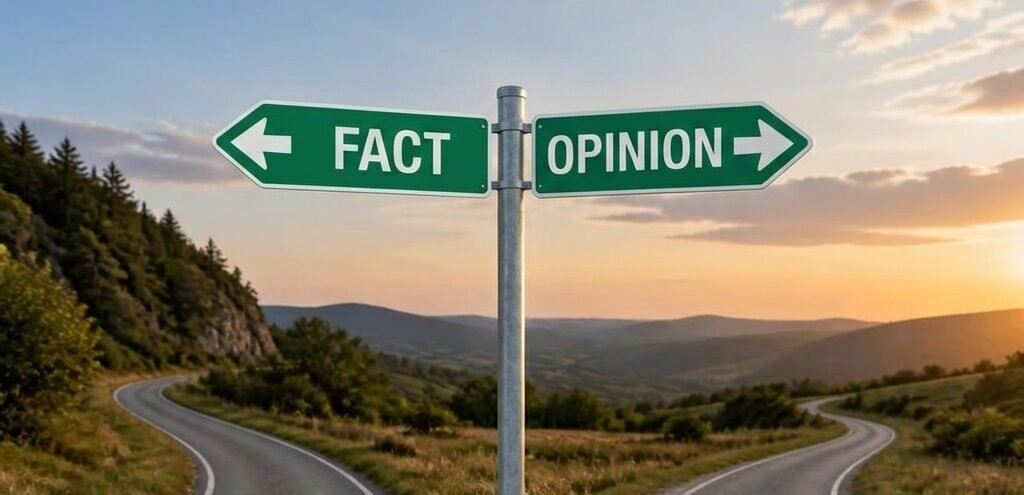
The word “objective” is one of the most powerful rhetorical tools in modern public discourse. It signals neutrality. It suggests distance from bias, politics, and personal experience. To claim objectivity is to claim that one’s position reflects reality itself rather than merely a perspective on it.
And yet, if we look closely, something curious appears.
What many people call objectivity often looks suspiciously like confidence in one’s own experience and assumptions.
This was the question raised long ago by the philosopher and psychologist William James, who asked whether someone could feel completely satisfied that an idea fits perfectly with everything they know and still be wrong about whether it is objectively true. It is an uncomfortable question. It suggests that the feeling of certainty may not be the same as the presence of truth.
This matters especially in fields that rely heavily on the authority of evidence like epidemiology, medicine, and public health among them. These disciplines rightly emphasize data, statistical inference, and rigorous methodology. Their credibility rests on the promise that knowledge is produced through systematic investigation rather than personal opinion.
But knowledge does not emerge from laboratories fully formed and untouched by human judgment. Scientists decide which questions deserve investigation. Institutions determine which projects receive funding. Researchers interpret results through theoretical frameworks that shape how evidence is understood. Even the choice of statistical models reflects assumptions about how the world works.
None of this makes science unreliable. Quite the opposite.
Science works precisely because it recognizes the possibility of error. It advances through criticism, replication, and revision. Every finding is provisional, and every conclusion is open to challenge by better evidence.
In other words, science is powerful not because it guarantees certainty but because it institutionalizes doubt. The trouble begins when the language of objectivity is used not as a methodological aspiration but as a form of intellectual closure.
During the debates surrounding COVID-19, public health messaging frequently relied on appeals to “the science,” as if scientific knowledge were static and final. Yet as new data emerged, recommendations evolved, as they should in the face of a novel virus.
For many observers, however, the shift created confusion. Policies once presented as unquestionable truths were suddenly revised. What looked like inconsistency was, in fact, the normal process of scientific learning. But the earlier framing of objectivity as certainty made that evolution appear contradictory.
The real problem was not that science changed. Science always changes.
The problem was the story we told about it. When objectivity is framed as a final destination rather than a process, revisions look like failures rather than progress. And yet the most reliable knowledge systems in human history (from modern science to democratic governance) are built on the recognition that no perspective is complete. They depend on disagreement, scrutiny, and the constant testing of ideas.
True objectivity, then, may not lie in the confident declaration that one possesses the truth. It lies in the willingness to keep asking whether one might be wrong.
That posture is quieter, less theatrical, and less satisfying in the heat of argument. But it is also, perhaps, the closest we come to the thing we so confidently call objective.
So, the next time someone says “let’s be objective” in a debate, the honest response might not be to concede or resist, but to ask a better question: are we searching for truth here, or just trying to end the conversation?
About the author
Ndubueze Onyeani is a Nigerian student and author of two books, “The Medical Student” and the fantasy novel “The Last Sun of Tharis.” He is passionate about public health, epidemiology, and youth development