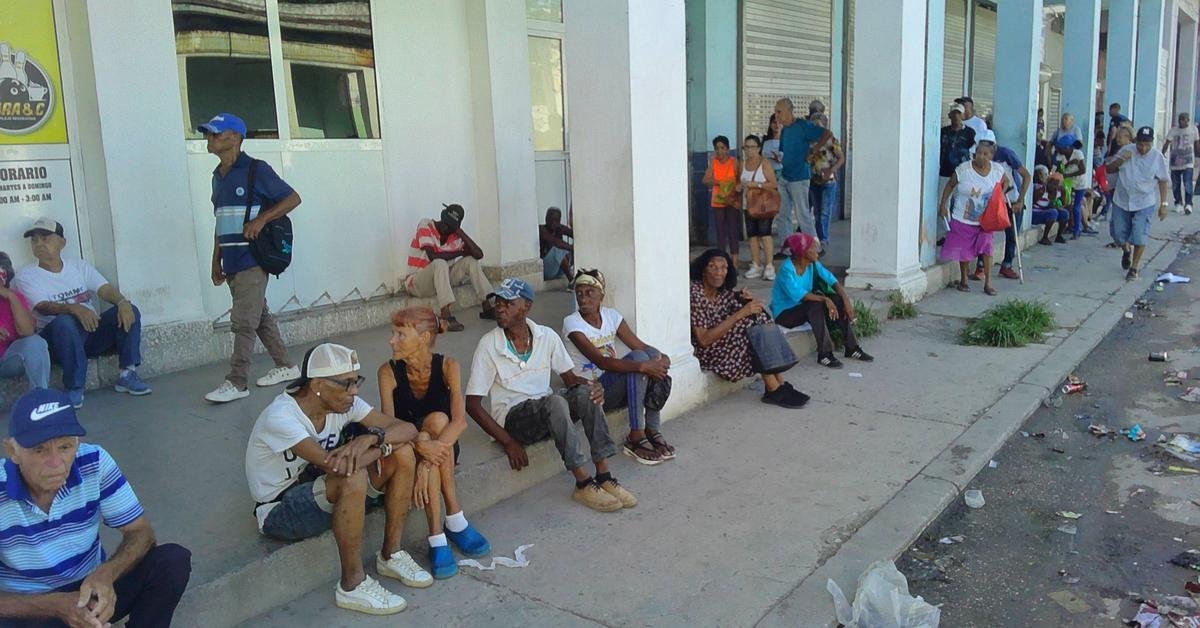
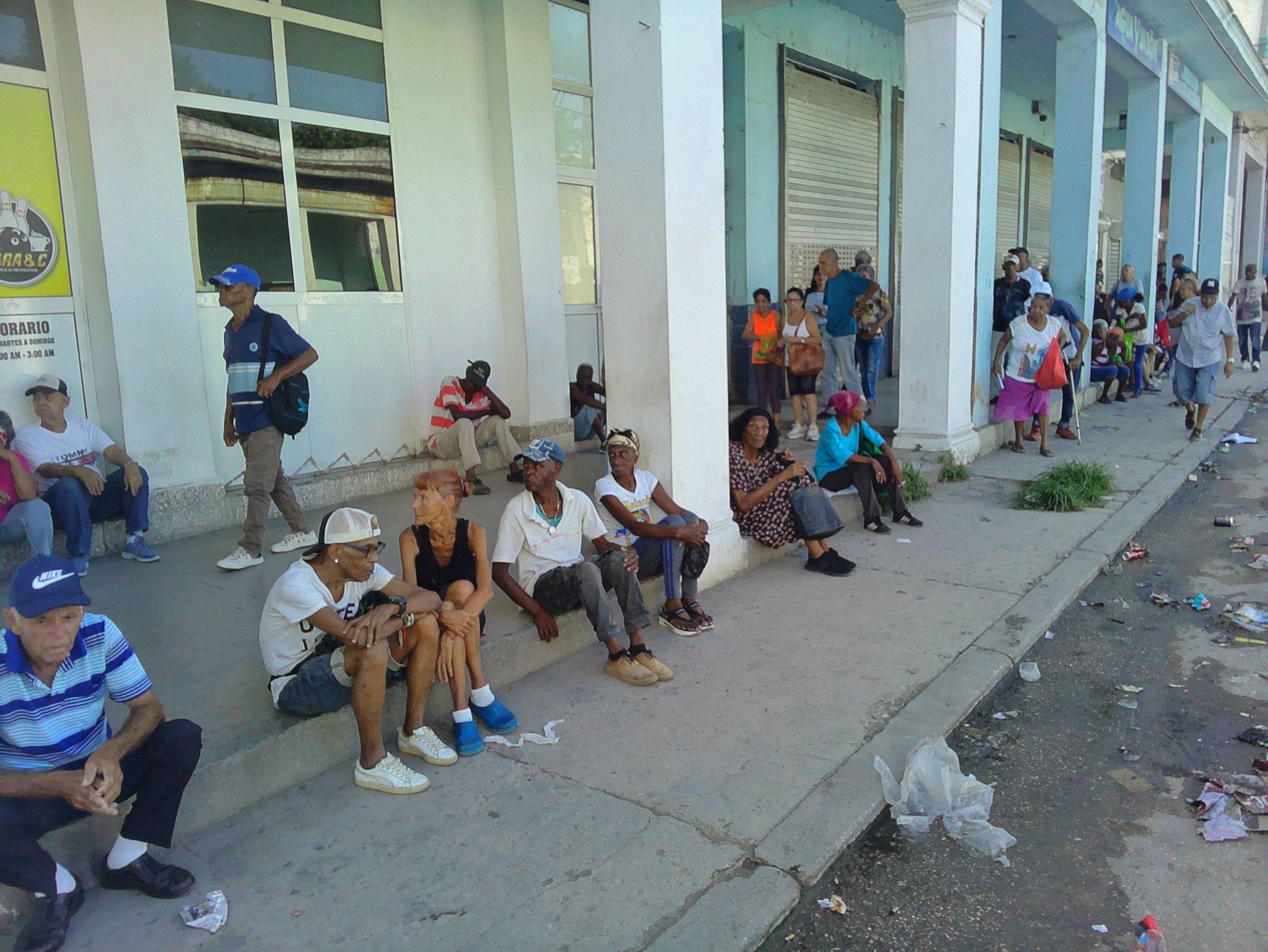
Madrid/The official statistics put figures on the perception that the migration crisis has no bottom. In 2025, 313,414 people permanently left the Island, although the return of 72,056 slightly cushioned the figure to leave a total migration balance of 245,264. The worst of the last five years continues to be, by far, 2022, when half a million inhabitants were lost, while in 2023 it was 330,000 and a year later 307,961. These are, once again, unprecedented data for a country that is not experiencing a war. The population of Cuba, as the official press had announced a few days ago, stood at 9,434,593 people at the end of last year.
The capital largely leads the drain, with 98,773 emigrants, followed by Matanzas, Villa Clara, Santiago de Cuba and Camagüey, which lost more than 20,000 people last year. Between 10,000 and 15,500 emigrants were registered in Holguín, Sancti Spíritus, Cienfuegos, Ciego de Ávila, Las Tunas and Mayabeque. Behind them are Guantánamo, Pinar del Río, Artemisa, Granma and the Isla de la Juventud.
To these data we must add the low birth rate in 2025, where there were only 68,051 births, and the very high mortality134,354 deaths, which left a negative natural balance of 66,303 people. This section shows the mortality rate, already advanced in January in the official press, which was 9.9 per thousand live births. The detail is even more alarming, since Havana has a rate of 14.2, Isla de la Juventud 12.9 and Camagüey 12.4, numbers more typical of the rest of the continent than of a country that until a few years ago had figures worthy of the first world, between 3 and 5 per thousand.
The detail is even more alarming, since Havana has a rate of 14.2, Isla de la Juventud 12.9 and Camagüey 12.4
Consequently, the Yearbook reveals another continuously rising data: the average and median age. Both indicators have risen two points compared to 2021 and are, respectively, at 43 and 45 years, being higher for women (44.1 and 46.5) than for men (42.9 and 43.3).
The information arrives the same day that Cubadebate has published a special to give explanations about some details of the new Immigration, Citizenship and Immigration lawsthat the Government published in the Official Gazette last May and come into effect in 180 days. First Colonel Mario Méndez Mayedo, head of the Directorate of Identification, Immigration and Immigration of the Ministry of the Interior, has responded to a list of questions in which there are not many new answers, the main one being effective immigration residence and the expansion of the recognition of effective residence.
As was already known, the concept recognizes those who maintain “their main link with Cuba,” where they live their lives because they remain there – in general terms – for most of the year. Therefore, 180 days of living on the Island are required for a foreigner to acquire this condition. “However, the law incorporates a broader concept that is not limited only to the time of stay. Effective residence may also be recognized for those who remain in the country for at least 120 days, as long as they prove real roots with Cuba through family, work, economic or property ties,” explains the official, who justifies it with the need that the mere number does not serve to limit these rights.
The rights that will be recognized will not, in any case, be political ones. Whether or not a foreigner recognized as resident in Cuba can vote in electoral processes will be included in another norm, that of the Electoral Law, Méndez clarified.
Among the other key points highlighted in the laws is the regulation, for the first time, of the renunciation of Cuban citizenship, which must be requested from the consulate abroad, and its recovery, which can be done only once, after a minimum of five years from the loss and under certain requirements. Children of Cubans retain the right to apply for nationality, too.
Cubans residing abroad can stay in Cuba for as long as they wish without limit, without having to complete procedures or request extensions of stay. As usual, if you retain your nationality, you must enter the country with your Cuban passport – if it has expired, you are allowed entry, but you are obliged to renew it before being able to leave – and the rights and duties that derive from it will apply.
Whether or not a foreigner recognized as resident in Cuba can vote in electoral processes will be included in another norm, that of the Electoral Law, Méndez clarified.
Among those rights that until now they lost and the new law allows them to keep are property rights, including the right to preserve property, inherit and do business.
For foreigners who do not live in Cuba but want to participate in its economy, the Investment and Business category is created for emigration. “As long as they remain in Cuba, they will enjoy the rights that the legal system recognizes for Cuban citizens, which reinforces the legal security of their projects and their investments in the country,” says the official, in a superficial mention of a core issue.
There is also another new category that previously did not exist, that of humanitarian resident, and the Migration Police is officially established, whose functions are “prevention, care for migrants, protection of their rights, social discipline and public order. It will also contribute to the execution of decisions adopted by the courts and immigration authorities within the scope of their powers.” It is no small thing for the tiny – undisclosed – number of foreigners who want to live in Cuba.