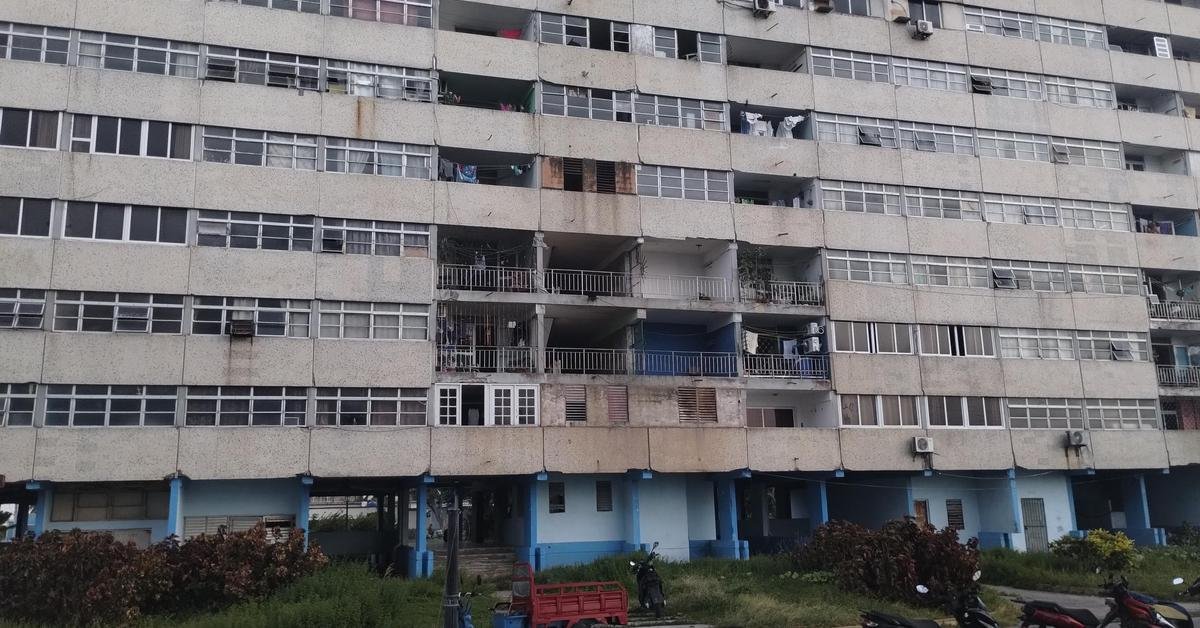
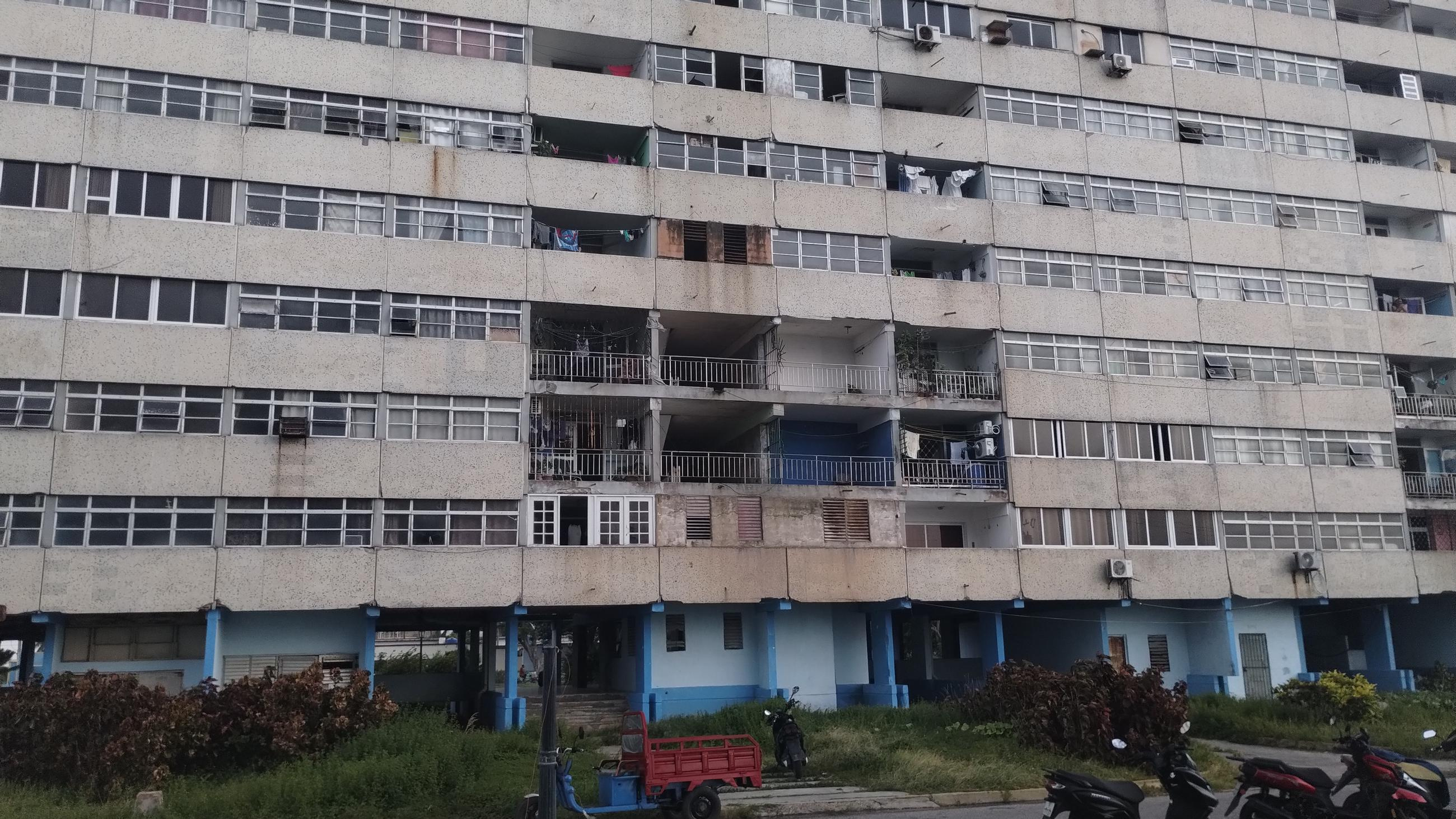
Matanzas/It was around ten at night on July 7 when a man, later identified as Miguel, fell from the sixth floor of the emblematic old 13 story buildinglocated in Matanzas, while trying to enter a neighbor’s home. According to the preliminary Criminalistics report, the intruder tried to grab onto a protective grate on the balcony of the building, but the structure gave way, causing him to fall suddenly to the ground floor.
Miguelito was wearing a balaclava that covered his face, which made it impossible for neighbors to identify him at first. It was his own mother who, before police experts, confirmed the identity of the deceased.
For the community, the tragic outcome was not a surprise, but something expected in a person like Miguelito: mentally ill for years, with a criminal record and forgotten by the authorities.
“It was a problem for the neighborhood,” says a neighbor on condition of anonymity. “He was someone disturbed who was undergoing psychiatric treatment. About fifteen years ago he stabbed several times a boy from the same building who helped him, and even gave him work doing crafts. One day, without there being a problem or a prior discussion, he waited for him downstairs and stabbed him several times,” he says.
“He was someone disturbed who was undergoing psychiatric treatment. About fifteen years ago he stabbed a boy from the same building who was helping him several times.”
Miguel spent eight years in prison and, once finished, returned to the neighborhood. The victim was the one who had to move, for fear of a new attack. “I am not a judge, but someone who endangers the lives of others is either given specialized help or removed from society. What cannot be done is sent back, after a few years, to the same place where he almost murdered an innocent person,” laments the neighbor.
The alarming lack of infrastructure, medications and monitoring protocols for people with chronic mental illnesses is one more of the many open wounds in Cuba. The extreme shortage of antipsychotic drugs and sporadic medical supervision have left the responsibility of containing patients who, during a crisis, can be very dangerous in the hands of families and neighbors themselves.
The Island’s health system, which years ago centralized the control of these cases through prolonged admission or the rigorous provision of treatments, is no longer responsible for them. Faced with the collapse of hospitals and pharmaceuticals, patients with severe diagnoses of schizophrenia or psychosis end up wandering the streets or confined to homes that do not have sufficient resources to assist them. The lack of adequate detention institutions and the absence of controlled reintegration programs turn mental health in Cuba into a Russian roulette for public safety.
Odalis, the owner of the apartment that Miguel tried to access on the night of July 7, reaffirms the previous testimony while trying to assimilate what happened. “I’m still nervous. His mother is a very dear neighbor, but that boy needed urgent medical attention. He tried to enter my house several times this week for different reasons, and now this happens. No one knew his true intentions, only that he was wearing a balaclava and, in a backpack, a rope and a hammer. It’s hard to think that, if he hadn’t fallen, maybe it would be me who would be dead today,” she says regretfully.
Although the feeling of helplessness is felt throughout the building, his case is special, and he agrees that this was foreseeable. “Since he stabbed Eduardito, the craftsman, we all knew – and the Police too – that he was not well psychologically. All for not caring for a sick person or taking him to a place to treat him.”
“It’s not that everything bad that happened in the building was Miguelito’s fault, but he chased the girls, harassed them and threatened the families”
Residents claim that Miguel’s erratic and intimidating behaviors were frequent and that early warnings were systematically ignored by law enforcement. In recent nights, Miguel, adds a third neighbor consulted, was throwing bottles from his balcony at passers-by.
“We called the police and they never came,” he laments. “Just as they did not arrive when Cecilia, a neighbor on the eleventh floor, had her door forced and her EcoFlow equipment stolen. It is not that everything bad that happened in the building was Miguelito’s fault, but he chased the girls, harassed them and threatened the families. The Ministry of the Interior and the head of the sector never did anything. Now look, if this misfortune did not happen, perhaps Odalis would not be alive,” he continues.
The neighbor affirms that all the residents feel the pain of Magalys, his mother, very much. “He is a beautiful person, but this is like García Márquez’s book: the chronicle of a death foretold. The worst thing is that it could have been avoided with treatment and the supervision of specialists.”