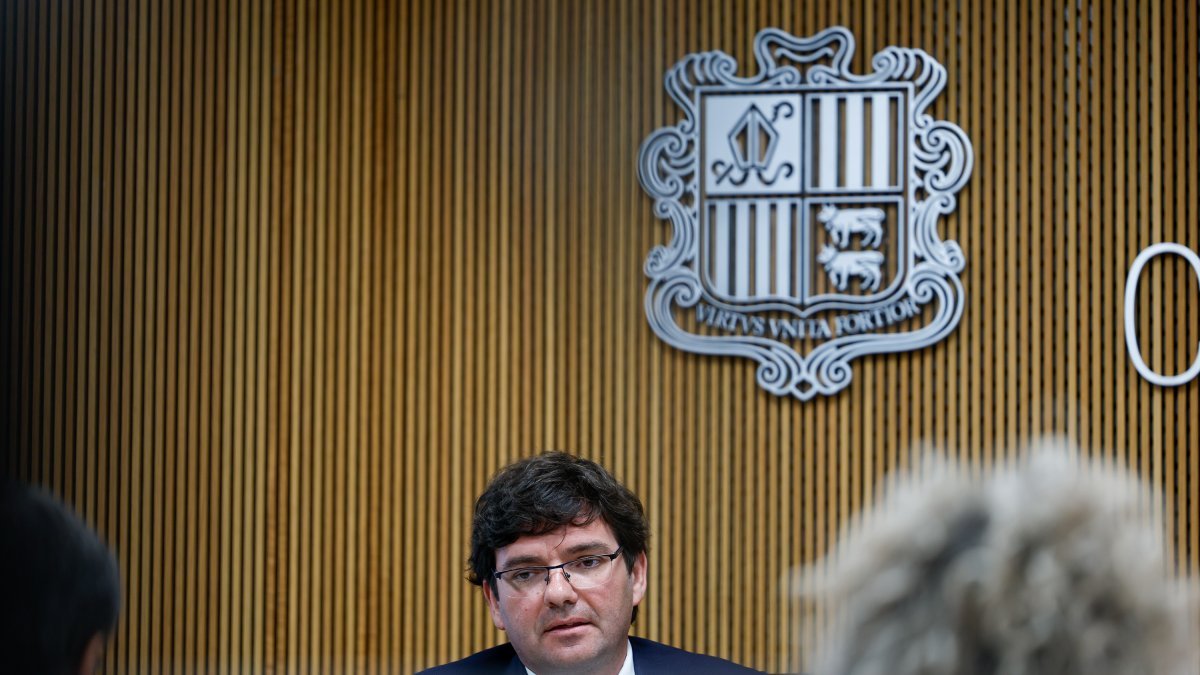

The Reasoner of the Citizen, Xavier Cañadaemphasized yesterday the need to apply with more flexibility and proportionality the rules on family reunification and expulsionsespecially when minors are involved. During the appearance at General Council to present the annual report, Cañada warned that some regulatory changes in immigration matters are creating complex situations for families who live and work legally in the country, but who cannot meet the financial or administrative requirements to maintain or complete reunification for their children.

“We don’t question public policies, but we question the protection of minors”
The Reasoner placed the debate in thefield of child protection and not in a global amendment to migration policy. “We don’t question public policies on immigration issues, but we question the protection of minors“, he affirmed. The complaints received often respond to families with both parents with regular permits and low-paid jobs who, when trying to regularize the family situation, find themselves with the annulment of the residence and work permits or with the invitation to leave the country.
“There are children they expel who have spent more time in Andorra than in their country of origin”
The institution considers that the rooting of children should weigh in any administrative decision. “There are children who have spent more time in Andorra than in their country of origin“, he remarked canada This reality, as he explained, forces us to go beyond an automatic application of the rule and to study each file individually, with a specific assessment of the best interests of the minor.
The recommendations of reasoner go precisely in this direction: incorporate a specific analysis of theinterest of the childavoid automatisms, apply a proportionality checkexplore less harmful measures and prioritize family unity. “That it be individualized, that the proportionality of the measure be looked at, that the circumstances be taken into account”, he summarized.
Cañada also pointed out that the legal reform has created a new casuistry that should be assessed in some way transitional regime for affected families. “Obviously the law is the law and must be obeyed”, he said. However, he defended that the application should incorporate criteria of proportionality, a case-by-case look and less harmful alternatives before arriving at decisions that can break already established family trajectories.
The Reasoner admitted that he did not have closed data on him exact number of filesbut he did note that they are more than last year. In any case, he remarked that it is not a volume “stratospheric”, but of sensitive situations that can have important consequences for children and parents that have been on the rise in recent times.
The appearance also served to raise two fundamental questions: where should the minors live if they parents work legally in Andorra and what model of cohesion does the country offer to families who, despite having a regular career, cannot regroup due to lack of resources. canada spoke of a “material impossibility of regroupingr” in the case of people who have been residing and working legally in the principalitybut which do not reach the required scales.
The institution closed the year with 433 files and one 38% increase in demands. For the reasonerthis increase does not necessarily mean that the country’s situation has worsened, but it does force us to observe what social tensions are emerging.
Other problems
One of the future problems he sees canada are the difficulties of single-parent families to support themselves. Another one that he has warned about is that of people who have debts and who are unable to open a bank account, with the disadvantages that this entails. On this, negotiations are underway with Andorran Banking and “some entity” to try to find a solution.
Within the framework of another of the institution’s action axes, canada defends that a justice “effective must be accessible” and also “able to respond in a reasonable time”.
HOUSING, THE MAIN QUESTION
The Raonador located the house as “the main social issue ofAndorra” and warned that the problem is not explained only by the current situation, but by an evolution accumulated over more than a decade. Xavier Canada vto point out that thehousing it has stopped being just a residential asset to also become an investment asset, which has put pressure on prices and access. He also pointed out the effect of intermediaries, which they depersonalize the problemand warned that the crisis particularly affects the elderly and workers who cannot afford the current rents.