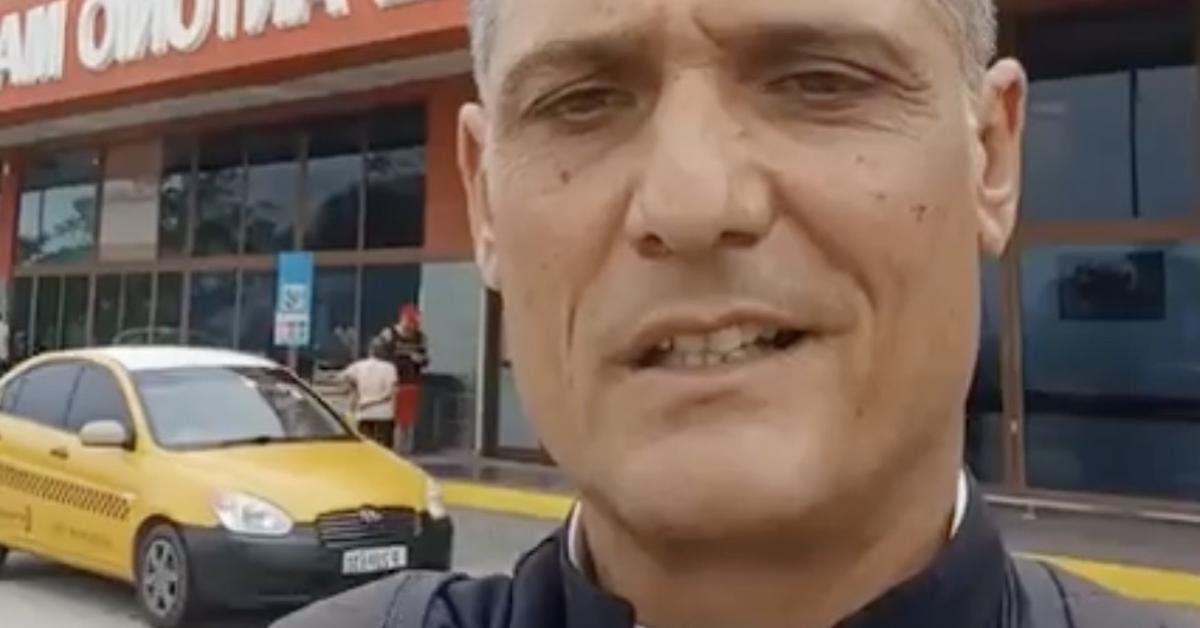
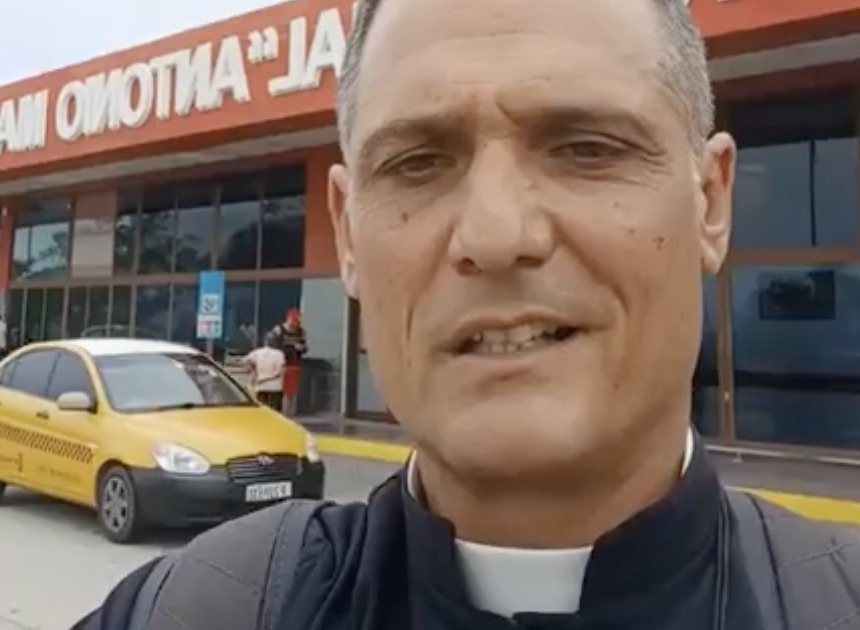
Madrid/Father Castor Álvarez was about to board his flight to Miami, where he was going to attend the ordination of another priest, this Friday, when the authorities prevented him from doing so. “They told me that I cannot leave the country,” said the priest himself in a short video posted on Facebook.
“It’s sad that they didn’t even notify me and I had to come, and my friends got the ticket and I found out right here,” lamented Álvarez, who said that the worst thing, however, was the mere fact of not being able to travel freely. “I hope that one day we Cubans will have freedom on our island, and I hope it will be soon,” he wished, adding a note of humor in the days when the soccer World Cup is being held: “May we score a goal in the World Cup and be free.”
The regime’s action has been condemned by the Cuban Observatory of Human Rights (OCDH), in a press release. “The impediment to leaving and entering the country is one of the repressive instruments of the Cuban regime against any person who dissents. The religious affairs office of the Communist Party of Cuba insists on using it, even in the serious moments that the country is experiencing,” denounced the NGO, based in Madrid.
“We are facing an escalation of repression, which includes religious leaders”
The Observatory pointed out that Álvarez’s case is not an isolated case: “We are facing an escalation of repression, which includes religious leaders.” Tomorrow marks the fifth anniversary of the historic and massive protests of July 11 in Cuba, in which the priest himself participated. that day he was beaten and imprisonedand released the next day thanks to the request of an archbishop.
He is one of the priests, along with Alberto Reyes Pías or Leandro Naún, who have most publicly expressed their dissident ideas.
The Ocdh also recalls in its report that the evangelical pastor Alian López Rodríguez, member of the Alliance of Christians of Cuba, was also detained. It happened on June 28, after a pilgrimage that had as its motto “Free Cuba for Christ”, in the city of Cabaiguán (Sancti Spíritus).
Likewise, he mentions the case of Rolando Pérez Lora, known as “El pregonero de Cristo”, summoned by the political police, interrogated and threatened, along with other activiststhe same day that the US Embassy in Havana organized the commemoration of the 4th of July at the residence of the head of mission, Mike Hammer.
“Failure to comply with the mandate qualifies as a crime of disobedience, which generates a significant deterrent effect”
This same Friday, the Observatory said, the organization denounced the human rights violations against Pérez Lora to the UN Special Rapporteur on freedom of religion. And he said that there is “a sustained pattern of harassment, surveillance, intimidation and threats allegedly attributable to state agents and authorities linked to the State Security bodies and the National Revolutionary Police, aimed at limiting the development of activities typical of their pastoral work, preventing the dissemination of sermons and religious messages through digital media and generating an inhibiting effect on the collective exercise of religious freedom within their faith community.”
The warning issued against Pérez Lora, observes the Ocdh, does not formally constitute a criminal sanction, but warns: “Failure to comply with the mandate qualifies as a crime of disobedience, which generates a significant deterrent effect and is usually invoked later as a precedent to justify new repressive measures or criminal procedures.”