
- Horacio Ochoa, the photographer who captured Cusco like few others and whose legacy (for so long ignored) is reborn again
- Sarah Bernhardt, the diva who charged a fortune in silver soles to appear in Peru and paralyzed the capital after the war with Chile
Nobody trusts almost anyone. We do not have confidence in our leaders, in our governors, in our politicians. It’s the same reason why there are almost no heroes. The last ones we had in Peru were Ketín Vidal and María Elena Moyano. And so many anonymous heroes then and today. This lack of heroes extends to international life. There are no leaders in the world, just tribal leaders. They are engaged in endless and meaningless wars, without heroes to show.
LOOK: I read you like a book, by Irene Vallejo
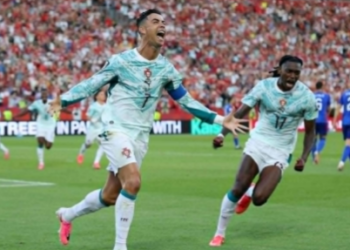
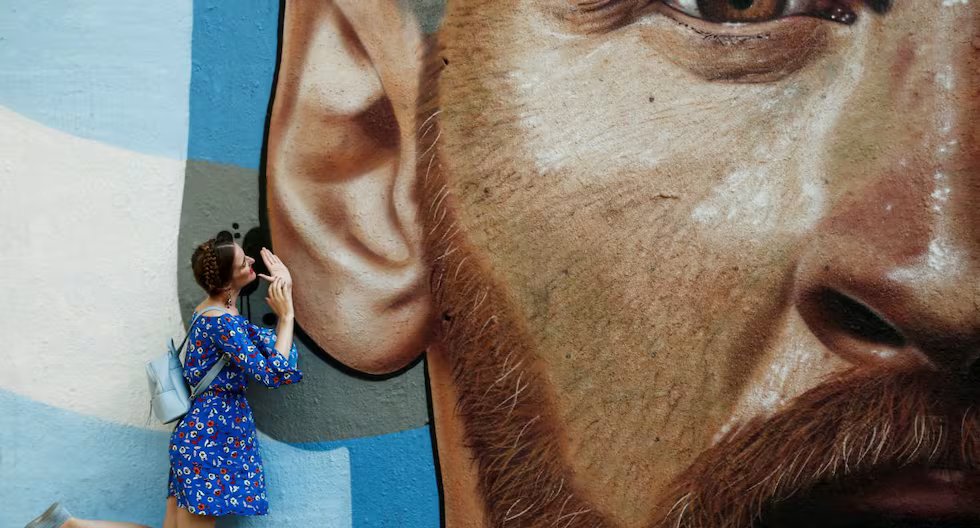
But the sport of football, a new formulation of the forgotten causes of patriotism and war, is the last refuge of heroes. There is Vozinha, Cape Verde’s goalkeeper in the World Cup. Messi or Mbappé or Haaland or Kane also parade there. They seem to meet the old definition of heroism. The one who defends the community, the one who puts his body and soul into a cause. To complete their image, we know that they have all suffered, they have sacrificed to defend their societies.
In the classical definition, the hero is the son of a god and a mortal woman. There are Hercules, Aeneas or Achilles, who come from this mixture. That is why the cameras focus on Messi’s father or someone else, looking for the origin of the divine dust. In that same impulse to look for heroes where we need them, we find a place for popular heroes. From Achilles to Spider-Man, through Batman, Superman and Superwoman, we give free rein to our thirst to create beings to admire. They are the compensations for our shortcomings.
Unlike life, made of chaos where there are no winners or losers, sport shows a symbolic but concrete space. The players, the ball and some simple and definitive rules form the basis of that universe. Football offers us the spectacle of concretion in a panoramic frame, made like the great theater of the world supported by the Greek choir from the stands. Collective play and individual heroism go hand in hand and numbers define them. Heroes bring together and offer cement to fragmented and divided societies.
It is the same sacred fire that sustains one of our first heroes, Prometheus. It is he who steals fire from the gods and brings it to men. We owe our civilization to him. Like a good hero, he must suffer a terrible punishment, tied to a rock in the Caucasus mountain range, where an eagle comes to eat his liver. “I gave them hope and thus removed death from their eyes,” says Prometheus, whose chains would happily be broken by Hercules. Many centuries later, this cult of heroism reappears in a purely realistic way in the Medinaceli poet who composed Mio Cid (he who “in good time girded with a sword”) around the year 1200. At some point Rodrigo Díaz de Vivar says a phrase that could be repeated by the captain of a national team. “I will tell you the truth: whoever lives in one place always, his belongings may decrease. Tomorrow morning, let’s start riding, leave this camp, we will go forward.”
However, in sports and politics, we also live in an era of some cheap heroes. For them there is a classic aphorism, although it is also attributed to Mio Cid: “That person was like the rooster, because he thought that the sun rose to hear him sing.”